
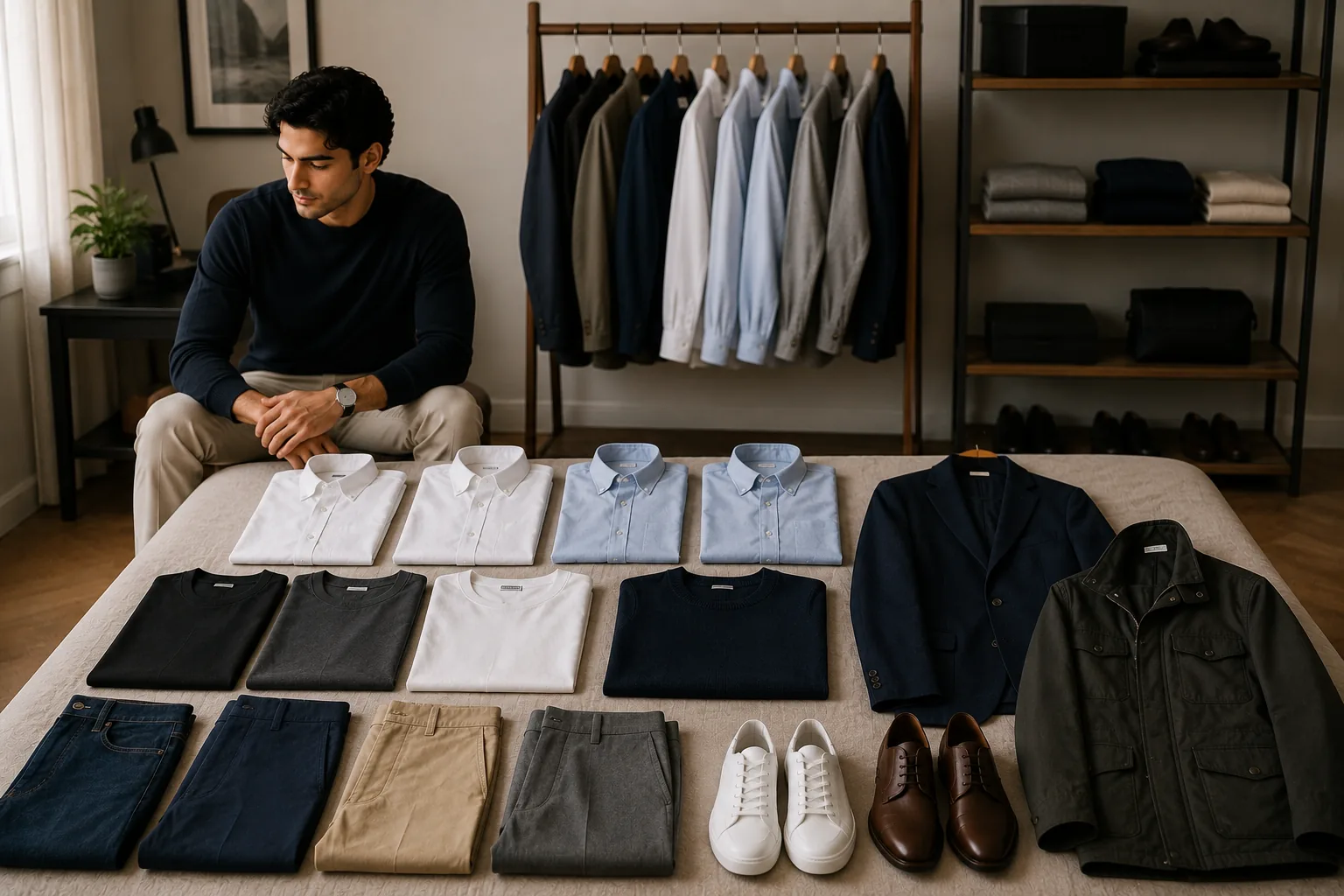
The point is combinations, not pieces
A work wardrobe is a system, not a shelf of favourites. Fifteen well-chosen pieces in agreeing colours produce over a hundred outfits; forty random ones produce five. The essentials below earn their place because each works with almost every other — the maths does the styling for you before you are awake.
Two rules keep the system running. Keep every base piece in neutrals — navy, grey, white, tan, black — so nothing can clash by accident. And buy for your real week, not an imagined one: if you have not needed a formal blazer since 2023, it is not essential for you, whatever the lists say. Count your typical fortnight — office days, one client meeting, one after-work event — and let those numbers, not aspiration, decide what earns a hanger. The framework is universal; the pieces are personal.
Tops: four shirts, three tees, one knit
- Two white shirts — one crisp poplin for formal days, one softer cotton for everything else
- Two light-blue shirts — the most forgiving colour ever put near a human face
- Three plain tees in white, grey and navy, in a weight you cannot see through
- One fine knit — navy or grey, worn over shirts and tees alike
That is more than a week of tops before a silhouette repeats. Fit them properly — shoulder seams sitting where they should, the waist following your own, sleeves ending at the wrist — and each piece earns its keep alone or layered. An ironed shirt with tailored trousers remains the most reliable outfit in a working wardrobe.
Bottoms and a dress: two trousers, one dress
- Black tailored trousers — the hardest-working garment in a working wardrobe; a true black, no shine, a clean straight or slightly tapered leg
- A second pair in charcoal or navy for variety through the week
- One sheath or shift dress — the fastest correct answer on a rushed morning, worn alone in summer, layered under the blazer in winter
Every pair should sit comfortably at the waist, follow the hip without pulling, and end at most one shallow break over the shoe or a clean crop above the ankle. Hemming costs almost nothing and transforms everything — puddling, unfinished lengths are the single most common failure in otherwise decent wardrobes.
The blazer, the coat, and the shoes that carry the week
- One well-cut blazer in navy or black — the single piece that reads "ready for the meeting" over almost anything else on this list
- One weather-appropriate coat — a trench for rain, wool for cold, cut to actually cover the dress underneath
- Flat loafers or pointed flats — for the days that involve real walking
- One low block heel — enough height to read smart, low enough to survive a full day standing
The blazer over the dress, over the shirt and trousers, over the tee and jeans on a Friday — one jacket, worn constantly, does more for a working wardrobe than three trend pieces combined. Buy it in the neutral you reach for most, and the rest of the fifteen pieces will organise themselves around it.
Buy in the order the week actually needs
Sequence matters more than the list. Start with the blazer and one pair of black trousers — that pairing alone covers most first-week meetings. Add the white shirt next, then the dress, then the second trouser colour. Shoes come after the clothes they need to match, not before.
Buy the coat last and buy it properly; a good coat is worn for years and seen by everyone, so it is the one place in this list worth stretching the budget. Everything else can start mid-market and be upgraded piece by piece as the wardrobe proves which combinations you actually reach for each morning.