 SKIBDRIP®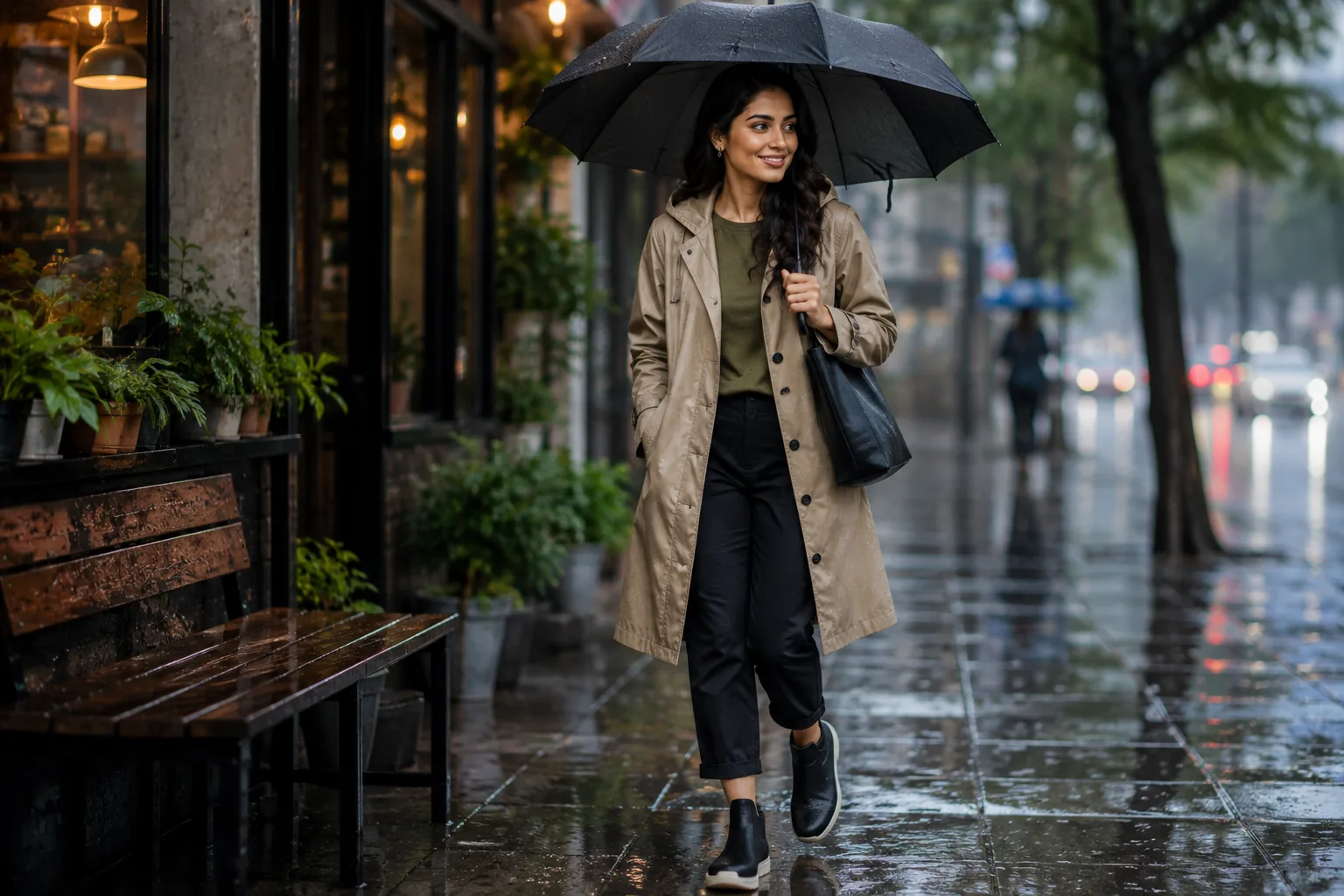
Shoes decide the whole outfit
Rain reorders the usual sequence: shoes first, everything after. The qualifying shoes are rubber-soled with grip and either waterproof or cheap to dry — chelsea boots, rubber-soled loafers, leather trainers you do not baby, proper gumboots if the water is ankle-deep.
The disqualified list is stricter: suede and nubuck, which water stains; white mesh trainers, grey by lunch; leather-soled dress shoes, a skating rink on wet marble; delicate flats and open sandals — unless it is warm monsoon rain and you have accepted wet feet. Choose the shoe for the deepest puddle of the day, then build upward.
Keep hems off the splash line
The lower fifteen centimetres of your trousers take the worst of the weather — wheel spray, puddle splash, the drip line of your own umbrella. Defend them: choose cropped or ankle-length trousers, cuff or pinroll full-length ones, or wear tapered cuts that hang clear of the shoe.
Wide, floor-grazing hems are the day's one genuine mistake; wet fabric slapping your ankles by 10 am colours the whole day. Skirts and dresses at midi length, with some weight in the fabric, handle rain better than floaty maxis that wick water upward.
Fabrics that forgive water
Rain divides fabric into two camps. Friendly: nylon and technical synthetics, tightly woven cotton twill or gabardine, wool and merino in light rain — wool keeps warming even when damp — and washed, mid-weight denim. Unfriendly: suede, raw and heavy denim that soaks and stays cold, canvas, silk that spots, and fine mulmul that turns translucent.
Dark and mid shades — navy, charcoal, olive, black — hide both the splatter and the drying process. Prints hide them even better. Save the pale trousers and the white shirt for a forecast that promises mercy.
One real rain layer
An umbrella is a tool; a rain layer is an outfit decision. Own one that earns the name: a hooded shell for casual days, a classic mac or trench for work, a packable anorak that lives in the bag during unstable months.
Fit test before buying: hood up, arms lifted — nothing should ride or gape, and the layer must close over your usual third piece. Neutral colours — navy, stone, olive, black — go over everything you own. This is the outer shell of the layering system: weatherproof outside, breathable enough inside.
Warm rain and cold rain are different briefs
A Mumbai July and a Delhi January drizzle ask opposite questions. Warm rain is about drying fast and staying light: sandals or quick-dry trainers, cropped cotton-blend trousers, no lining anywhere, and an umbrella doing most of the work — a sealed jacket in humid heat becomes a personal sauna. Cold rain is about staying sealed: waterproof boots, wool socks, the hooded shell over a warm mid-layer, hems still cropped but ankles covered.
Misreading the pair is the classic error — the heavy raincoat in warm humidity, the breezy sandals in a cold squall. Check the temperature alongside the rain icon, and pick the playbook before you pick the clothes.
The kit that saves the day
Rainy-day composure is mostly logistics:
- A bag in coated canvas, nylon or leather-look synthetic — not raw suede — that closes fully
- A compact umbrella that lives permanently in that bag
- Spare socks in a pouch; wet socks end more good moods than wet coats
- A small cloth for glasses and phone
Arriving composed while everyone else drips is a quiet style win. In serious downpour season the full monsoon playbook takes over — but for the ordinary rainy Tuesday: shoes, hems, fabric, layer, kit. Keep the whole lot packed as one pouch and rainy mornings stop requiring memory.