 SKIBDRIP®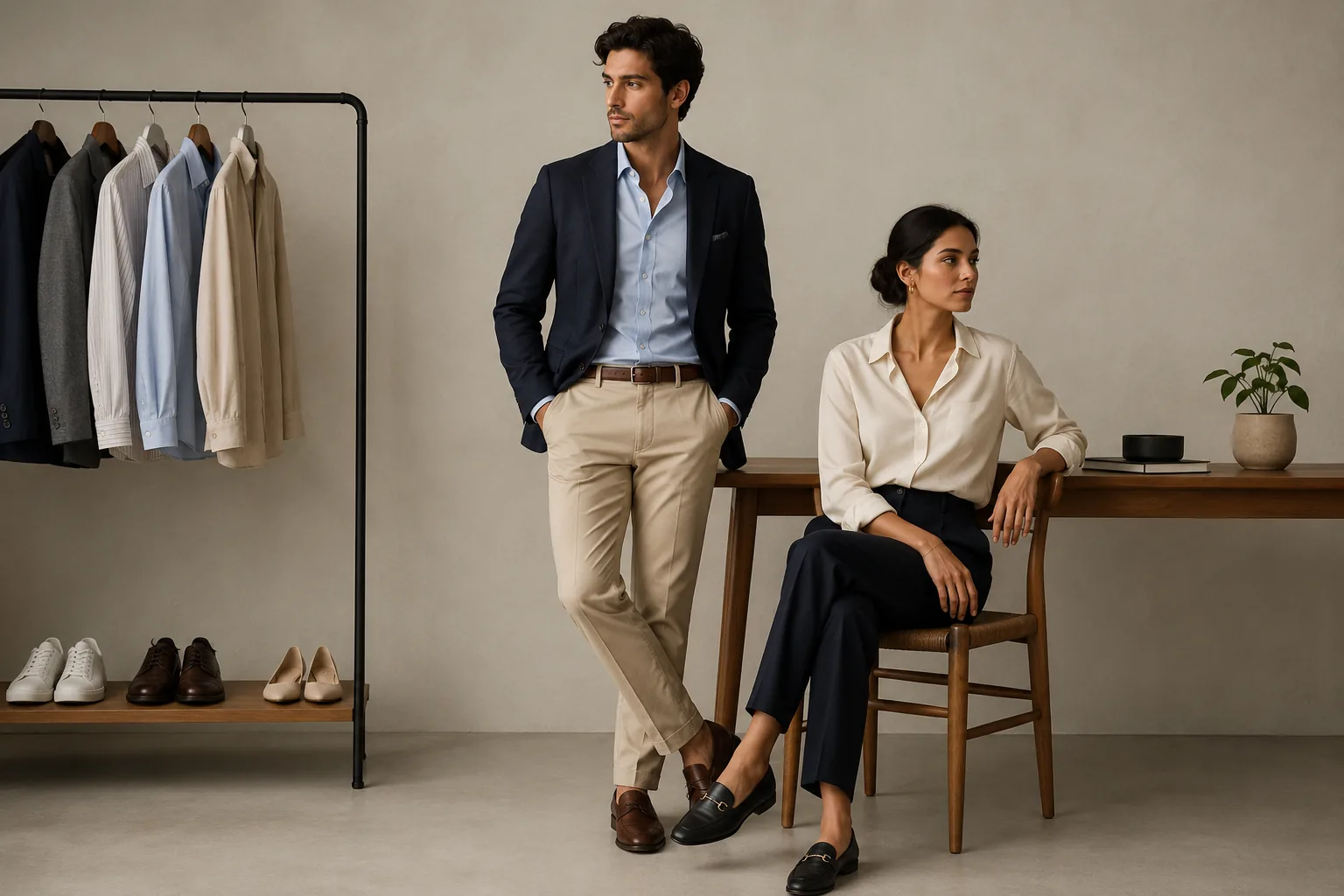
The definition, drawn precisely
Business casual sits one notch below the suit and two above the weekend. The suit's formality is dropped; the tailoring is kept.
In practice: trousers or chinos with structure, a shirt with a collar or a knit with a neat neckline, and closed leather shoes. A blazer converts the outfit for meetings; a tie tips it back into business formal, so leave it. The phrase confuses people because 'casual' is doing quiet work — it means without ceremony, not without effort. Every piece should look chosen for an office, just an office that no longer requires armour. If you would wear it to mow a lawn or to a wedding, it is not business casual.
The yes list and the no list
Yes:
- Chinos, wool or cotton trousers, tailored ankle-length trousers, smart skirts and dresses at knee length or longer
- Oxford and poplin shirts, blouses, polos in solid colours, fine merino or cotton knits
- Blazers, unstructured jackets, neat cardigans
- Loafers, derbies, brogues, ballet flats, low block heels, clean minimal leather sneakers where the office accepts them
No:
- Shorts, flip-flops, running shoes, hoodies, joggers
- Slogan or graphic tees, visible logos writ large
- Ripped, faded or baggy jeans; anything sheer, strappy or beach-adjacent
The grey zone — dark jeans, smart sneakers, polo shirts — is decided by your specific office. Watch the most senior well-dressed person and calibrate to them.
Five-day formulas that never miss
Build a small rotation and stop thinking about it.
- Navy chinos, white oxford shirt, brown loafers
- Grey trousers, black fine-knit crew, black derbies
- Tan chinos, light-blue shirt, navy blazer for meeting days
- A knee-length shirt-dress or trousers with a silk blouse and flats
- Dark jeans (if permitted), tucked shirt, jacket, leather sneakers
Iron on Sunday, hang the five builds together, and mornings run themselves. Keep the palette to two neutrals plus one colour and everything cross-combines. In Indian offices, well-cut kurtas with tailored trousers sit comfortably inside business casual for most teams — office wear in India has its own generous range.
Fit is the actual dress code
Most business-casual failures are fit failures wearing a fabric disguise. A polo that balloons at the waist looks sloppier than a crisp tee; expensive trousers pooling over the shoes undo the whole effort.
Aim for: shoulders of shirts and jackets ending at your shoulder bone, trousers with a slight break or none at the ankle, tops that skim rather than cling or billow. One visit to a tailor for hems and sleeve lengths upgrades an entire wardrobe for the price of a single new shirt. If the office feels vague about rules, precise fit is the thing that quietly reads as professional everywhere — sleeves and hems are the tells managers notice first.
Reading the room when rules are unwritten
Business casual varies by company, city and industry — a Mumbai bank's version is not a Bengaluru startup's. On day one, dress at the formal end: trousers, collared shirt, proper shoes. Then observe for a week — what do respected seniors wear on ordinary days, and what changes on client days?
Calibrate to the level just above your team's average and hold there. Keep a blazer at your desk for surprise meetings; it converts any outfit in ten seconds. When a specific day feels ambiguous — an offsite, a client visit — the one-notch-up rule from smart casual territory applies: slightly sharper is the safe error. And when you misjudge a day once, as everyone does, simply adjust tomorrow without commentary.