 SKIBDRIP®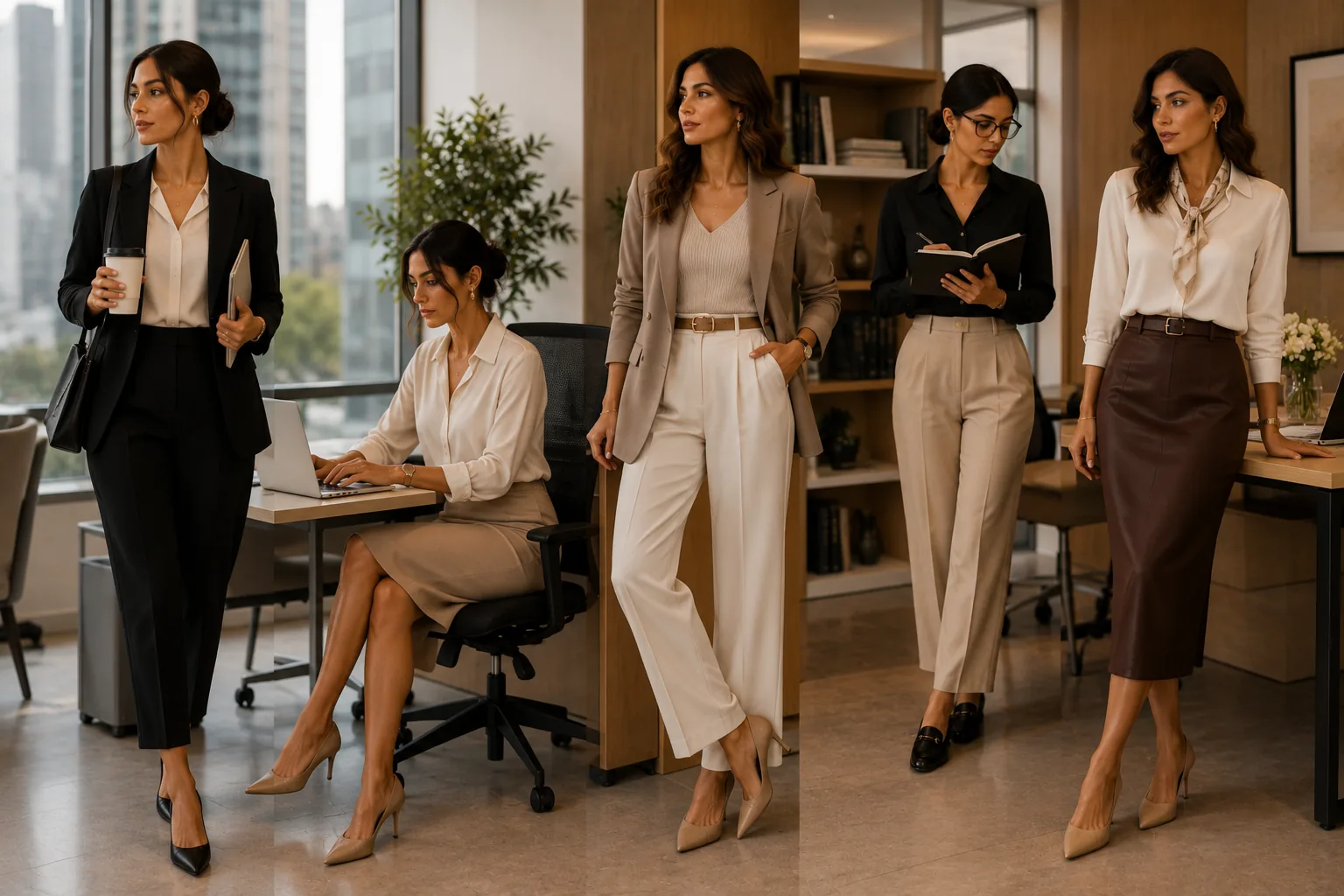
Decode the actual dress code first
Office wardrobes go wrong when they are built for an imaginary office. Spend one week reading the real one: what do the most senior women wear on ordinary days, and what changes on client days.
Most Indian and global workplaces now sit at business casual — tailoring without the suit obligation. Formal environments such as law, banking and client-facing consulting still want suits or their equivalent. Creative and tech floors run casual, where the real code is neatness. Whatever the room does, dress at its median or one notch above. One notch, not three — sharpest in the room works; costume does not. Take a photograph of yourself on a day you felt exactly right and keep it — that image is your office uniform brief, more honest than any HR document.
The five-piece office core
Five pieces in two base colours make a fortnight of outfits.
- Tailored trousers in black, navy or charcoal
- A knee-or-lower skirt — pencil or A-line
- A white or ice-blue structured shirt
- A fine knit or elegant top with sleeves
- A blazer that fits the shoulders exactly
Add a dress that does meetings on its own and you have a sixth workhorse. Everything combines with everything because the palette is closed. Rotate: trousers, shirt and blazer on Monday, the dress on Tuesday, skirt and knit on Wednesday. Nobody notices repetition; everybody notices creases. When budget allows, buy the trousers and blazer in the same fabric so they can serve as a suit on the days that demand one.
Meeting days versus desk days
Calibrate effort to the calendar, not the mood.
Desk days take the softer end: knit and trousers, loafers, small earrings. Meeting and presentation days take structure — the blazer goes on, the shoe gains a point or a small heel, the shirt gets properly ironed. Client days take the full signal: matched or tonal tailoring, closed pumps or crisp loafers, one authoritative accessory such as a watch or a structured bag.
Heels are optional everywhere; polish is not. Flats carry authority perfectly well when the rest of the outfit is deliberate, and your feet will still be thinking at 6 pm. Keep one all-weather meeting outfit ironed and ready — decision-free mornings before big days are worth protecting.
Comfort is a performance issue
You think better in clothes you are not managing. Choose fabrics that survive nine hours — cotton stretch blends, ponte, merino, crease-resistant crepe — and cuts that let you sit, reach and walk between floors.
In Indian offices, a crisp cotton kurta with cigarette trousers and a structured jacket or dupatta clears any business-casual bar; kurta sets are exactly as professional as western tailoring. Heat argues for breathable weaves and half sleeves under the AC-to-street swing. Keep a neutral blazer or fine shawl at your desk — it upgrades any outfit for the surprise meeting and settles the office air-conditioning war. Test every workwear purchase seated — a skirt that behaves standing can misbehave through eight chair-bound hours.
The details that read as seniority
What separates fine from impressive at work is maintenance, not money.
Pressed fabric. Clean, unscuffed shoes. A bag with structure that closes. Hems that end where they should — trousers skimming the shoe, sleeves showing wrist. Jewellery kept to two or three deliberate pieces; a watch does more boardroom work than any bracelet stack.
Grooming the outfit takes five evening minutes: shoes wiped, tomorrow's pieces hung, blazer brushed. It is the cheapest professional advantage available, and it compounds — people stop noticing your clothes and start noticing your work, which is the entire point of dressing well for one.