 SKIBDRIP®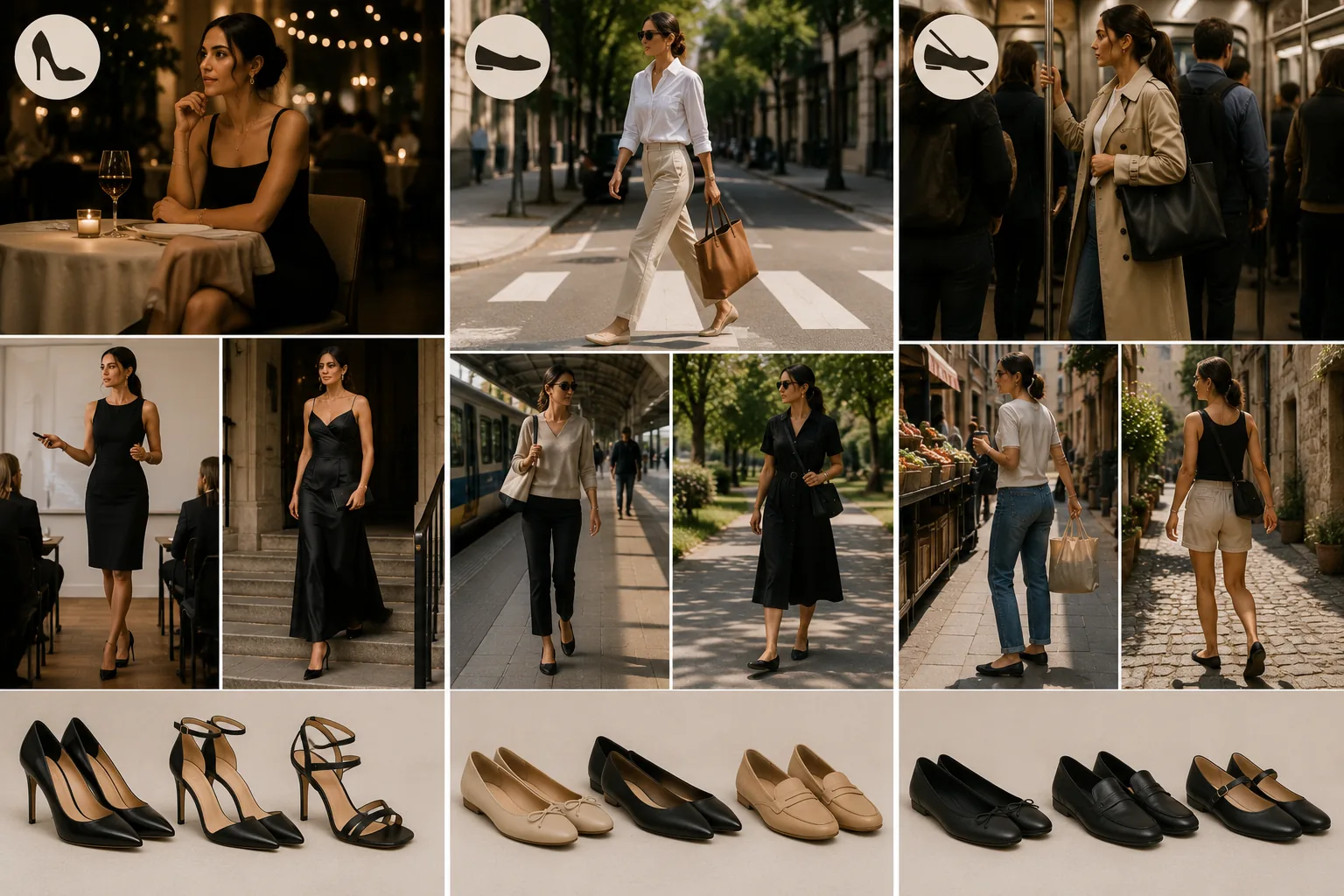
The real question is hours on your feet
The heel-or-flat decision is not about formality first. It is arithmetic: how many hours upright, on what surfaces, moving how often.
A wedding with four hours of standing is a flats event in disguise. A seated dinner is a heels opportunity at zero cost. Count the day honestly — commute, stairs, standing rounds, the walk between venues — before the mirror gets a vote. Style is not what a shoe looks like at 7 pm; it is what your face looks like at 11. Nothing undoes a good outfit faster than visible foot pain, and everyone can see it. Make the count a habit: before any invitation, ask how far, how long, what floor — the answer usually picks the shoe before the wardrobe opens.
Where heels genuinely earn their place
Heels change posture and proportion — the leg lengthens, the spine stacks, trousers hang from the hip the way tailors cut them to.
They are worth it when the event is mostly seated, under three hours, or ceremonial enough that presence outranks comfort: award nights, receptions, a short and important presentation. Block heels and wedges spread the load and survive lawns and cobbles; stilettos are for smooth floors and short distances. Two working heights cover everything — a 5 to 7 cm block for long events, and one higher pair for the nights that genuinely justify it. Practise the first wear at home for an hour — carpets are kinder teachers than wedding lawns.
Where flats quietly win
Everything with distance in it belongs to flats: airports, market days, gallery afternoons, office days with floor-to-floor meetings, school events, standing receptions.
The modern flat wardrobe is genuinely elegant — pointed flats that read as sharp as pumps, loafers with real presence, ballet flats, minimal white trainers, flat metallic sandals for occasions. A pointed toe recovers most of the leg-lengthening a heel provides, especially matched to the trouser or to skin tone. Authority at work comes from the whole outfit, not the heel height; shoes finish an outfit, and a polished flat finishes it just as decisively. Keep one metallic flat in the wardrobe — it dresses up as hard as a heel without the arithmetic.
The middle path most days deserve
Most real days are hybrids — a smart morning, a moving afternoon, an evening that might extend. Three answers.
- The low block heel: 4 to 6 cm, walkable, still lifts the outfit
- The heeled loafer or Chelsea boot: height with a stable base
- The carry-both method: commute in flats, change for the evening leg
A foldable flat in the bag is the cheapest insurance in fashion. Whichever you choose, buy the pair a half-size honest and walk the shop floor twice — no shoe styles well from inside a plaster. And rotate — the same pair two days running tires both the shoe and the feet.
Make either choice look deliberate
Whichever you choose, commit to it visibly.
With flats, sharpen everything above: precise hems — cropped or full-length trousers, never a puddle — a structured bag, considered jewellery. With heels, soften the effort elsewhere so the look stays easy. Match shoe weight to outfit weight: delicate sandals with flowing fabric, substantial loafers with denim and wool.
And maintain them. Worn-down heel tips and scuffed toes announce themselves across a room; two well-kept pairs beat six neglected ones. The choice between heels and flats is never a compromise when the pair you picked looks like the pair you meant. Resoling and fresh heel tips cost little and return the whole outfit's polish at once.