 SKIBDRIP®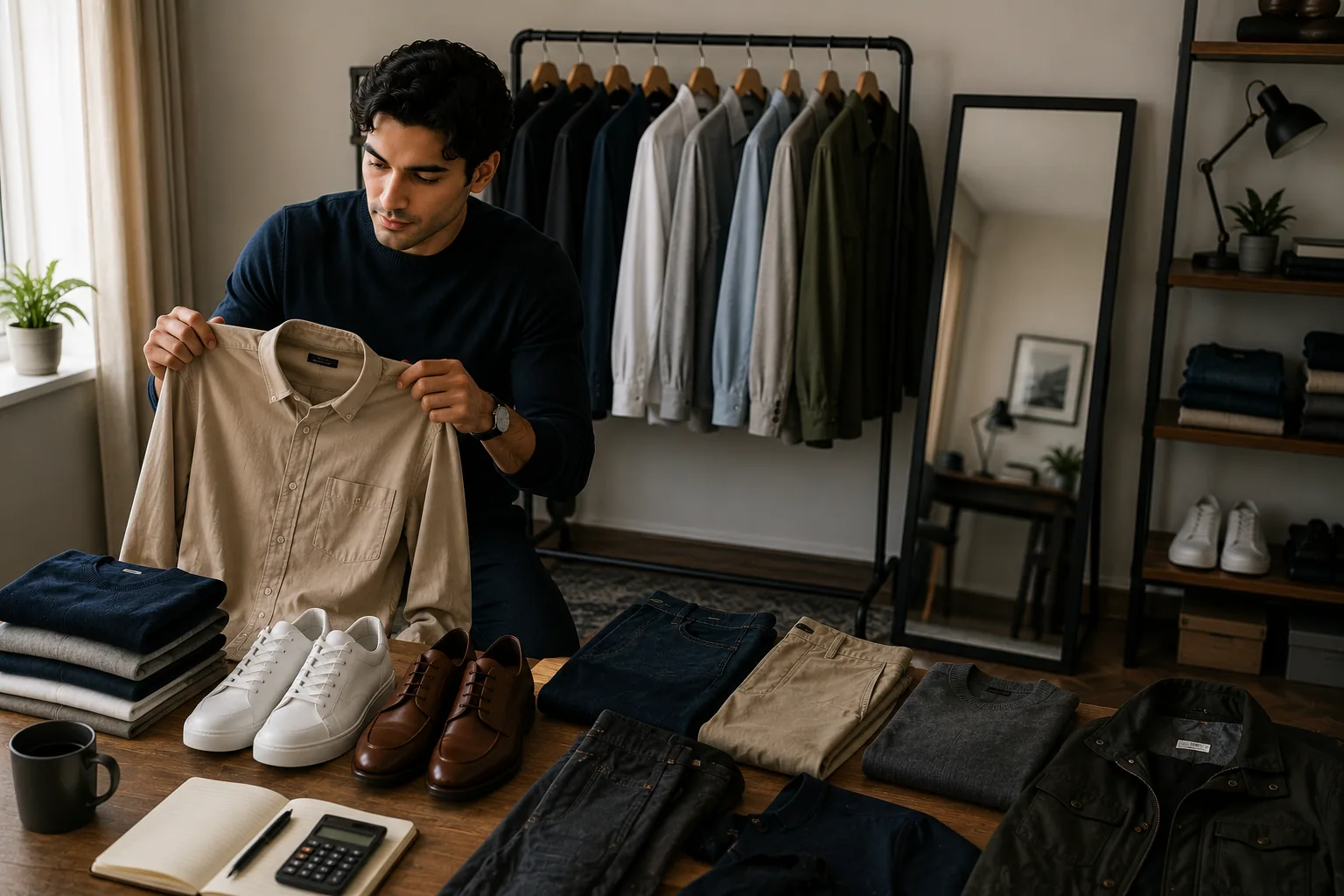
Fit is free — start there
The best-dressed man in most rooms is not the best-funded one; he is the one whose clothes actually fit. The right size costs the same as the wrong size, which makes fit the only genuinely free upgrade in menswear.
Before spending anything, audit what you own. Check shoulder seams against the shoulder bone, sleeve ends against the wrist, trouser hems against the shoe. Pieces that pass stay; pieces that nearly pass go to the tailor; pieces that fail become house clothes. Most men discover a workable wardrobe hiding inside their existing one — worn a size too large for years. The audit costs an evening and improves more outfits than a month of salary spent at the mall.
Neutrals multiply a small wardrobe
On a budget, every purchase must work with everything already owned — which is a colour decision. Navy, grey, white, olive, tan and black all agree with each other, so fifteen neutral pieces produce dozens of outfits while fifteen assorted colours produce a handful.
The discipline: base pieces — trousers, outerwear, knitwear, shoes — stay neutral without exception. Colour enters through the cheapest slots, tees and socks, where a mistake costs little and boredom is easily cured. One loud impulse jacket that matches nothing is the classic budget leak; it costs the same as three quiet pieces that each work thirty ways. Boring choices at the till become interesting outfits on the body — that is the trade.
Spend up, spend down: the allocation
Budget style fails when money is spread evenly. Concentrate it instead:
- Spend up: shoes and outerwear — worn constantly, inspected closely, and where cheap materials announce themselves fastest
- Middle: jeans, trousers, a blazer — mid-market brands cover these well
- Spend down: tees, basics, anything trend-led — these are consumables, replaced yearly regardless of price
Judge every purchase by cost per wear, not price tag: a 3,000-rupee shoe worn 150 times costs twenty rupees a wear; an 800-rupee novelty shirt worn twice costs four hundred. The expensive item is frequently the cheaper one. Sales are for planned pieces at better prices — never for unplanned pieces at any price.
The tailor is the best bargain in menswear
Every Indian neighbourhood holds the most underused style resource in the country: a tailor who will hem trousers, take in a shirt with darts, slim a trouser leg or shorten sleeves for the price of a plate of biryani. That is the difference between clothes that are your size and clothes that are your shape.
The move that changes everything: buy for the largest relevant point — shoulders on shirts and jackets, seat on trousers — then have the rest brought in. A 900-rupee shirt altered for 150 rupees beats a 3,000-rupee shirt worn as it came. Thrifted and hand-me-down pieces respond the same way. Rich men buy fit off the rack; smart men manufacture it locally.
Thrift, time your buys, and hold the line
Secondhand is the budget cheat code, particularly for the expensive categories — wool blazers, overcoats and leather shoes turn up in thrift stores and resale apps at a tenth of retail, and quality old fabric beats cheap new fabric every time. Check seams, smell for damp, and apply the same fit rules as anywhere else.
Then defend the system. A wish list, written and waited on, filters out the impulse buys that drain budgets ten small purchases at a time. End-of-season sales fill planned gaps; festival sales test your resolve. The uncomfortable truth about dressing well on less: it is mostly the discipline to buy nothing — worn with clean shoes.