 SKIBDRIP®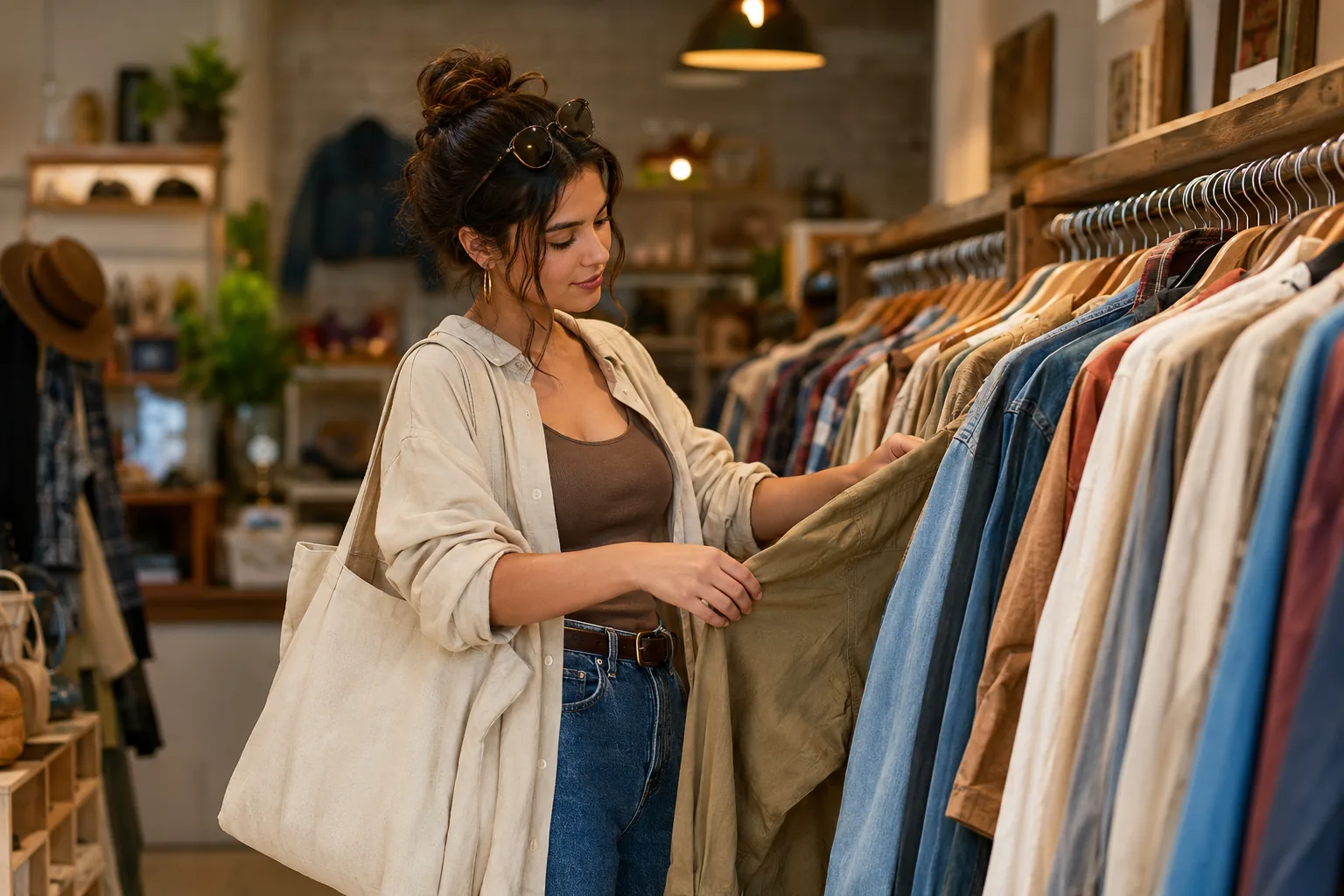
The list is the whole discipline
Junk enters thrift hauls through open-mindedness. A store of one-off bargains, browsed without intent, will always produce three fascinating garments that fit nothing in your life.
Go in with a written list of two or three specific gaps — a camel wool overcoat, straight dark jeans, a plain silver-grey saree — ideally drawn from an honest wardrobe audit. The list does not forbid serendipity; it disciplines it. A wonderful surprise still has to answer the question every purchase answers: which three things I own does this work with? No answer, no purchase, however good the price. Cheap and unworn is the most expensive kind of clothing.
Know your numbers, ignore the labels
Sizing in a thrift store is folklore. Decades of vanity sizing mean a 1990s medium is today's small; export-surplus pieces follow other countries' charts; and the previous owner may have altered anything.
So carry your real numbers — chest, waist, hip, shoulder width, inseam — and a soft measuring tape, and measure garments flat. Shoulder seams are the one measurement tailoring cannot cheaply fix, so they must be right off the rack. Waists, hems and sleeves are all adjustable — a great fabric in a slightly wrong size is often a better buy than a mediocre fabric in a perfect one, because your tailor closes the gap for very little.
Read the rack with your hands
Speed comes from filtering by fabric before style. Run a hand along the rack and stop only where the material objects — the weight of real wool, the dry cool of linen, the density of old-stock cotton, silk's particular slip. Check the content label to confirm what your fingers guessed.
Natural fibres survive previous owners far better than synthetics: wool and cotton wash back to life, while tired polyester stays tired forever. Older garments often carry better construction than their modern price peers — this is where quality-spotting skills pay double, because at thrift prices, quality is the entire reason you are here.
The inspection that catches the junk
Shortlisted pieces earn a two-minute interrogation, in the brightest light the shop has — daylight near the door beats the changing-room bulb.
- Underarms and collar: yellowing and odour that survived a previous wash are permanent
- Zips: run them twice, full length; replacement is possible but priced into your decision
- Seams: tug gently — reveals loose stitching and fabric weakened by age
- Buttons and buttonholes: all present, holes unfrayed
- Knits held to the light: moth holes glow
- Smell test, honestly applied: musty airs out; mildew and smoke mostly do not
- Stains: oil and ink at thrift age are tattoos
Any failure on a structural point puts the piece back. Flaws you can fix cheaply — hems, buttons — are negotiating facts, not dealbreakers.
The endgame: buy less, wash everything
At the till, run the final gate on each piece: does it beat something you already own, or fill a listed gap? 'It is only three hundred rupees' is not an answer — the junk you are trying not to buy is precisely the stuff that only makes sense at the price.
Home protocol: everything gets washed or dry-cleaned before it touches your wardrobe, whatever it looks like. Hot-wash sturdy cottons; wool-cycle the knits; steam what cannot be washed. Then alter fast — a thrifted piece that waits a month for the tailor waits forever. The thrill of thrifting is real; the skill is making sure every trophy earns a place in the regular rotation.