 SKIBDRIP®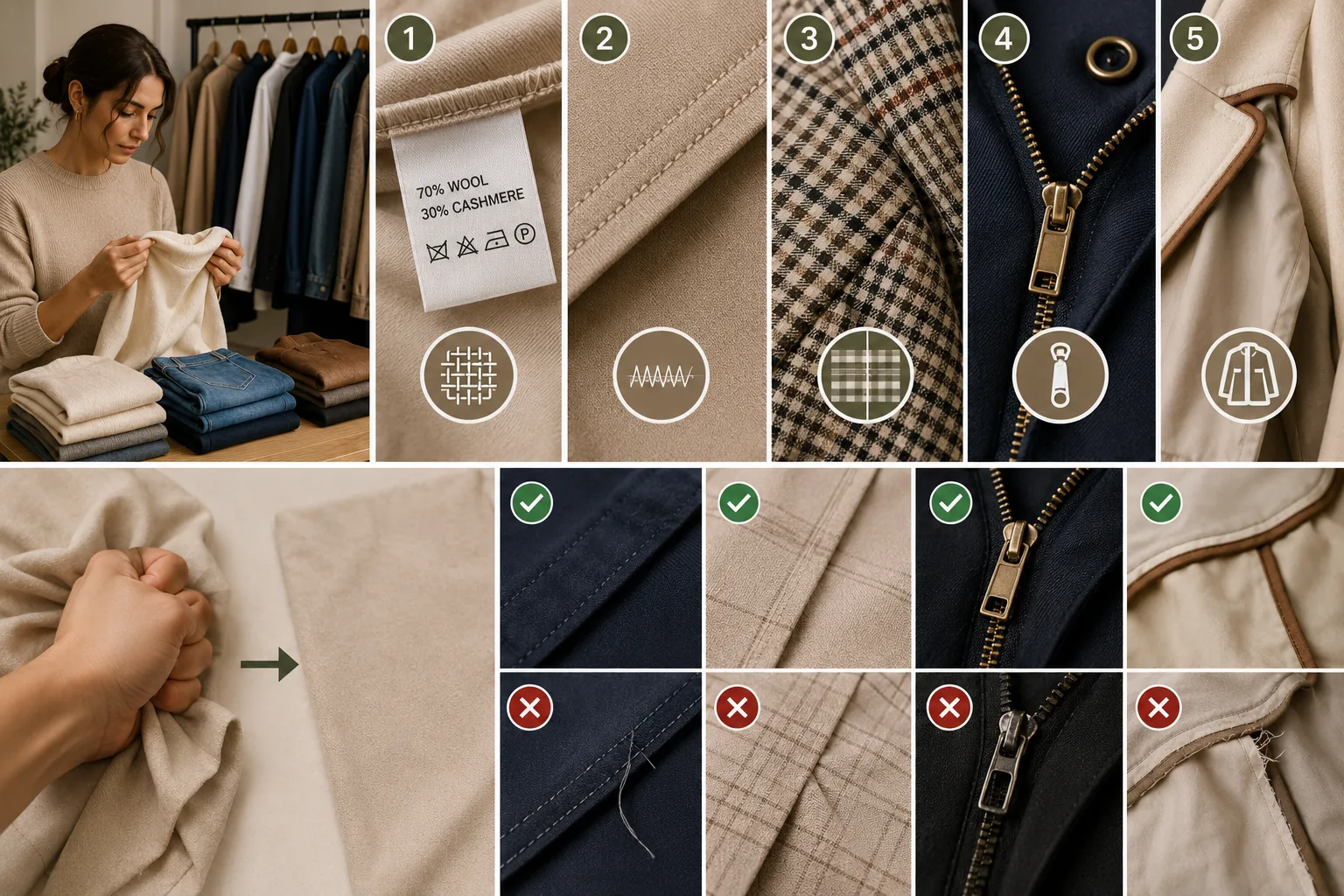
Start with the label, then the hand
Flip to the composition label first. Natural fibres — cotton, linen, wool, silk — and sturdy blends generally age better than flimsy full-synthetic weaves, though a touch of elastane for stretch or polyester for strength is not a crime. What you are avoiding is the whisper-thin mystery blend that pills by the third wash.
Then trust your hand. Quality fabric has weight and density for its type: a tee you cannot see your palm through, a shirt poplin with a crisp dry touch, wool with spring. Hold it up to the light — the more light floods through a supposedly substantial garment, the shorter its life. Thin is a choice in summer fabrics; flimsy is a cost-cut everywhere.
Read the seams like a resume
Seams are where money is saved or spent, and they cannot lie.
- Stitch density: look for small, tight, even stitches — roughly 8 to 12 per inch on wovens. Long, loose stitches mean speed-sewing.
- Loose threads: a garment shedding threads on the shop rail has told you its future.
- Tug test: pull gently across a seam; if it gapes and shows ladder-like threads, it will split at the gym bag stage.
- Flat and French seams: enclosed seam finishes inside jeans and good shirts signal a maker who spent seconds nobody would ever see.
Ten seconds per seam, three seams per garment. It is the highest-value half minute in shopping.
Details that are expensive to fake
Cost-cutting hides in fabric; it shows in details.
Pattern matching: on checks and stripes, the lines should continue across side seams, pockets and plackets. Matching patterns wastes cloth, so only careful makers do it.
Buttons and buttonholes: buttons sewn with a thread shank and a spare included; buttonholes densely stitched with no fray. Wobbly, thin-rimmed buttonholes are the first thing to collapse.
Zips and hardware: a metal zip that runs smooth and sits flat, not a wavy plastic afterthought.
The inside: turn it inside out. Clean finishing, taped or bound edges, a lining that hangs without twisting. Makers who respect the inside respected everything else.
The crush test and the recovery test
Two hand tests settle most doubts.
Crush: squeeze a fistful of fabric hard for five seconds and release. Quality cotton, wool and linen blends spring back with soft creases that fall out; poor fabric holds sharp, papery wrinkles. (Pure linen creases nobly — that is character, not failure.)
Recovery: stretch a small section of knit or stretch-woven and let go. It should snap back to shape immediately. Slow, baggy recovery today is a bagged-out knee and elbow within a month.
Add a colour check under daylight or your phone torch — uneven dye, or colour rubbing onto your fingers, ends the conversation. Two minutes, no expertise required, and the garment has told you nearly everything.
Quality is not the same as price
A high price buys a brand's margin before it buys you a better garment. Plenty of expensive clothes fail the seam test; plenty of modest labels, mill-town exports and second-hand finds pass it easily — which is exactly why these checks make thrift shopping a sport you can win.
So run the tests on everything, regardless of the tag. When a piece passes on fabric, seams, details and recovery, price becomes a simple cost-per-wear calculation instead of a leap of faith.
And quality kept is quality doubled: careful washing and small repairs extend even a mid-range garment's life far past a neglected luxury one.