 SKIBDRIP®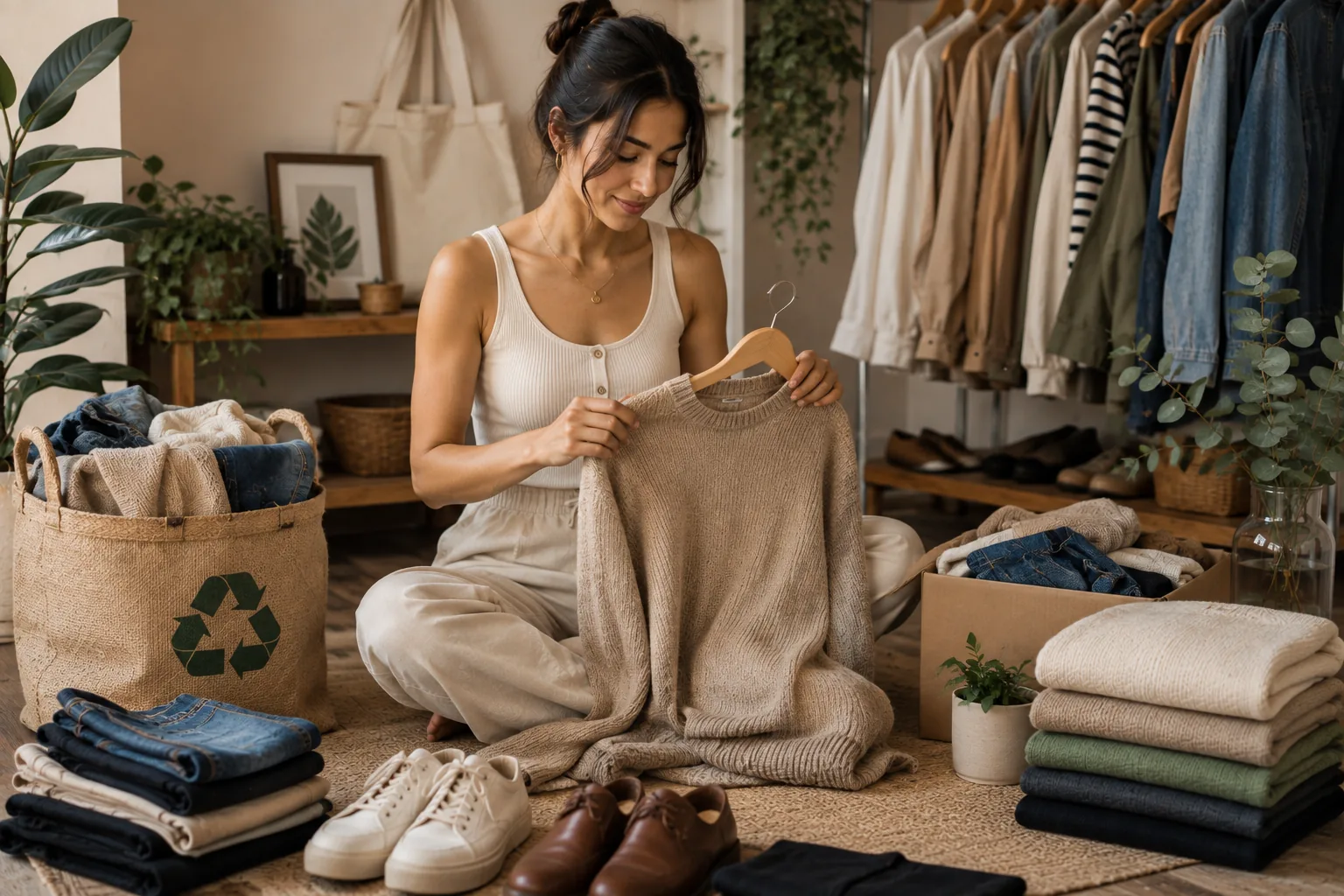
Start with the maths, not the guilt
Sustainability in clothing is mostly arithmetic: the environmental cost of a garment — fibre, dyeing, water, transport — is paid at production, so the more wears you divide it across, the smaller each wear's footprint. A jacket worn a hundred times beats an 'eco' one worn five.
That reframes everything. The goal is not a wardrobe of certified-organic everything; it is fewer garments, worn longer, cared for well. Apply the thirty-wears test before any purchase: can you honestly picture thirty outings for this piece? It is the same logic as cost per wear — the sustainable choice and the financially smart choice are usually the same garment.
Buy less, and buy like you mean to keep it
The highest-impact habit is the least glamorous: fewer purchases. Most wardrobes are not short of clothes; they are short of clothes that work together.
Before buying, run three gates. One: does it pass the thirty-wears test? Two: does it work with at least three things you already own — or is it a costume in search of a life? Three: is it built to last — dense seams, decent fabric weight, a hem worth repairing? Quality signals matter doubly here, because durability is sustainability. Trend pieces are not banned; they simply have to clear the same gates, which most cannot.
Secondhand first, fibres second
When you do need something, check the secondhand route first — thrift stores, resale apps, exports surplus markets, a cousin's cupboard. A pre-owned garment carries zero new production cost, and the hunt is genuinely enjoyable once you learn it; our thrift shopping guide covers the method.
Buying new, weigh fibres with nuance. Natural fibres — cotton, linen, wool, and Indian workhorses like khadi and handloom cotton — age well, repair well and biodegrade; linen and khadi are especially low-thirst crops of their categories. Polyester sheds microplastics with every wash, but a poly-blend that survives a decade can still out-green a flimsy cotton piece that dies in a year. Durability remains the tiebreaker.
Care is where sustainability compounds
Roughly a quarter of a garment's lifetime footprint accrues after purchase — in washing and drying — and that share is entirely yours to shrink.
- Wash less often, and cold: 30°C, full loads only
- Air dry everything; the tumble dryer is the wardrobe's biggest energy drain and its fastest ager
- Use a microfibre-catching wash bag for synthetics
- Repair early: buttons, hems, small holes — a local tailor makes most fixes for pocket change
- De-pill, steam and store properly so clothes stay wearable, not just owned
Every one of these habits also makes clothes last longer, which is the whole game twice over.
The exit matters too
A sustainable wardrobe has a responsible back door. First choice: pass garments to someone who will actually wear them — family, friends, domestic help networks, community swap groups, or resale apps for pieces with value. Donation drives work when clothes are clean and genuinely wearable; a torn, stained donation just exports your landfill decision.
Damaged textiles still have downstream lives — cleaning rags at home, or textile-recycling collection where your city offers it. And close the loop: notice what you are discarding and why. If everything leaving is cheap, trend-led and barely worn, the exit pile is telling you exactly what to stop buying — six months of exits teaches more about your taste than any quiz. The wardrobe that needs no purging is the one that was bought slowly.