 SKIBDRIP®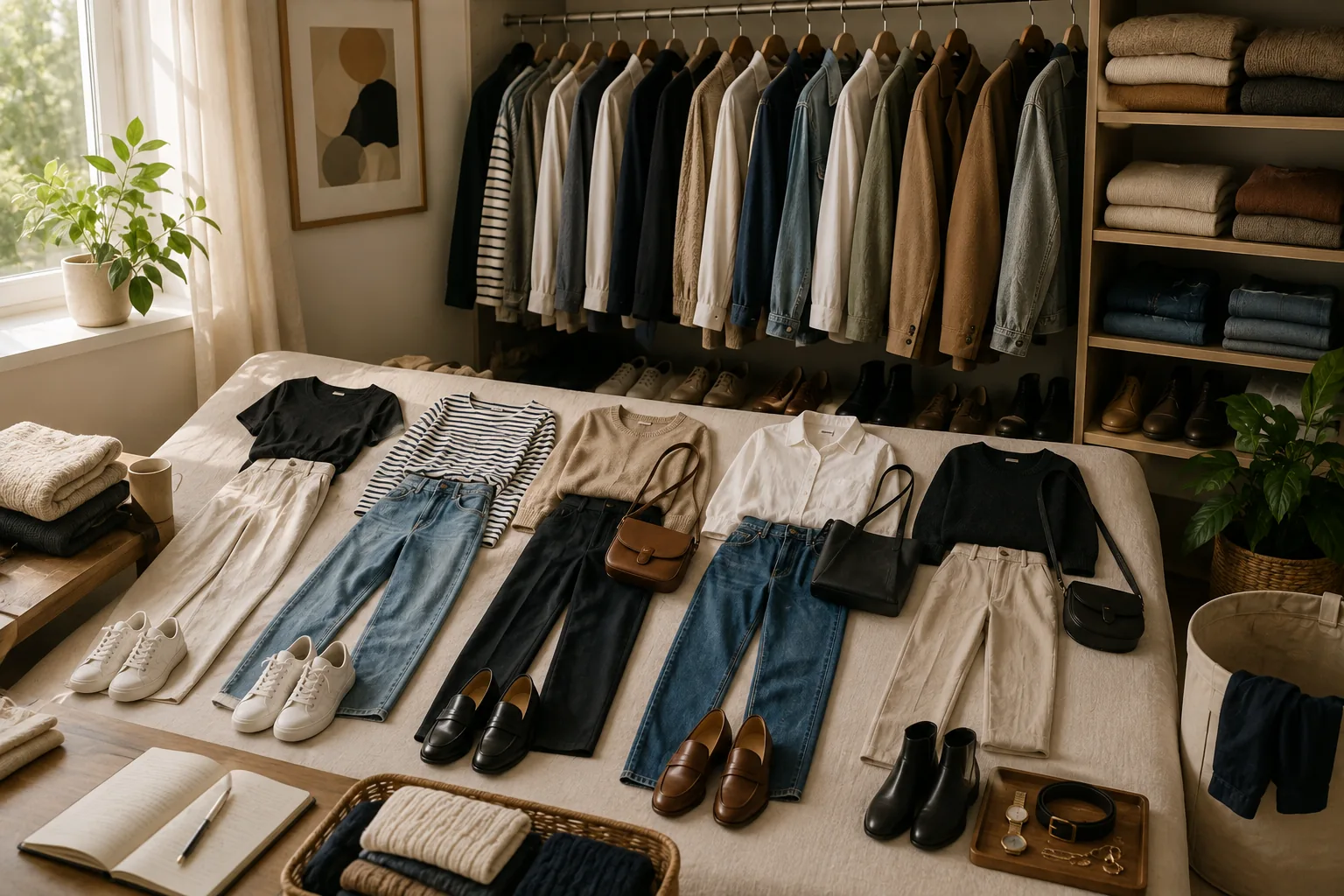
A gap is a missing outfit, not a missing item
The instinct says: find what is missing by scanning the wardrobe. But a wardrobe cannot show you its absences — only its contents. Gaps become visible only when you try to build outfits and something refuses to complete.
That reframe changes what you look for. Owning no beige trousers is not a gap; standing dressed for a client dinner with no shoe that bridges smart and relaxed is. The gap is the missing link between pieces you already like and situations you actually face.
This is also why shopping to fill a vague sense of lack fails — it adds items to the collection without adding completions to the week, and the feeling of nothing to wear survives the spending.
Run a two-week wear log
Evidence first. For a fortnight, spend twenty seconds a day recording what you actually wore — a note, a mirror photo, anything.
The log surfaces three patterns you cannot see from memory:
- Overworked pieces — the one blazer or kurta doing four jobs a week is a gap disguised as a favourite; it needs a colleague, not applause
- Improvised patches — every time you wore something slightly wrong for the moment (trainers to the smart dinner, a shawl over the wrong dress), you photographed a gap in action
- Untouched zones — categories the fortnight never reached, which are candidates for decluttering, not duplication
Fourteen days of honesty beats a year of shop-window intuition.
The three-outfits test
Now stress-test the wardrobe against your life. Write down your five most frequent situations — for example: office days, casual weekends, festive family functions, rain commutes, evenings out.
For each, physically assemble three complete outfits from what you own — down to shoes and the layer. Not in your head; on the bed.
Score each situation. Three easy outfits: covered. Two: adequate. One or zero, or an outfit that only completes by borrowing awkwardly from another situation: that is a confirmed gap, and the failed assembly tells you the exact missing piece. The test takes an hour and converts wardrobe anxiety into a shopping list of usually two to four specific items.
The usual suspects
Most wardrobes, audited this way, reveal the same culprits — because people buy interesting pieces and skip connective tissue:
- The third layer: the blazer, overshirt, cardigan or waistcoat that turns a top-and-bottom into an outfit
- The in-between shoe: smarter than trainers, easier than formal — a loafer, clean leather sneaker, or block heel
- Plain bottoms: statement tops crowd wardrobes that own two workable trousers
- The right-weight layer for your actual climate — a monsoon shell, a light jacket for over-air-conditioned offices
- Transitional occasionwear: something between office and wedding, so festive invitations stop causing panic
Check your failed assemblies against this list; the overlap is usually complete.
Fill gaps with connectors, not stars
A gap purchase has one job: complete the most outfits per rupee. That means buying deliberately boring — the plain, palette-matching, mid-weight piece that plugs into everything, chosen by cost-per-wear logic rather than shop-floor excitement.
Before buying, name five specific outfits the piece will complete from your existing wardrobe. If you cannot, it is not filling your gap — it is starting a new collection.
Then stop. A proper audit ends with a short, finite list, and once those two to four connectors arrive, the correct amount of shopping is none. Re-run the three-outfits test each season; a well-fed wardrobe eventually passes every situation, and the list goes quiet.