 SKIBDRIP®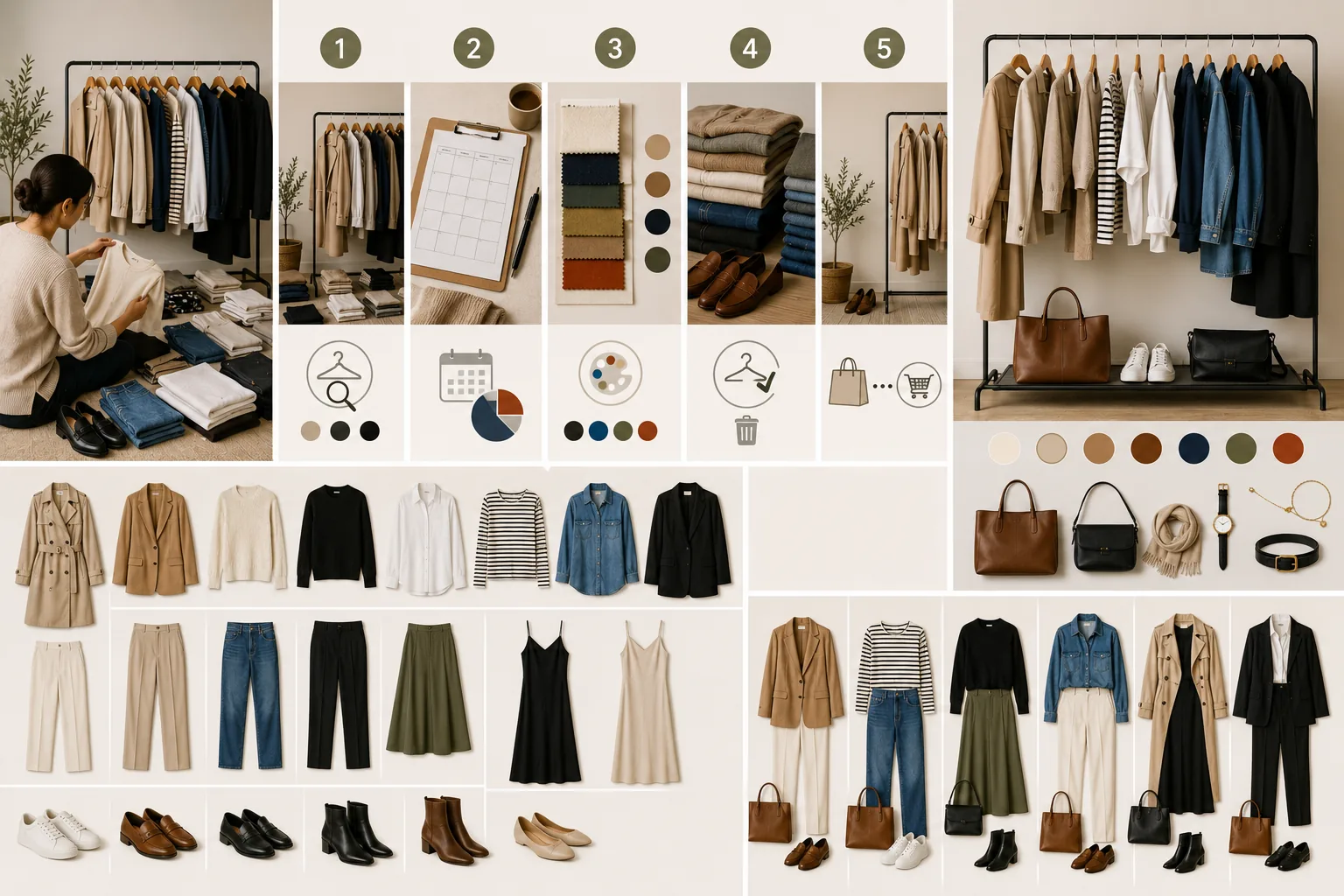
What a capsule actually is
A capsule wardrobe is not a punishment diet of thirty-three items. It is a closed system: a set of pieces chosen so that almost any top works with almost any bottom, layer and shoe.
The maths is the point. Ten interchangeable tops, five bottoms, three layers and three pairs of shoes give you 450 possible combinations from 21 pieces. A wardrobe of 120 random purchases often produces fewer real outfits than that, because nothing agrees with anything.
Most working capsules land between 25 and 40 pieces per season, excluding underwear, sleepwear, gym kit and occasionwear. The number matters less than the rule behind it: every piece earns its place by combining, not by being individually lovely.
The reward is practical too — faster mornings, easier packing, and money that stops leaking into orphan purchases.
Step one: audit what you already own
Do not start by shopping. Start by emptying the wardrobe onto the bed and sorting into three piles: wear constantly, wear sometimes, have not touched in a year.
The first pile is your capsule's DNA — it already tells you your true colours, fits and fabrics. Photograph those pieces. The third pile is leaving; be honest and declutter without regret before you build anything new.
Now write down what the constantly-worn pile has in common. Perhaps it is dark straight trousers, breathable cotton, nothing fussy at the wrist. That pattern — not a stranger's checklist — is the brief for every future purchase.
Step two: set ratios from your real week
Capsules fail when they are built for an imagined life. Count your actual week instead.
If you spend five days in an office, two days casual and one evening out a fortnight, your capsule should be roughly 60 per cent workable smart-casual, 30 per cent relaxed, 10 per cent occasion. A student or work-from-home week flips those numbers.
- 7 days mostly casual → two-thirds casual pieces
- 5 office days → tailored trousers, shirts and layers dominate
- Frequent weddings and festivals → protect a small ethnic-wear shelf
Dress the life you have. The life you want can borrow from it. And if the ratios look unglamorous, good — that is usually the sign they are true.
Steps three and four: palette, then pieces
Choose two base neutrals (say navy and ecru, or black and grey) and two accents you love wearing near your face. Every piece you keep or buy must sit inside that palette — this single constraint is what makes 30 pieces behave like 300 outfits.
A sample 30-piece season: 9 tops, 5 bottoms, 2 dresses or kurtas, 4 layers, 4 pairs of shoes, 3 occasion pieces, 3 wild cards you simply love. Adjust the split to your ratios from step two.
Buy nothing yet except true connectors — the plain bottom or third layer that unlocks five outfits. Everything else waits. Shoes and bags obey the same palette, which is exactly what lets four pairs cover a whole season.
Step five: run it for a season
A capsule is a hypothesis. Test it for twelve weeks before judging it.
Keep the off-capsule clothes boxed, not binned. Note every time you feel stuck — that friction is data, usually pointing at a genuine wardrobe gap rather than a need for novelty. Note, too, the pieces you never reach for; they exit at the season's end.
After twelve weeks, review: what earned its place, what sat idle, what one purchase would raise the whole system. Then rebuild lightly for the next season. One in, one out keeps the number honest — and mornings stay fast, because every combination already works.