 SKIBDRIP®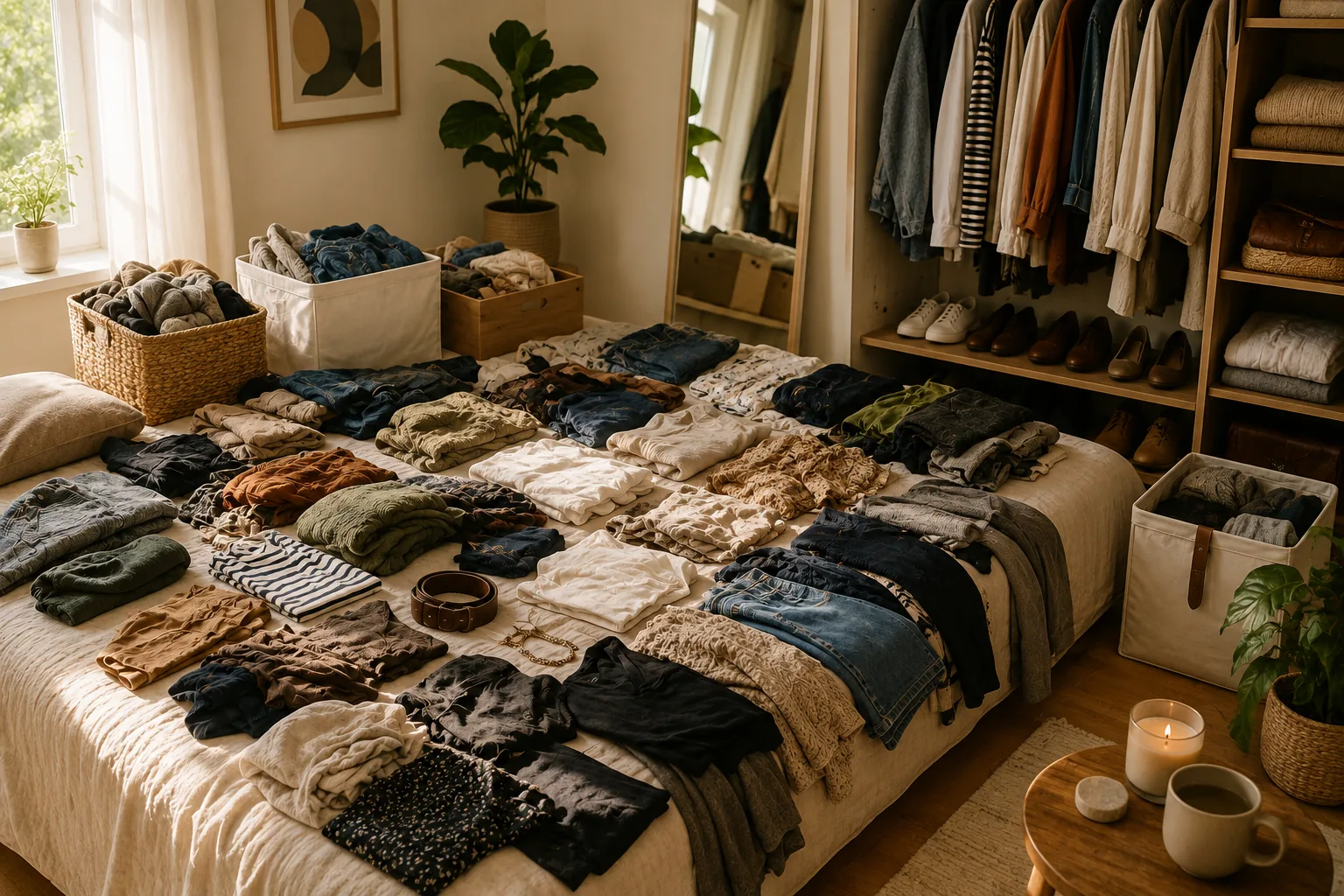
Empty it all — the pile is the point
Decluttering shelf by shelf fails because everything looks reasonable in its place. Pull every single garment onto the bed instead.
The pile does two jobs. It shows you the true volume — most people guess they own half of what they do — and it forces a decision on every piece, because nothing goes back by default. Re-hanging is now an active choice.
Work in category order: tops first, then bottoms, layers, ethnic and occasionwear, shoes, and accessories last. Categories keep momentum up and make duplicates impossible to ignore. Seven near-identical black tops in one heap argue their own case for release. Put on music; momentum matters more than mood here.
The four questions that decide
Hold each piece and answer honestly:
- Have I worn it in the last twelve months? Seasons excuse nothing here — a year covers them all.
- Does it fit the body I have today? Not three kilos from now. Today.
- Would I buy it again at full price this afternoon? This one cuts through nostalgia fastest.
- Does it make outfits with at least two things I own? Orphans cost mornings.
Four yeses: it stays. A no on fit or wear with a yes on love: repair or alter it within a month, or it moves on. Mostly nos: it leaves. Sentimental pieces — a wedding outfit, a parent's shawl — are memories, not wardrobe; store them separately with respect and stop counting them as clothes.
The maybe-box: your regret insurance
Regret fear is what keeps wardrobes clogged, so build the safety net into the system.
Anything you cannot decide on goes into a box or bag — sealed, dated, and stored out of sight. The rule: you may retrieve anything you genuinely miss, any time. But when ninety days pass, whatever remains inside leaves unopened.
Almost nobody opens the box. That is the lesson it teaches: the pull you felt was ownership, not use. Psychologists call the general effect the endowment effect — we overvalue things merely because they are ours — and the sealed box is the cheapest cure for it ever invented. Write the date on the outside so the deadline stays real.
Give the leave pile a good exit
Clothes leave better with a destination, and knowing the destination makes letting go easier.
- Excellent condition: resell, or pass directly to someone who admired it
- Good condition: donate to a verified charity or clothing drive, washed and folded
- Damaged but loved category: one honest repair attempt, deadline one month
- Beyond wearing: cut into cleaning cloths or send for textile recycling
Do the exit within a week, before the bags quietly re-enter circulation. Moving pieces on responsibly is also the first honest step towards a more sustainable wardrobe — the greenest garment is the one someone actually wears, even if that someone is no longer you.
Keep it decluttered
A declutter is an event; a tidy wardrobe is a policy. Three habits protect the result.
First, one in, one out — every new purchase names the piece it replaces, before you pay. Second, the backwards hanger test: turn every hanger the wrong way, flip each one as you wear it, and read the verdict in six months. Third, understand your own patterns, because the clutter came from somewhere — usually the same shopping mistakes on repeat.
Done this way, a full declutter takes one afternoon a year, and the ninety-day box makes regret a choice you never have to make blind.