 SKIBDRIP®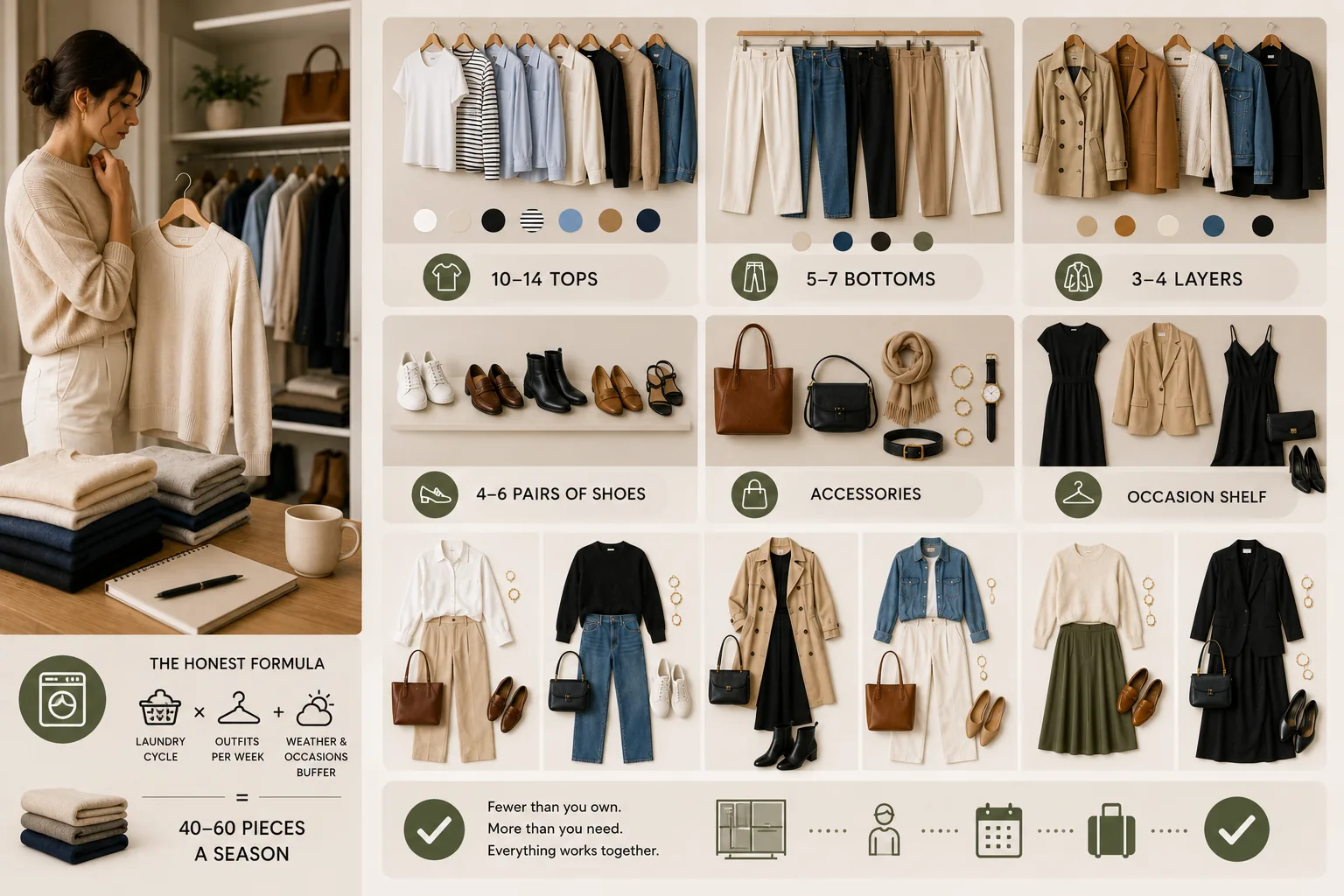
The formula, not the fantasy
There is no universal number, but there is a universal formula:
(days between washes × outfits per day) + buffer = what you need.
Wash weekly and wear one outfit a day, and you need seven to nine tops in rotation — enough to reach laundry day with two spares for spills and surprises. Wash twice a week and the number drops. Sweat through two shirts a day in May and it rises.
Bottoms, layers and shoes repeat between washes, so they need far fewer slots. The formula explains why tops always dominate a sane wardrobe count and why owning thirty pairs of jeans never once solved a morning.
Run the numbers once and your target lands within a few pieces rather than a few guesses.
A working baseline by category
For one season, a full working life fits comfortably in:
- Tops: 10-14, mixing plain tees, shirts and knits or kurtas
- Bottoms: 5-7 — two denim, two tailored or relaxed, one wild card
- Layers: 3-4 — one sharp (blazer or structured jacket), one soft, one weatherproof
- Dresses or kurta sets: 2-4 if you wear them
- Shoes: 4-6 pairs — daily, smart, sport, rain, occasion
- Occasionwear: 2-3 outfits, guarded and rarely touched
That is 40 to 60 pieces. Count yours against it before deciding you have nothing — most people discover surplus in one category and famine in another.
Adjust for climate and laundry reality
Numbers written for a four-season European life break in Chennai. Heat and humidity mean tops rotate faster — a shirt worn through an Indian summer day is done — so add three or four extra tops and subtract heavy layers you will use twice a year.
Monsoon adds its own line item: one proper rain layer and shoes that can be soaked without grief.
Laundry access matters just as much. A machine at home supports a lean wardrobe; a weekly wash cycle or a hostel bucket demands deeper stock. Whenever the count feels wrong, fix the laundry rhythm before buying — it is cheaper and works immediately. Two cities, two numbers: the formula travels even when wardrobe lists do not.
The 20 per cent you actually wear
Run the hanger test for a month: after wearing something, return it facing the opposite way. Most people find their own version of the old 80/20 rule staring back — a small core doing almost all the work while the rest hangs as decoration.
That core is the real answer to how many clothes you need. It is usually 20 to 30 pieces, and it is the part worth upgrading, repairing and repeating. The unworn majority is not variety; it is a decluttering job waiting for a free Sunday, and the reason the wardrobe feels full while mornings feel empty. Count that working core once, honestly, and the right total stops being a mystery.
When more is genuinely the right answer
Enough is not always minimal. You legitimately need more if you attend frequent weddings and festivals, work a job with a dress code plus a uniform, live between two climates, or share laundry cycles with a full household.
The test is not the count but the friction: if getting dressed is quick, laundry never corners you, and nothing hangs unworn for a year, your number is right — whether that is 35 pieces or 80.
What never fixes anything is buying past a wardrobe gap into duplication. The eleventh similar top adds a decision, not an outfit. Add slots only where the week actually strains.