 SKIBDRIP®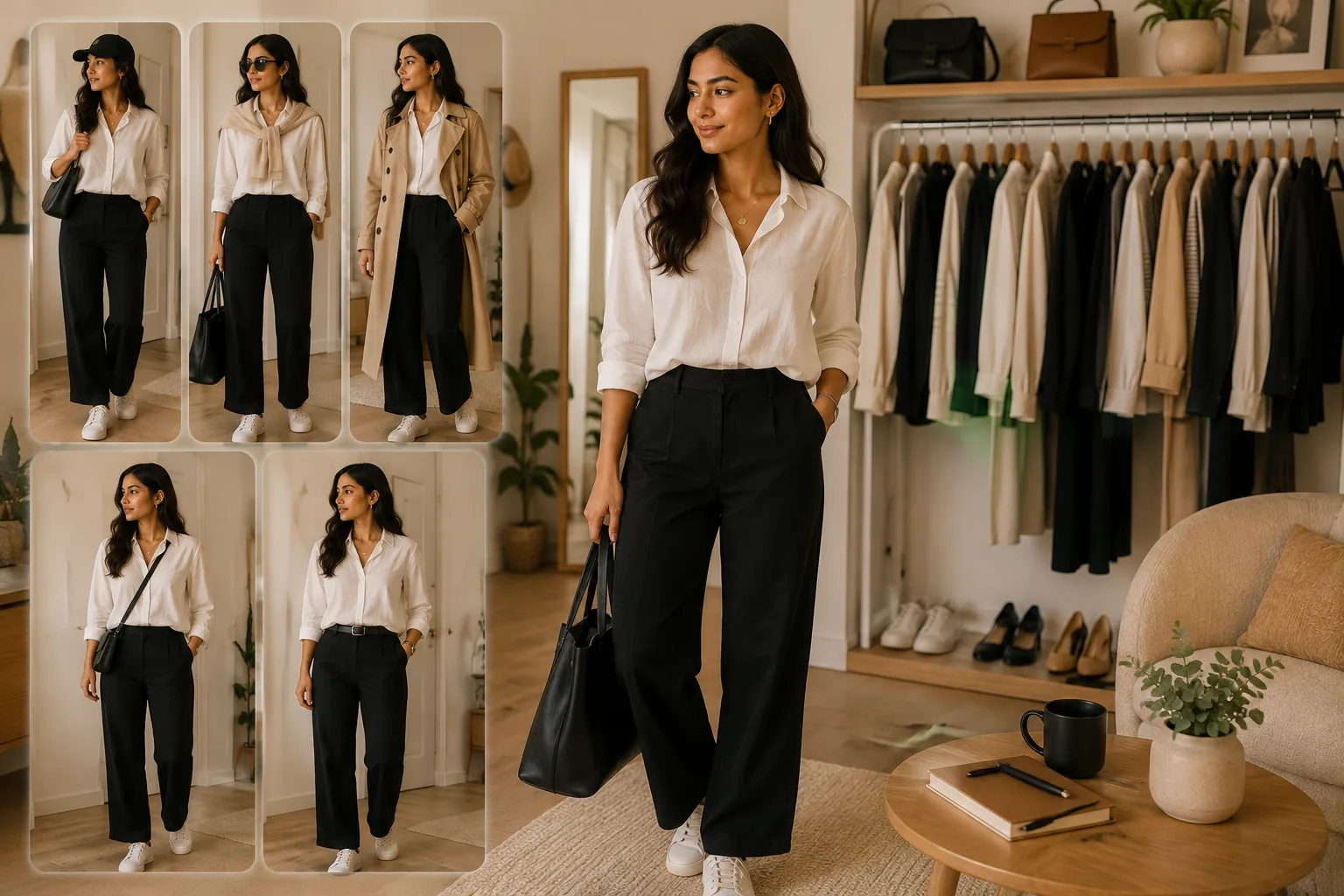
Nobody is keeping score
Start with the fear: people will notice. Mostly, they will not. Psychologists call it the spotlight effect — we drastically overestimate how much attention others pay to our appearance, because we are the only ones watching ourselves full-time. Colleagues register whether you look clean, awake and appropriate; the specific rotation of your shirts does not survive their commute.
And when repetition is noticed, it is usually read as intent. Wear the same good outfit twice a week and you are forgettable for a day; wear a considered formula daily and it becomes your signature.
Why uniforms work
A uniform converts your best outfit from a lucky day into a standard. The practical wins stack up:
- Decisions: mornings drop from a negotiation to a reach
- Money: you buy depth in one proven formula instead of breadth in experiments
- Identity: you become visually memorable — the navy-polo person, the black-kurta person
- Quality: repetition tells you fast which fabrics survive, so upgrades are precise
Designers, founders and architects lean on uniforms for a reason: when clothes are solved, attention goes elsewhere, and the outfit still says something deliberate about you.
Repeat the silhouette, not the garment
The workable version of daily repetition is multiples. Choose the formula, then own it in depth — five identical white oxfords, or three pairs of the same dark jean and a rotation of near-identical tees. Each garment is worn once between washes; the look repeats, the laundry does not.
This is the line between uniform and neglect. Same outfit, fresh garment: intentional. Same actual shirt three days running: a different message entirely. Depth also costs less than variety — five great shirts in one style beat twelve mediocre ones in six, and the maths of cost per wear favours the repeat.
Rotate the details
A uniform is a frame, not a cage. Keep the silhouette fixed and let small elements move: the overshirt colour, the watch strap, silver one day and gold another, a scarf in winter, sleeves rolled in summer. Seasonal swaps do the rest — the linen version for May, the flannel version for December.
These variations keep the eye interested while the decisions stay tiny. You are choosing an accent in seconds, not an outfit in twenty minutes — which was the entire point. Keep the rotating pieces in one drawer beside the uniform, so the accent is a reach, not a hunt.
When a uniform is the wrong answer
Uniform dressing has honest limits. If your work is client-facing across very different registers — a site visit Monday, a boardroom Wednesday, a wedding shoot Saturday — one formula cannot cover the spread; you need two or three. If getting dressed is genuinely your joy or your craft, a uniform removes the fun along with the friction. And a uniform chosen badly — wrong fabric for your climate, wrong fit for your body — repeats its mistake daily, which is worse than varying it.
The workable compromise for most people is the part-time uniform: a fixed weekday formula that automates the commute, and a free wardrobe for evenings and weekends. Consistency where it pays, play where it does not.
How to choose a uniform worth repeating
Audit before you commit. Look at photographs from the last year and find the outfit you reached for most and felt best in — that outfit has already won the election. Check it against your real week: it must handle your most common day, not your fanciest.
Then run a two-week test before buying multiples. Wear the formula daily; note where it fails — creases by noon, wrong for one recurring meeting, too warm — and adjust once. When it passes, buy depth. A uniform chosen this way is not settling; it is a signature look arrived at honestly.