 SKIBDRIP®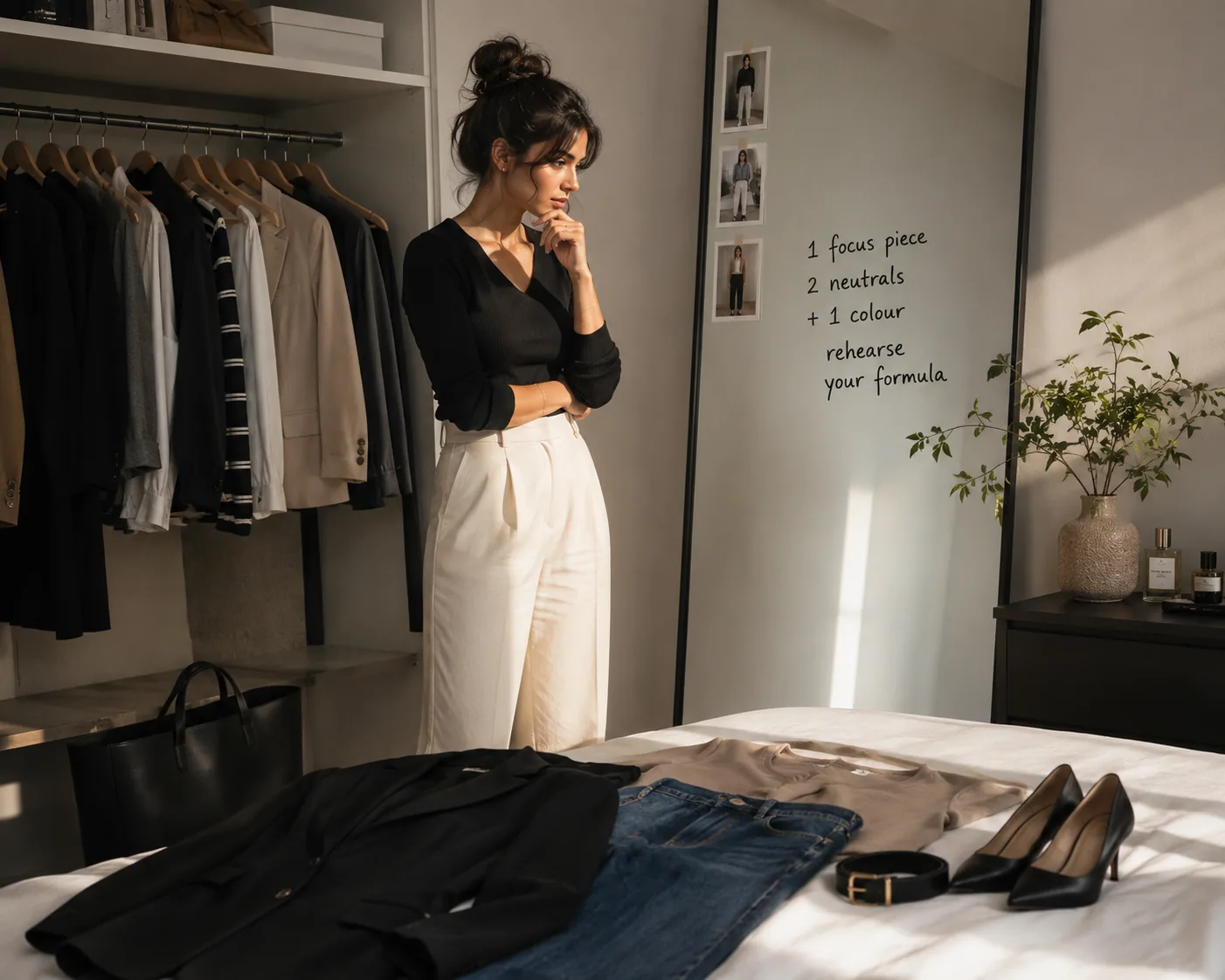
The minute is won before the morning
An outfit decided in under a minute is not a talent — it is a system meeting a prepared wardrobe. The people who dress fast are not deciding faster; they are deciding less, because most of the choice was made earlier: a wardrobe with fewer, better options, a handful of combinations already proven, and a clear reading of the day ahead.
So before the speed tricks, accept the honest part: if every morning is a fresh negotiation with forty garments, no method survives. The minute is won the night before — weather checked, first commitment known — and the month before, when you edited the shelf.
Fix one piece, then obey it
Start with the non-negotiable. Rain fixes the shoes. A client meeting fixes the blazer. A 38-degree afternoon fixes the fabric. Name that one piece and put it on the bed.
Now every other slot has one job: agree with it. A structured navy blazer asks for a plain shirt and dark trousers, not a debate. Sturdy rain boots ask for slim, croppable trousers. This is how a seven-decision problem collapses into one decision obeyed six times — and an outfit built this way reads intentional, because it is. The anchor even settles the accessories — belt, watch, bag — before you have consciously thought about them.
Two neutrals plus one colour
Colour is where mornings die. Kill the debate with a fixed ratio: two neutrals and one colour, all in the same temperature. Warm set: cream, camel, olive, rust. Cool set: white, grey, navy, ice blue. Denim counts as neutral in both.
Pick the colour first — usually the piece you fixed in step one — then fill the neutral slots without ceremony. If you already know which colours suit your skin tone, keep the shade nearest your face inside that palette and stop optimising. Good enough, chosen fast, beats perfect chosen slowly.
Keep three rehearsed formulas
A formula is an outfit you have already worn, already liked, and can reassemble blind. Keep three, matched to your actual life:
- Effort day: dark straight jeans, white or striped shirt, loafers, leather watch
- Ordinary day: chinos, plain heavyweight tee, overshirt, clean white trainers
- Soft day: knit polo or kurta, relaxed trousers, sandals or slip-ons
Write them inside the wardrobe door if you must. When the minute is running out, you do not improvise — you pull a formula and change one element at most. Repetition is not a failure; repeating what works is precisely how consistently well-dressed people operate.
The sixty-second drill
Here is the minute, on the clock. Seconds one to ten: read the day — weather app, first commitment, ideally done the night before. Ten to twenty: name the anchor and pull it. Twenty to forty: fill the remaining slots in the anchor's colour temperature — bottom, top, third layer if the day needs one. Forty to fifty: shoes and belt, agreeing with each other. Fifty to sixty: one finishing touch — watch, earring, collar check — and a single glance in the mirror.
The glance is a yes-or-no gate, not a review. Yes: walk. No: swap exactly one piece and walk anyway. The drill feels mechanical for a week; after that it is simply how mornings go.
Make the wardrobe fast
If the method still stalls, the wardrobe is the bottleneck. Three fixes, one afternoon:
- Create a fast lane: one rail section holding only current-season, currently-fitting, currently-loved pieces
- Retire the maybes: anything that triggers a try-and-check loop leaves the prime shelf
- Group by outfit, not by garment type, so combinations pull out together
Then protect the minute itself. Decide, dress, one glance in the mirror, leave. If you are still swapping pieces after sixty seconds, you are no longer solving clothes — you are negotiating with your mood, and the mood always asks for extra time it does not need.