 SKIBDRIP®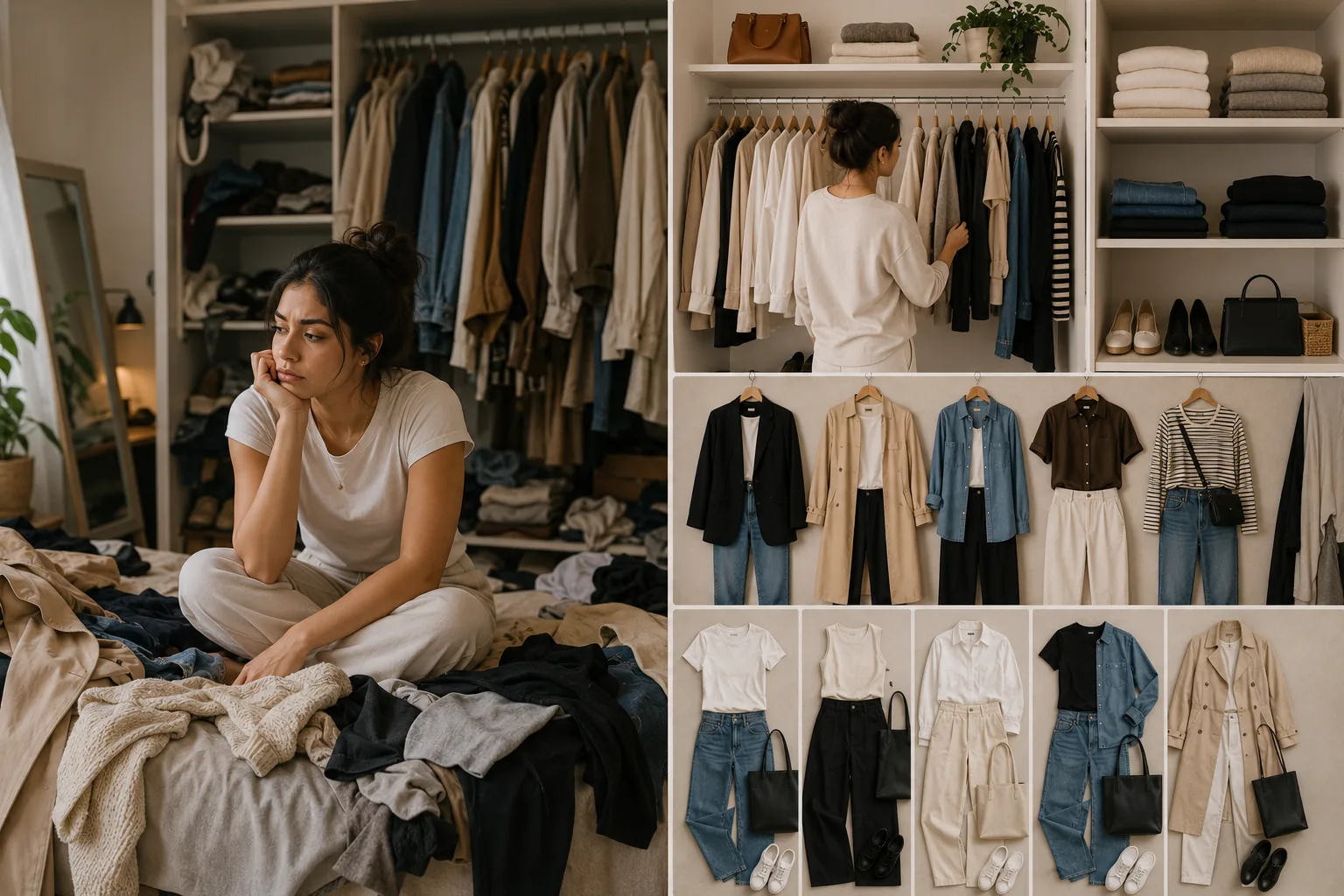
It is a matching problem, not a volume problem
Count honestly and the shelf is full. So the feeling is not scarcity — it is that the pieces do not talk to each other. A printed skirt with no top that works. Three party tops and no ordinary Tuesday bottoms. Clothes bought as individual crushes, each lovely alone, none playing in a team.
Style runs on combinations, and combinations need shared neutrals, compatible formality and colours in the same temperature. Ten coherent pieces can make thirty outfits; forty random ones can make six. You do not need more clothes. You need clothes that multiply.
You are dressing a self who is not here
Half of most wardrobes belongs to someone else: the size you were two years ago, the office job you left, the occasion wardrobe for parties that come twice a year, the aspirational purchase for a version of you that never quite arrived.
Every morning those clothes vote, and every morning you veto them — that is the fatigue. Be ruthless about the present tense: does it fit the body and the life you have this month? Store the sentimental and the someday elsewhere. The wardrobe should hold only live options.
Your favourites are buried
There is a reason you wear twenty per cent of your clothes: they are the ones you can see. Deep shelves, crowded rails and the laundry cycle conspire to hide the good stuff behind the noise.
Organising the wardrobe so current-season, currently-loved pieces sit front and centre — one visible rail, folded knits at eye level — changes what you reach for within a week. Out of sight is genuinely out of rotation; visibility is the cheapest styling trick there is. If storage is tight, one hook holding tomorrow's outfit does the same job — the decision greets you already made.
The one-hour fix
Block one hour. You need a mirror, a rail and honesty.
- First 20 minutes: remove everything that does not fit today, is damaged, or has not been worn in a year. Do not debate; just separate.
- Next 30 minutes: build outfits from what remains — complete ones, with shoes. Photograph each. Aim for ten.
- Last 10 minutes: list the gaps that blocked outfits — the missing white shirt, the one right-blue jean.
You end with a working menu of proven outfits and a precise list of wardrobe gaps, which is the opposite of wandering a mall hoping.
The protocol for tomorrow morning
The full fix takes a weekend hour; tomorrow still arrives at seven. Bridge it with a holding pattern. Tonight, set out your single most-proven outfit — the one that always works — and wear it without debate. Keep the photographs from your outfit-building session in one album on your phone; when the blankness hits, scroll the menu instead of the shelf and pick by picture.
And notice the pattern of the panic: it spikes before high-stakes days. That is a feelings problem wearing a clothes costume — the wardrobe did not shrink overnight. A default outfit for exactly those mornings, decided once in calm, is worth more than five new purchases decided in a fitting-room hurry.
Buy outfits, not items
The rut returns if the shopping habit that built it continues. New rule at the till: name three complete outfits this piece finishes, using clothes you already own. No three outfits, no purchase — however lovely it is alone.
That single question redirects money from more orphans to more combinations, which is what something-to-wear actually means. The feeling you are chasing was never a fuller wardrobe. It was a wardrobe where any hand you reach in comes out holding an outfit. Run the same three-outfits test on gifts and sale bargains, too — free and discounted orphans crowd a wardrobe exactly as fast as full-price ones.