 SKIBDRIP®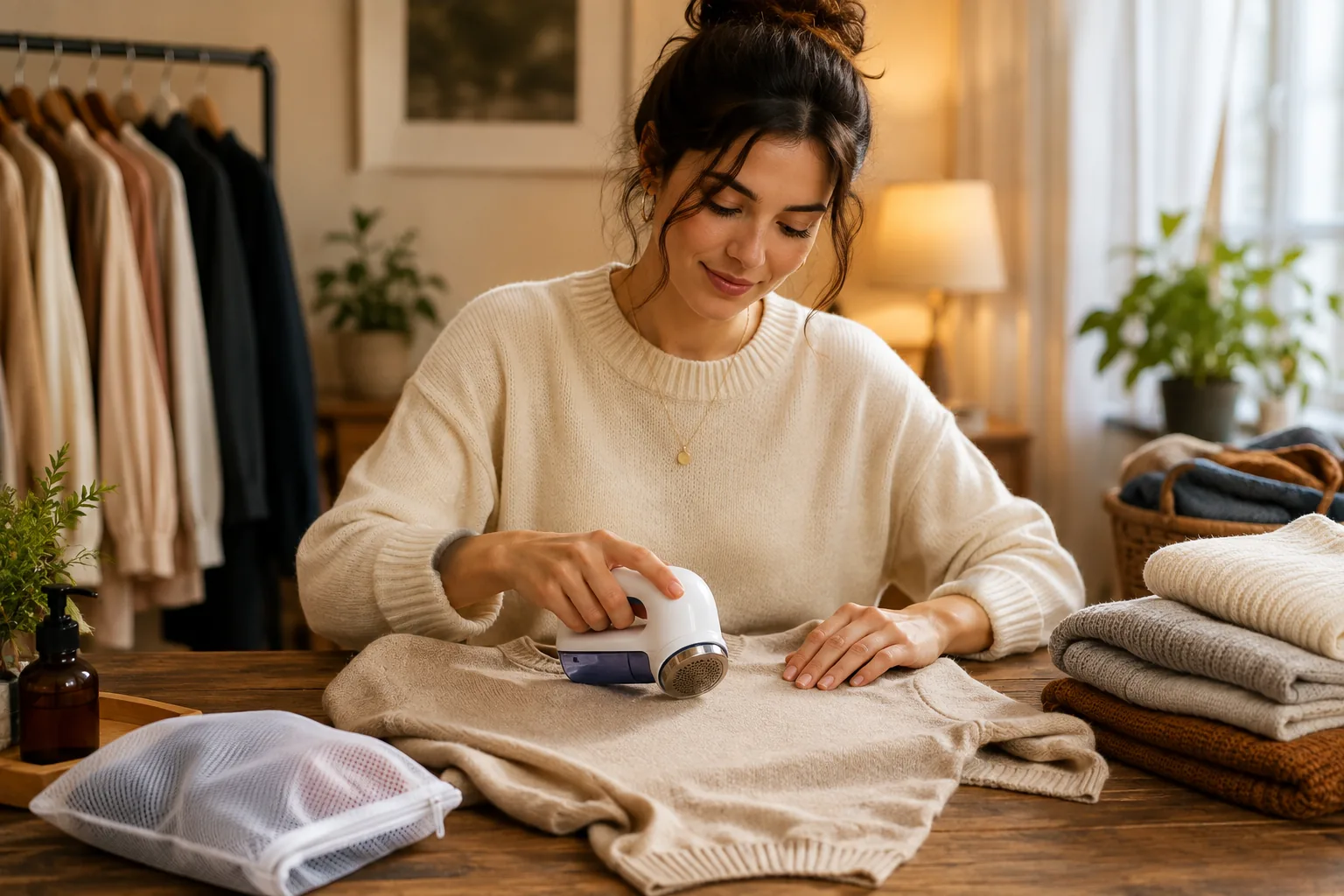
What pilling actually is
Pills are broken and loose fibre ends that friction has teased out of the yarn and rubbed into tiny knots. They are a surface event, not deep damage — which is why removal genuinely restores the garment rather than hiding a flaw.
Where they appear tells you the cause: under the arms and at the sides means wear friction; across the seat and thighs means chairs; one shoulder means your bag strap; everywhere at once means the washing machine. Any fabric can pill, but loosely spun yarns, short-staple fibres and soft brushed surfaces pill fastest — softness and pilling are, inconveniently, close cousins.
Removal, tool by tool
- Electric fabric shaver: the best answer for almost everyone — cheap, fast, hard to misuse. Lay the garment on a flat surface, pull the fabric gently taut, and move in slow light circles without pressing down
- Disposable razor: works well on flat, sturdy knits and jersey. Stretch the fabric over your knee or a flat surface, hold the razor at a shallow angle, use short feather-light strokes, and clear the blade often. Skip it on loose weaves and cashmere — one snag is a hole
- Sweater comb or pumice-style stone: gentler, slower, good for fine wool and cashmere
- Scissors: for a handful of large pills only
Never pull pills off by hand — pulling drags more fibre out of the yarn and seeds the next generation.
Why some clothes pill worse than others
Fibre and construction decide most of it before you ever wear the garment. Long-staple cotton, worsted wool and tightly twisted yarns shed pills or never form them; short-staple cotton, brushed finishes and loosely spun soft knits pill within weeks.
Blends have a hidden mechanic: on pure wool or cashmere, pills break off easily and the fabric self-clears, but add polyester or nylon and the strong synthetic fibre anchors each pill permanently to the surface. That is why a poly-cotton tee looks worse at six months than a pure lambswool jumper at three years. Checking yarn twist and fibre content at purchase — part of spotting quality clothes — is the cheapest pilling fix there is.
Prevention in the wash
The machine is a friction chamber, so calm it down.
- Turn garments inside out — pills then form on the invisible face
- Use the gentle or wool cycle: slower drum, shorter agitation
- Zip zips and hook hooks; metal teeth grate knits all cycle
- Wash knits in mesh laundry bags, and separate them from denim, towels and anything with velcro
- Wash cold with liquid detergent — powder's abrasives and hot water both roughen fibre ends
- Skip the tumble dryer, which is agitation with heat added
Hand-washing precious knits in cool water with wool detergent removes machine friction entirely — ten minutes a season for the pieces that deserve it.
Prevention in the wearing
Everyday friction grows pills faster than any wash cycle. The usual culprits are repeat offenders in fixed spots: the crossbody bag sanding one shoulder of every jumper, the seatbelt polishing a diagonal stripe, the desk edge working on both forearms, the rough jacket lining chewing whatever is under it.
Rotate bags between shoulders, or switch to a handheld on knitwear days. Give knits a rest day between wears — recovered fibres resist abrasion better than exhausted ones. And accept a little triage: keep the softest, loftiest knits for low-friction days, and let sturdier weaves take the commute. A fabric shaver pass once a season keeps the whole knitwear shelf reading like new — five minutes that adds years to a garment's life.