 SKIBDRIP®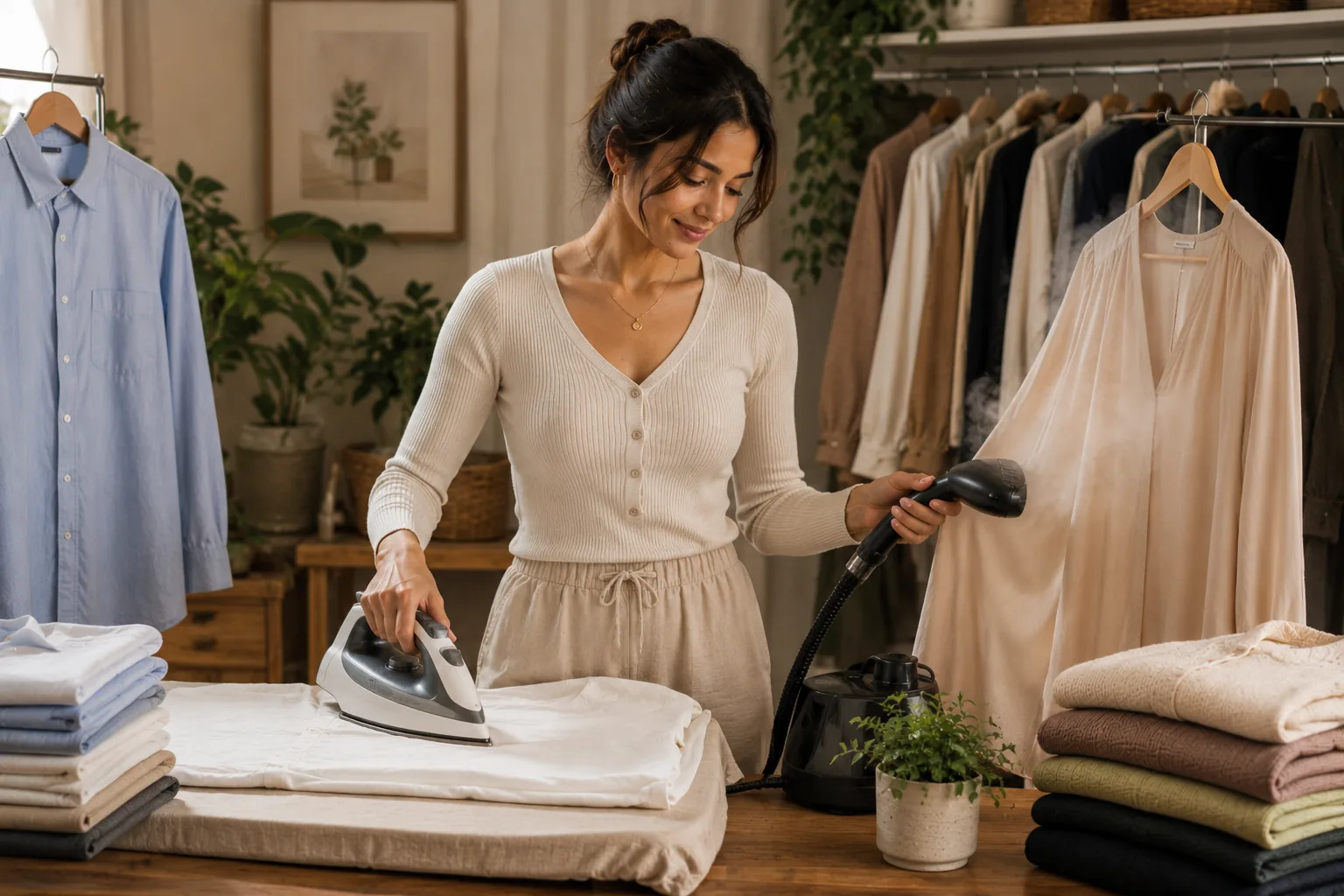
Two tools, two different physics
An iron works by pressure plus heat: the hot soleplate flattens fibres against a board and sets them in a new position. That is why only an iron produces a knife-edge trouser crease, a flat placket or a truly crisp collar.
A steamer works by relaxation: hot vapour swells and loosens fibres so wrinkles fall out under the garment's own weight, with nothing touching the fabric. That is why steam cannot press a crease — and also why it cannot scorch, shine or crush what it touches. Once you frame it as press versus relax, every fabric decision below becomes obvious.
When the iron wins
Reach for the iron when the goal is crispness or a set edge:
- Cotton shirts, poplin and oxford — best ironed slightly damp or with a burst of steam
- Linen — the highest setting, generous steam; it creases again by lunch and that is linen's charm
- Trouser creases, pleated skirts, pocket squares, saree pleats before pinning
- Cotton kurtas and chikankari — inside out, so the embroidery is never crushed face-down
Technique matters: keep the iron moving, iron collars and cuffs from the points inward, and do trousers seam-to-seam. A spray bottle of plain water is the cheapest upgrade — damp cotton presses twice as well as dry.
When the steamer wins
Steam whenever contact or pressure is the risk:
- Silk, satin, chiffon, georgette — an iron shines and water-spots them; steam does neither
- Wool blazers, suits and coats — steam raises the nap and relaxes creases without flattening the tailoring's shape
- Embellished, sequinned and zari work — nothing hot ever touches the surface
- Velvet — never iron it; steam only, from behind
- Knits and jerseys, which an iron stretches
- Quick de-creasing of anything hanging, in ninety seconds, no board
Steam also lifts light odours, which makes a steamer the between-wash refresher for clothes you wash less often. Hang the garment, pull it gently taut, sweep downward, let it dry before wearing.
Temperatures and the mistakes that scorch
Iron settings follow fibre, coolest to hottest: synthetics like polyester and nylon at low — around 110 to 130°C, they melt and shine fast; silk at low with a press cloth if you must iron it; wool at medium, always through a damp press cloth, never bare metal; cotton high; linen highest with steam.
Mixed fibres iron at the setting of the most delicate component. Never iron over prints, logos or embroidery face-on — turn the garment inside out. Never iron a stain; heat cures it permanently. Descale a steam iron monthly with diluted white vinegar, or it will eventually spit brown water across a white shirt — always on the morning that matters.
Which one to buy, and the no-tool tricks
If you wear crisp cotton shirts or pressed trousers weekly, buy a decent steam iron — a mid-range one with reliable steam output beats an expensive dry one. If your wardrobe leans knits, silk, tailoring and ethnic wear, a handheld steamer serves you better and takes ninety seconds per garment. Wear both kinds of clothing? The iron comes first; a good steam iron held just off the fabric can imitate a steamer, while a steamer can never imitate a press.
No tool at hand: hang the garment in the bathroom during a hot shower for ten minutes, or lightly mist creases with water and smooth flat with your palms. Travel makes its own case — keeping clothes wrinkle-free en route starts with how you pack.