 SKIBDRIP®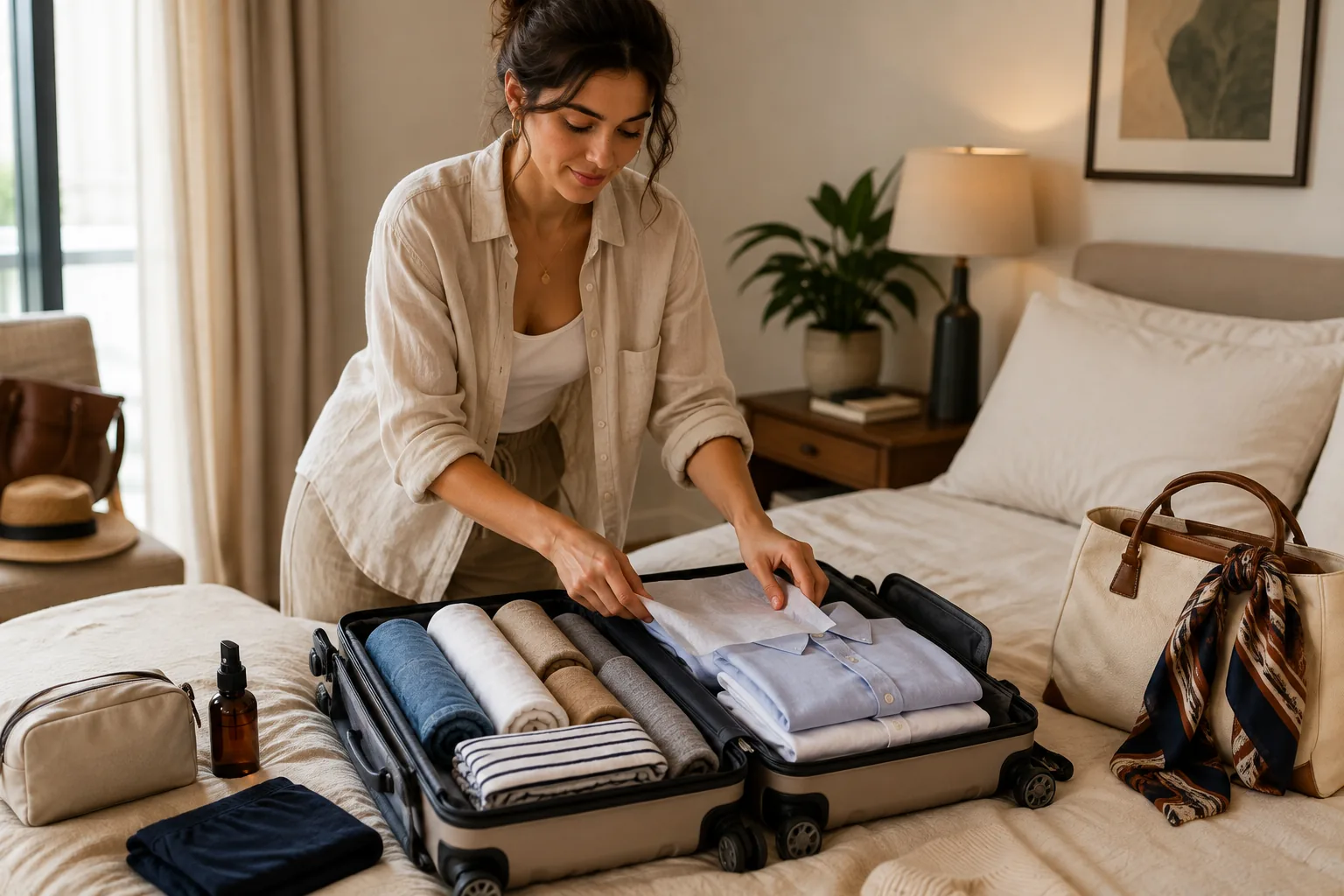
Why clothes wrinkle in a suitcase
Wrinkles need three ingredients: a sharp fold, pressure, and time. A suitcase supplies all three — fabric bent at a hard angle, the weight of everything above it, and hours in transit. Remove any one ingredient and the crease never sets.
That is the entire theory behind every packing trick. Rolling removes sharp angles. Layering plastic or tissue lets fabric shift instead of gripping itself under pressure. Bundle-wrapping curves every garment around a soft core so no true fold exists. And unpacking fast removes time. Heat and humidity accelerate setting — relevant in an Indian summer hold — so what you do in the first hour after landing matters as much as the packing.
Sort your clothes into three packing classes
- Rollers: tees, knits, jeans, shorts, sleepwear, athleisure, anything jersey or sturdy cotton. Rolling suits them — tight rolls pack densest and leave only soft curves
- Folders: crisp cotton and linen shirts, tailored trousers, pleated skirts, sarees. These crease at any sharp bend, so they get careful flat folds along existing seams and pleats, as few folds as possible
- Drapers: blazers, structured jackets, delicate dresses. They want either a garment sleeve, the inside-out shoulder trick, or the top layer of a bundle
Fabric overrides garment type: a jersey blazer can roll; a linen tee cannot. Wool suiting forgives and rebounds; pure linen records everything — pack it accepting its character.
The techniques, step by step
Rolling: lay flat, smooth every wrinkle out first — rolling a wrinkle in laminates it — fold sleeves in, roll tight from the bottom.
Folding shirts: button them, face down, sleeves folded back along the shoulder line, then one fold at the hip. Slide dry-cleaning plastic or tissue between each folded item; the slippery layer is the single most effective trick in this craft, because fabric that can slide cannot crease.
Blazers: turn one shoulder inside out, nest the other into it, fold once over your arm, lay on top of everything.
Bundle-wrapping, for the committed: build a soft core from a pouch of underwear and socks, then wrap each garment around it in turn, largest and most crease-prone outermost. No garment folds fully on itself, so nothing creases.
Load the case like it matters
Order inside the case: heavy rollers and shoes along the spine near the wheels, folded class laid flat above them, drapers on the very top. Shoes go in bags, stuffed with socks and belts, soles to the case walls.
The target density is snug — clothes that cannot shift cannot rub new creases in transit, but over-compression brings back pressure. Packing cubes help rollers hold their shape; compression cubes are for volume, not for anything crease-prone. A hanging garment bag remains the honest answer for one critical suit or lehenga. This part rewards planning the whole case as a system — the fewer clothes you bring, the less pressure on each; a capsule approach to packing is wrinkle prevention by arithmetic.
The first hour after arrival
Creases that just formed release easily; creases that mature overnight need equipment. So unpack within the hour: hang shirts, trousers and tailoring immediately, clip trousers by the hems so their own weight pulls them straight.
For whatever needs more, run the hotel shower hot with the bathroom door closed and hang the affected pieces inside for ten to fifteen minutes — steam relaxes most fabrics visibly, the same physics as a steamer, then let them dry before wearing. A travel steamer earns its space on trips with formal events. Hotel irons work with caution: test the soleplate on a hem first, and keep it well away from silk and anything embellished. Wrinkle-resistant fabric choices — merino, wool blends, crepe, denim, knits — make the whole hour largely unnecessary.