 SKIBDRIP®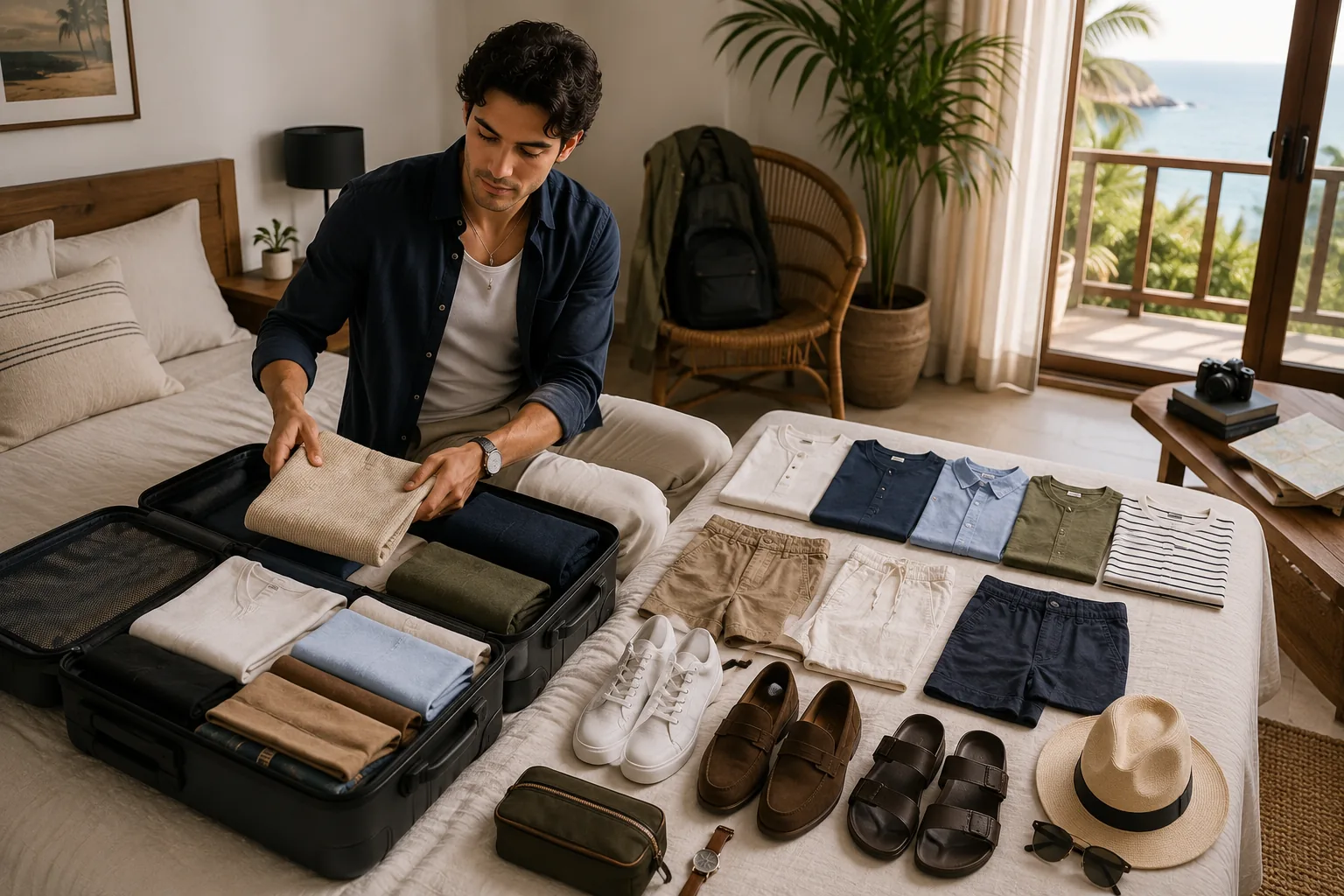
Pack a system, not outfits
Packing outfit-by-outfit is why suitcases overflow: seven complete looks means seven of everything and nothing interchangeable.
Pack a system instead — a miniature capsule wardrobe where every top works with every bottom. The maths is dramatic: five tops and three bottoms that all cross-match give you fifteen outfits from eight garments. The price of entry is a disciplined palette: two neutrals — navy and white, black and beige — plus one or two accent colours. Inside one palette, everything agrees; outside it, you are packing separate costumes.
The counting formula for a week
For a seven-day trip in a warm place:
- Five to six tops — tees, shirts, one slightly dressy option
- Three bottoms — one jean or trouser, one short or skirt, one versatile linen or chino
- One dress or one kurta set if you wear them — dual duty: day sightseeing, dinner
- One light layer — overshirt, cardigan or packable jacket, worn on the flight
- Three shoes maximum: walking sneakers, sandals or loafers, one dressy-enough pair — and one of these is on your feet in transit
- Sleepwear, a swimsuit, underwear for the week
Cold destinations flip the ratio: fewer, warmer layers that repeat, worn in different combinations. Either way, the layer you wear while travelling is the bulkiest one you own.
Audit the itinerary, not the fantasy
Most overpacking is packing for an imaginary trip — the gala you might attend, the hike you will not take. Before folding anything, list the real itinerary: how many beach days, city-walking days, temple or mosque visits needing covered shoulders and knees, one nice dinner, any pool.
Pack for those and nothing else, with one wildcard garment allowed. Check the destination's weather for your actual dates, not the season's reputation — hill stations run cold at night in May; coastal cities soak everything in humidity. And check the culture: a scarf or dupatta earns its space in most of the world, converting any outfit to modest in five seconds.
Fabrics that travel well, and the rolling question
Choose fabrics that fight wrinkles and dry overnight: merino, cotton-lycra blends, crepe, denim, linen-blends (pure linen creases as a lifestyle choice — accept it or leave it). Anything you can wash in a sink and hang dry extends the capsule by days.
Rolling beats folding for tees, knits and casual cotton — tighter packing, fewer hard creases. Fold structured pieces — blazers, crisp shirts — flat or in a garment sleeve, and layer dry-cleaning plastic between them if you have it. Shoes go in bags along the case's spine, stuffed with socks and chargers. The full science of arriving crease-free is its own craft — wrinkle-free packing covers it fold by fold.
The final edit before zipping
Lay everything on the bed and run three cuts. One: does every top work with every bottom? Anything that matches only one partner goes back in the cupboard. Two: shoes — if a pair serves only one outfit, both are wrong. Three: the honesty pass — remove one top and one 'just in case' piece; you will not miss them, and the space returns as souvenir capacity.
Wear the bulkiest outfit and heaviest shoes to travel. Keep one complete change in your hand luggage if a bag is checked. Then zip the case and trust the system — the traveller who packed less and matched everything gets dressed in two minutes every morning of the holiday.