 SKIBDRIP®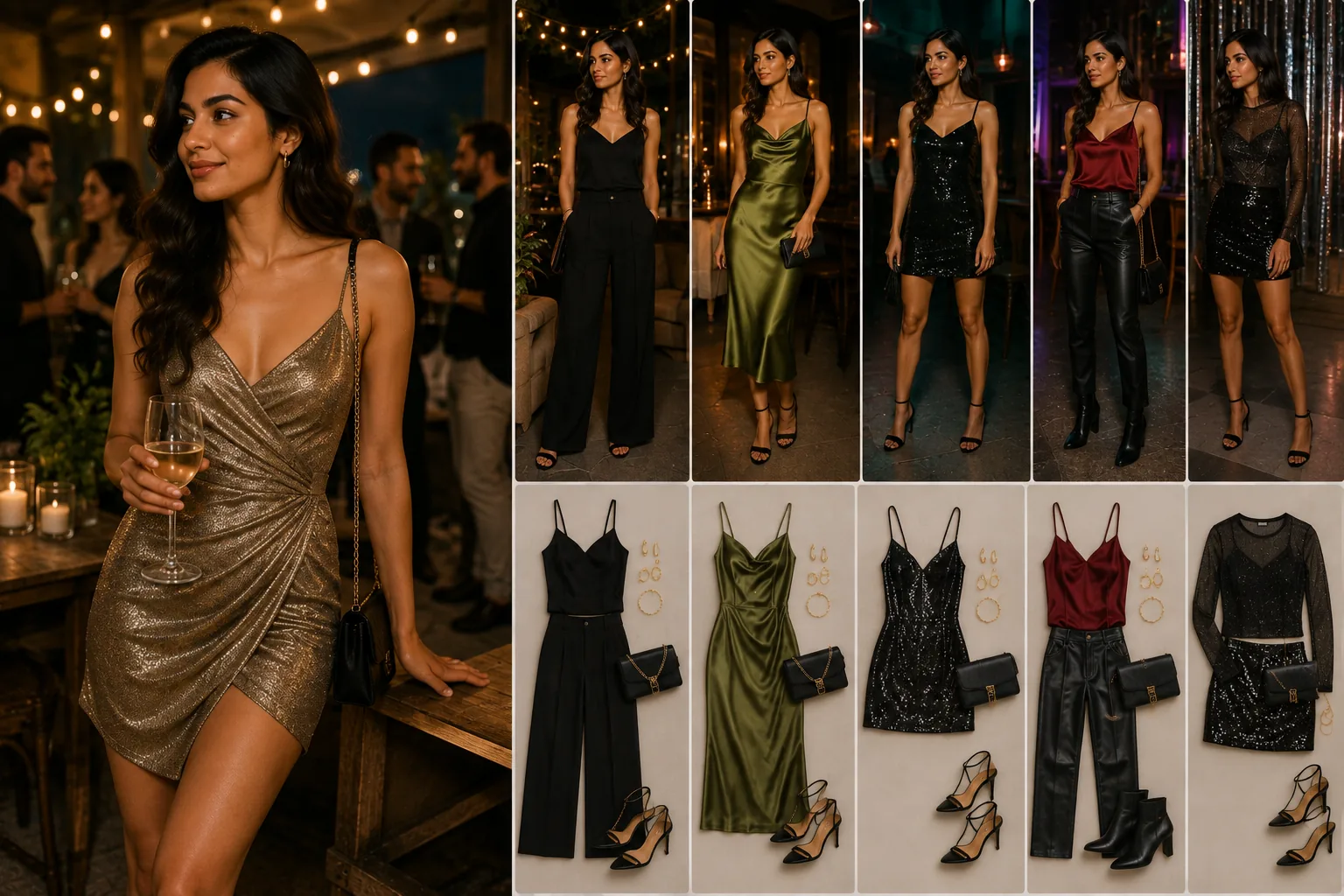
Read the party before the wardrobe
Party is not one dress code; it is five. A house party wants elevated casual. A bar birthday wants smart casual with edge. A club night wants darker, sleeker, shinier. A festive celebration — Diwali card party, New Year at a venue — wants richness. A daytime garden do wants colour and ease.
Three questions decode any invite: where is it, what time does it start, and how much effort will the host make? Match the host's effort level — the person throwing the party sets the register, and arriving two notches above or below them is the only real way to get it wrong. A message to the host — 'how dressed up are people getting?' — settles it in one line.
The one-signal principle
What separates party clothes from good everyday clothes is a single celebratory signal — one element that says tonight is not a Tuesday.
- A metallic: gold sandals, a silver top under a jacket, a lamé skirt
- A rich texture: velvet, satin, silk, leather
- A bold colour worn bigger than usual — the red shirt, the emerald dress
- Shine at the ears, neck or wrist that catches low light
- A statement shoe doing all the talking under simple clothes
One signal reads intentional; three read fancy dress. Let the venue's light choose it — shine rewards dim rooms, colour rewards daylight. Build the rest of the outfit from pieces you already trust, then place the signal where you want eyes to land.
Formulas by party type
House party: dark jeans, a great tee or silk cami, one signal — good boots, an earring — and layers you can shed as the room heats.
Bar or dinner birthday: smart casual pushed one notch — trousers or a slip skirt, a fitted knit or open-collar shirt, loafers or heels.
Club night: darker palette, sleeker fit, shoes you can stand in till 2 am; leave the precious jacket at home, cloakrooms lose things.
Festive celebration: this is where richness belongs — brocade, zari, a sequinned top, a silk kurta. For Indian festive nights, Diwali outfit logic applies: traditional fabrics, celebratory colour, comfort for a long evening.
The four-hour comfort test
Parties are endurance events: standing, dancing, squeezing past people, sitting on floor cushions at house parties. Every piece must survive four hours.
Shoes are the decision that matters most — broken in, stable, and honest about how long you will actually stand. Fabrics should breathe; crowded rooms run five degrees hotter than empty ones, so natural fibres and open weaves beat clingy synthetics. Skip anything you must adjust — the strapless top you keep hitching, the waistband that punishes dinner. Test your dance moves at home; seams announce their objections early. A party outfit you forget you are wearing is the one that photographs best, because you are visibly having a good time in it.
Grooming, logistics and the exit check
The finishing layer costs nothing: hair deliberate, nails tidy, fragrance applied lightly — one spray, not an announcement. Carry small: phone, card, keys, lip balm; a tiny crossbody or a pocketed jacket beats a day bag.
Plan the journey both ways — the auto ride, the walk from parking, the 1 am return — and dress for the coldest leg of it. Do one mirror check before leaving: signal visible, edges clean, put-together without visible effort. Then stop checking. The people you remember from any party were never the best dressed; they were the most at ease, which is what a well-chosen outfit is actually for.