 SKIBDRIP®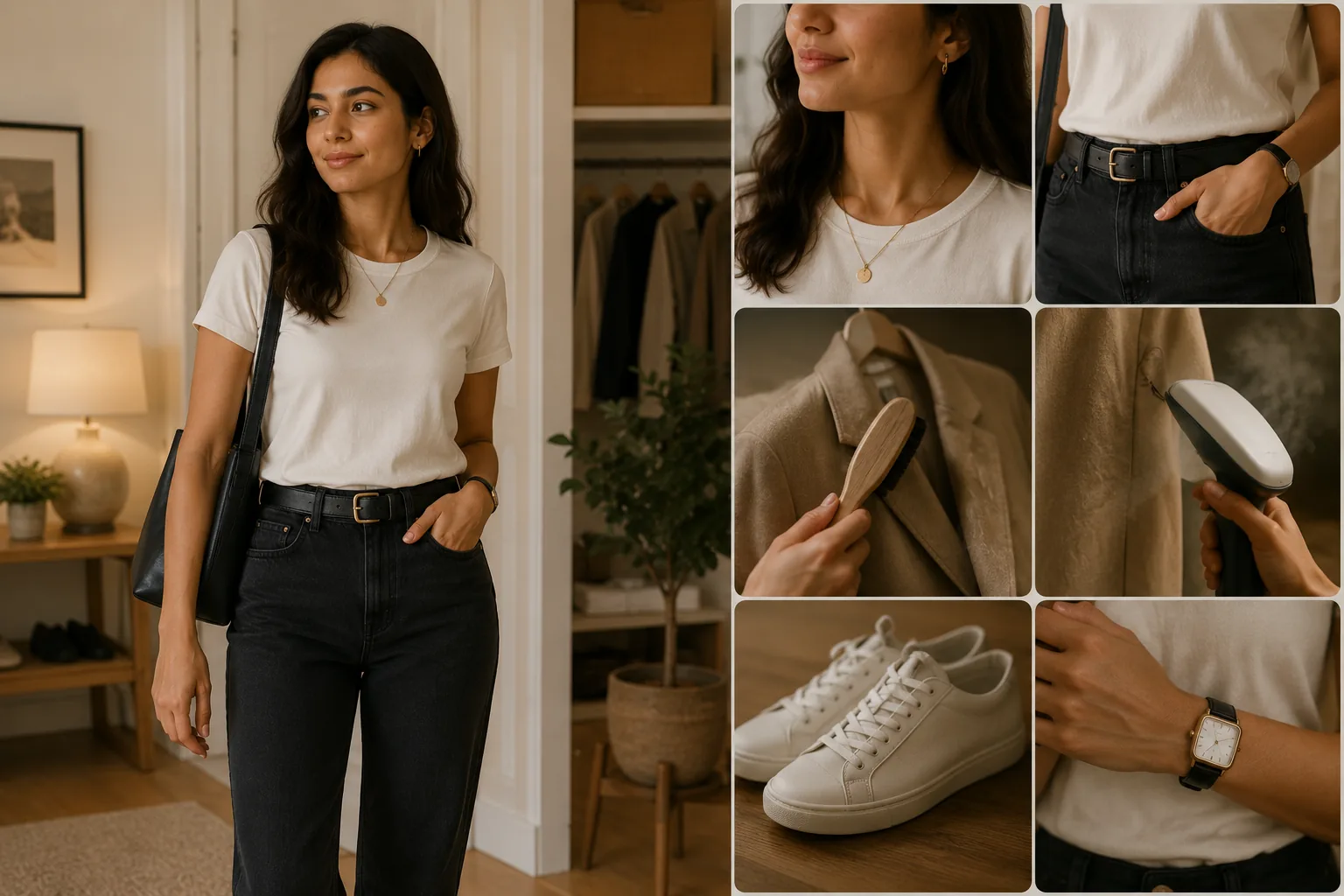
Fit does eighty per cent of the work
The put-together people you admire are rarely wearing remarkable clothes; they are wearing ordinary clothes that fit remarkably well. Shoulder seams ending at the shoulder bone. Trousers breaking once, not pooling. Sleeves showing a sliver of wrist or shirt cuff. A tee that skims rather than clings or tents.
Fit beats size, price and brand — and it is buyable: a local tailor will take in a shirt or hem trousers for less than the cost of a new piece. Fixing fit on five favourites upgrades more outfits than buying anything new.
The condition checklist
Sloppiness is usually a condition problem — the garment, not the choice. Run this check weekly, not daily:
- Wrinkles: steam or iron anything with a collar; hang clothes the moment they dry
- Pilling: shave knits each season — a fabric razor costs less than lunch
- Lint and hair: brush dark pieces before wearing
- Threads and buttons: two minutes with scissors and a needle
- Shoes: wipe uppers and soles, straighten laces
Each item is trivial. Together they are the difference between the same outfit looking crisp on one person and tired on another.
One loose, one fitted
Proportion is the free upgrade. Pair one relaxed piece with one trim piece and the outfit looks decided: wide trousers with a fitted knit, slim jeans under a roomy overshirt, a flowing kurta over straight pants.
All-tight looks effortful; all-loose looks accidental. The half-tuck, the cuffed hem and the pushed-up sleeve exist to show a waist, an ankle, a wrist — light structure at the edges that signals the looseness is chosen, not surrendered.
If both pieces must be relaxed, add one hard element — a structured shoe, a proper belt, a collar — and the balance returns. One deliberate edge is all the silhouette needs.
Keep the palette quiet
Low effort loves low colour risk. Two neutrals plus one colour, kept in the same temperature, makes almost any combination land. Navy-white-tan, grey-black-olive, cream-brown-denim — combinations that assemble themselves.
Matching your leathers loosely — belt near shoes, watch strap near both — adds a coordinated undertone nobody consciously notices but everybody reads. That is the put-together effect in miniature: a dozen quiet agreements between pieces, none of which shout.
Build three such combinations from your own shelf, photograph them, and you have a menu that survives any rushed morning. Quiet palettes also make accessories easier — everything already agrees before the watch goes on.
The five-piece maintenance kit
Minimal effort still needs tools, and five cover everything: a handheld steamer, which de-creases a shirt in ninety seconds and needs no board; a fabric shaver for pilled knits; a lint roller kept by the door, next to the keys; a basic shoe kit — brush, cloth, one tin of neutral polish; and a tailor's phone number, which turns almost-right clothes into right ones for small money.
Total outlay is less than one forgettable new shirt, and the return is permanent: every garment you already own presents one grade higher. Keep the kit in one visible drawer or it will not get used — friction kills maintenance faster than laziness does. The effort is small, cheap and weekly, and none of it happens in the morning.
The finishing touch, then stop
Dressed becomes put-together with one deliberate object: a leather-strap watch, a simple gold hoop, a belt that agrees with the shoes, a collar sitting exactly right. One touch signals the whole outfit was considered; three start to look like effort, which is the opposite of the brief.
Build the ten-minute Sunday habit — steam, shave the knits, wipe the shoes — and mornings shrink to reach, dress, one glance, leave. Effortless is real; it is just effort relocated to where nobody sees it. The finishing touch works precisely because everything beneath it is in order — polish on chaos convinces nobody.