 SKIBDRIP®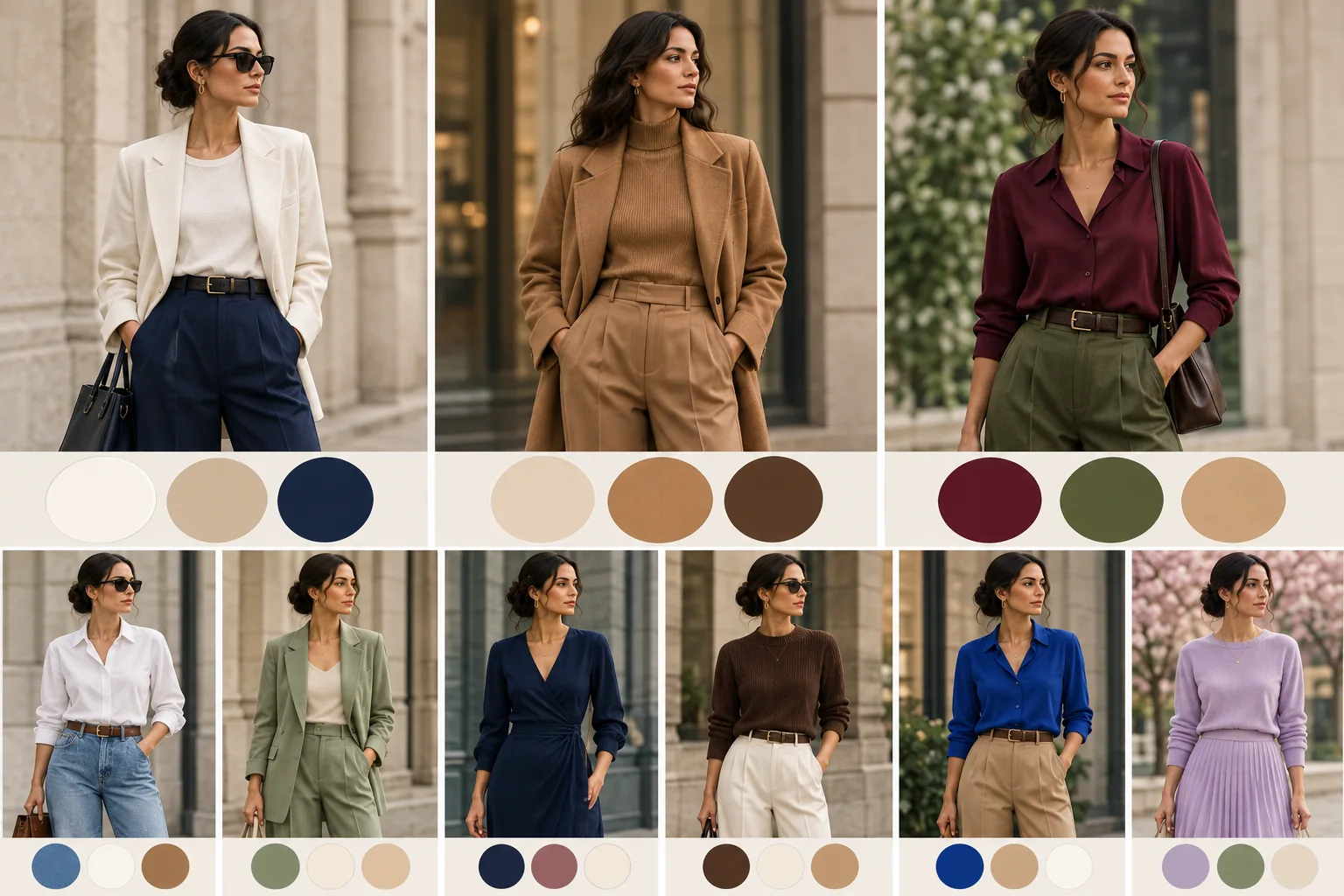
The colour wheel in wardrobe terms
Colour harmony is geometry. On the wheel, colours sitting opposite each other are complementary — blue and orange, red and green, purple and yellow — and create energy. Colours sitting beside each other are analogous — blue, teal, green — and create calm. Both work on clothes with one adjustment: fashion versions win when at least one side is muted.
So not fire-engine red with grass green, but burgundy with olive. Not pure orange with royal blue, but rust with navy. Mute one partner, keep the other richer, and the pairing looks expensive instead of primary-coloured. Triads and split-complements exist too, but you will rarely need them — the muted-pair principle carries nearly every outfit that matters.
Formula one: neutrals plus one colour
The workhorse. Two neutrals as the body of the outfit, one colour as the voice.
- Navy trousers, white shirt, rust jumper
- Grey suit, black tee, cherry-red bag
- Cream kurta, tan trousers, deep green dupatta
Neutrals — black, white, grey, navy, beige, camel, olive, denim — agree with each other almost unconditionally, which is why a neutral wardrobe is the easiest to dress from. The single colour then reads as a decision. Keep it near your face if it flatters your undertone; keep it at shoes and bag if it does not. Swap which piece carries the colour through the week — jumper today, bag tomorrow — and one formula quietly becomes seven outfits.
Formula two: tonal dressing
One colour family, two or three depths — the fastest route to looking deliberate.
Camel with chocolate and cream. Navy with ice blue and denim. Sage with forest. Blush with burgundy. The eye reads the repetition as intent and the varying depth as dimension. It lengthens the body too, since no horizontal colour break cuts the line.
Two rules keep tonal from going flat: vary the textures — knit against poplin against suede — and keep at least two clear steps of light-to-dark between pieces. Identical shades in identical fabrics read as a uniform; steps and texture read as styling. Tonal is also the easiest formal trick going — one colour family in good fabric reads considered with zero decisions.
Formula three: the confident pair
When you want actual colour-on-colour, steal combinations that are pre-proven.
- Burgundy and olive
- Rust and teal
- Cobalt and camel
- Pink and red — adjacent on the wheel and quietly modern
- Butter yellow and grey
- Emerald and navy
- Lavender and chocolate
The shared trick: one partner saturated, one muted or neutral-leaning, and roughly a 70-30 split of area rather than half and half. Ground any loud pair with a quiet base — white trainers, tan sandals, denim — and check the total against how many colours one outfit can hold. If a pair feels risky, demote one colour to a smaller area — the combination stays, the volume drops.
Five pairings to wear this week
Proof beats theory. Wear one of these tomorrow, built from things you likely own.
- Mid-blue jeans, white tee, rust overshirt, tan shoes
- Black trousers, cream knit, cherry-red lip and bag
- Olive kurta or chinos, white shirt, gold jewellery
- Navy dress, denim jacket, cognac sandals
- Grey trousers, lavender shirt, charcoal knit
Notice each is two neutrals plus one or two colours, muted partner included. Photograph the ones that earn compliments and repeat them monthly. A personal file of proven pairings beats any wheel — the wheel just explains why they worked. When one fails, change the depth before you change the colour — most bad pairings are two shades shouting at the same volume. Denim rescues almost any experiment.