 SKIBDRIP®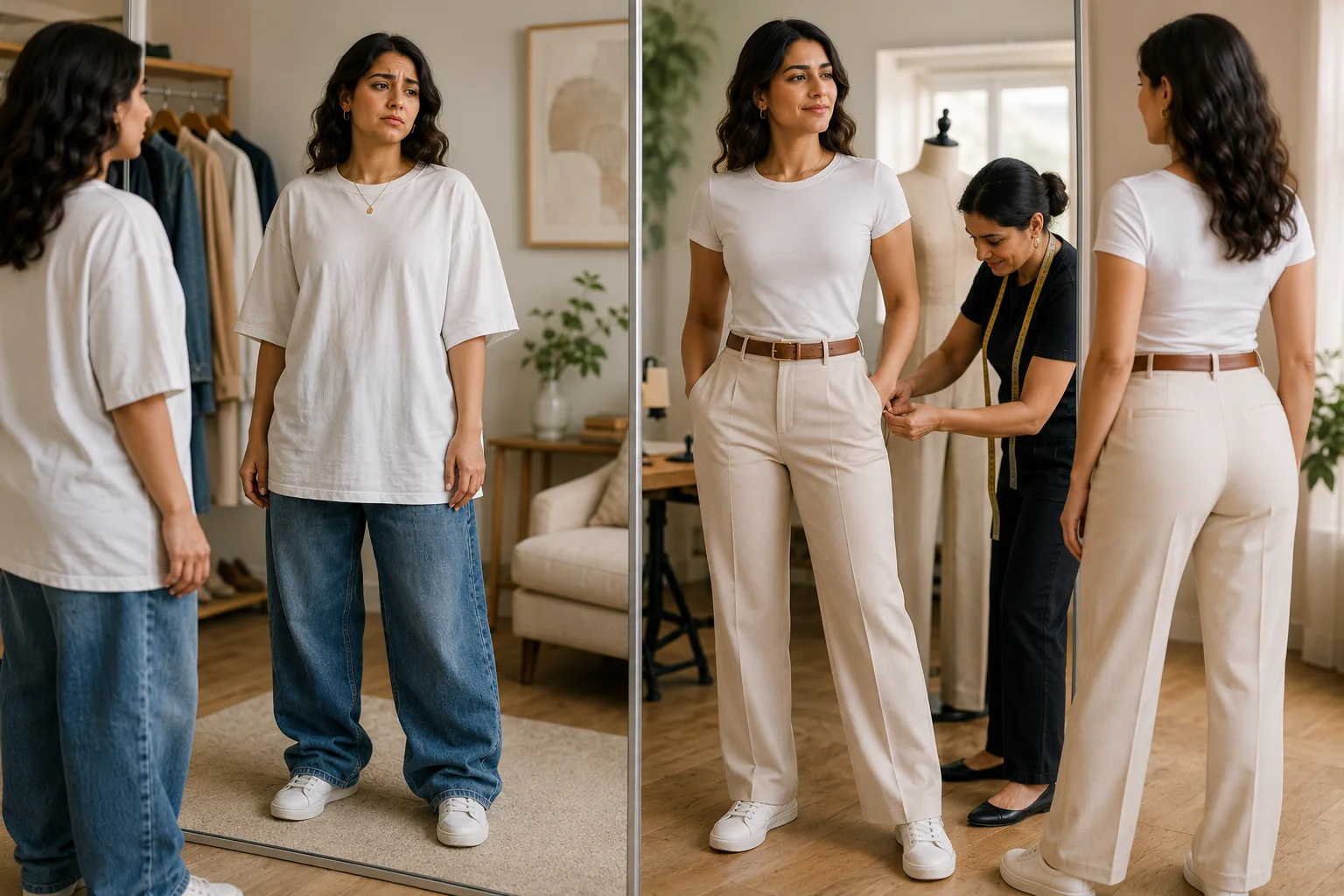
Size is a guess; fit is a fact
A size is not a measurement — it is a brand's marketing decision about a block of numbers. The same body can be a medium in one shop, a large next door and an extra-large online, sometimes within one brand's own ranges; vanity sizing shifts the goalposts further every few years. Chasing a particular letter is chasing weather.
Fit, by contrast, is observable physics: where the shoulder seam lands, whether the button pulls, how the hem meets the shoe. It is the entire visual information an observer receives — nobody at the wedding can read your waistband tag, and everybody can see the trouser puddling on your shoe. Judge every garment in the mirror, never on the hanger's label.
The five points where fit lives
Across garments and genders, fit concentrates at five checkpoints:
- Shoulder seam ends exactly at the shoulder bone — the one point tailors cannot cheaply move
- Ease through chest and body: fabric follows you with a few centimetres to spare — no button strain, no billow
- Waistband sits where the garment was cut to sit, holding without digging or gaping
- Sleeves end at the wrist bone; trouser hems break once, softly, or not at all
- Length — shirt tails, jacket hems, skirt lines — finishes where the cut intends
Run the five on anything before buying; a shirt is the cleanest classroom for learning them. Two minutes in a fitting room replaces years of vague dissatisfaction.
What good fit actually does for you
Clothes that fit change three things at once. Visually, they sharpen every line — a fitted inexpensive outfit photographs better than an expensive approximate one, which is why stylists spend their budgets at the tailor, not just the till. Physically, they move with you: no hitching trousers, no tugging hems, no waistband negotiations at lunch.
And there is a documented psychological layer — enclothed cognition, the finding that what we wear measurably shifts how we carry ourselves and perform. Clothes that fit feel like yours; clothes that almost fit feel borrowed all day, and the fidgeting broadcasts it. Comfort and polish are not competing goals. Fit is the point where they are the same thing.
Buy for the biggest point, then tailor
The practical method follows from one asymmetry: tailors can take fabric in cheaply and let it out barely at all. So buy for your largest relevant measurement — shoulders and chest on tops and jackets, hip and seat on trousers and skirts — accepting looseness elsewhere, then have the excess fitted: waists nipped, darts added, sleeves and hems finished to your exact length.
Each alteration costs a fraction of the garment and multiplies its value; in most Indian neighbourhoods the tailor charges less than the pizza you ordered while deciding. Size up without flinching, cut the tag out if the number nags, and remember the professionals' open secret: nearly everything you have admired on anyone was altered to sit that way.
The number changes; the mirror test never does
Sizes will keep drifting — between brands, between seasons, between the body you had and the one you have. Treat that as noise. The mirror test is stable at every age, weight and budget: seams on the bone, ease without excess, waist where it belongs, hems breaking clean. Clothes that pass belong to you; clothes that fail are just cloth in your size.
This is also where fit becomes kindness. Buying the size that actually fits — rather than the one you are willing to admit to — is how every body type wins: the garment adapts to the person, never the reverse. Fit is not about having a different body. It is about clothes finally doing their job for this one.