 SKIBDRIP®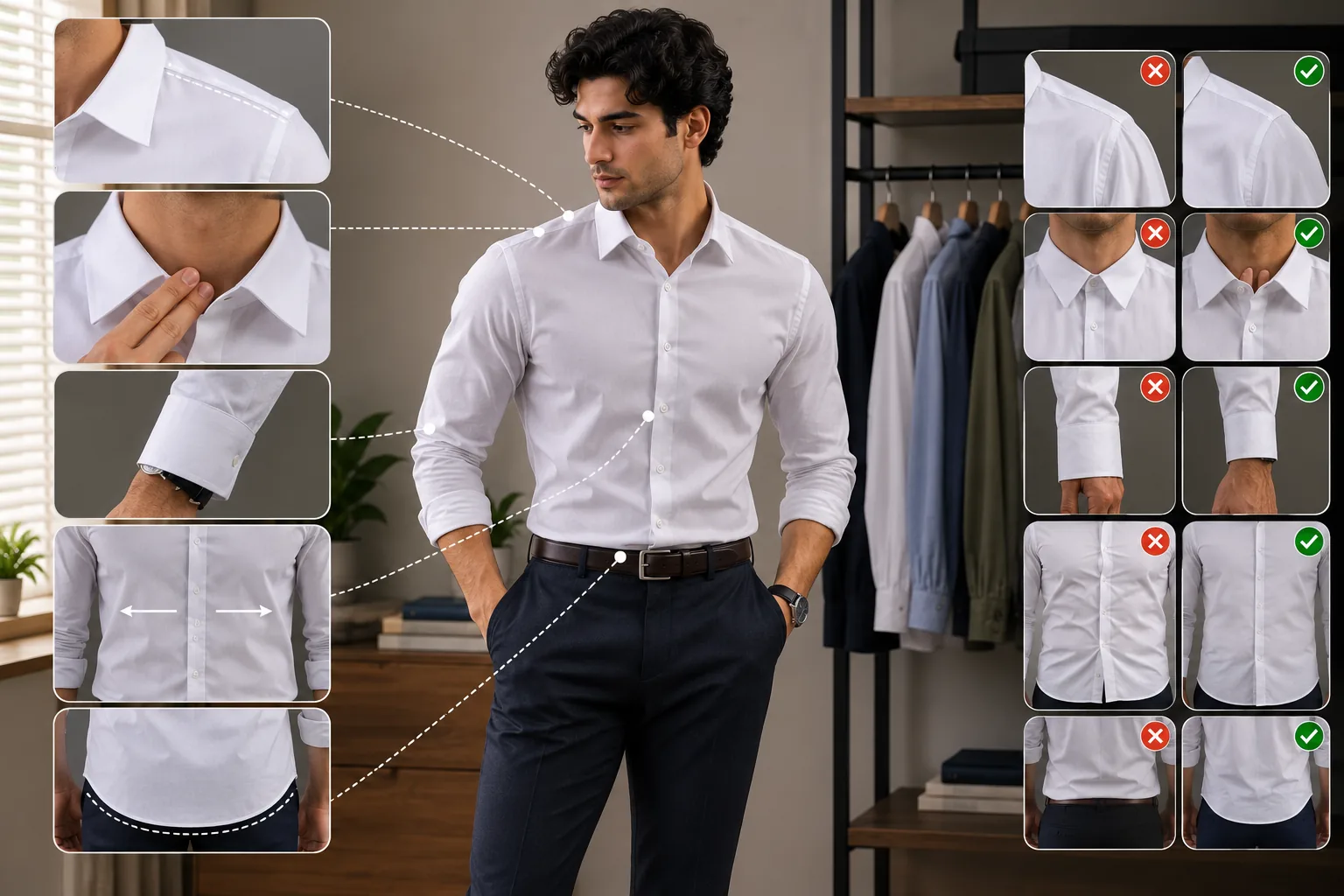
Shoulders first — the seam no tailor moves
The shoulder seam is the one part of a shirt that is expensive to alter, so it decides the purchase. Stand square in the mirror: the seam should sit exactly where your shoulder bone ends and the arm begins. Drooping down the upper arm reads as borrowed; biting inward reads as outgrown.
Everything else on a shirt — sleeves, body, length — can be adjusted for a few hundred rupees. The shoulders cannot, at least not affordably. So shop shoulder-first: find the size where the seam lands on the bone, then judge the rest. This is the heart of why fit matters more than size — two shirts labelled medium can sit two centimetres apart at this seam.
Collar and sleeves: two fingers, one wrist bone
Button the collar fully, even if you never wear it that way. Two fingers should slide in flat — one finger means red marks by lunch, three means the collar gapes away from the neck and the tie will never sit.
Sleeves end at the wrist bone, where the hand hinges. Longer, and fabric bunches over the watch; shorter, and the shirt looks outgrown the moment you reach for anything. The cuff should close so it just brushes the base of the thumb without sliding over the knuckles. Under a jacket, this length is what lets the classic half-inch of cuff show — the small detail tailors check first on other people.
The body: ease, not excess
A shirt should follow the torso, not trace it. The working measure is ease — the gap between fabric and body. Pinch the shirt at your ribcage: two to five centimetres of loose fabric on each side is right for most builds. Less, and the buttons strain when you sit; more, and the shirt billows when tucked, ballooning over the waistband.
Watch the two classic failure points. Pulling at the chest buttons means the shirt is too small, whatever the label claims. A sail of fabric at the small of the back means too big — or a candidate for darts, which any tailor adds cheaply. Sit down in the fitting room; shirts are worn seated more than standing.
Length decides the tuck
Shirt length is a commitment. For tucking, the tail must reach at least eight to ten centimetres past the waistband — enough that raising both arms overhead does not pull it free. Formal shirts are cut long for exactly this reason.
For wearing untucked, the hem should end mid-fly, roughly halfway down the trouser zip — covering the belt, stopping well above the knee-line chaos of a too-long shirt. A curved hem reads casual and sits better open over a tee; a straight hem with side vents can go either way.
One shirt rarely does both jobs well. Decide how each shirt will live before buying, and check the length for that life, not the other one.
Slim, regular, tailored — what labels actually mean
Cut names are marketing, not measurements, and they shift between brands. As a working translation: slim runs closest to the body through chest and waist, regular gives the most room, and tailored or modern sits between. None of them is more correct — the right cut is the one that passes the five checks on your torso.
Broad chest and narrow waist often means regular fit with darts added. Straighter builds usually land in slim without alteration. If you are between sizes, buy for the shoulders and chest — the widest points — and let a tailor take in the waist. Fabric matters too: oxford cloth forgives, poplin reports everything. Trust the mirror over the label, every time.