 SKIBDRIP®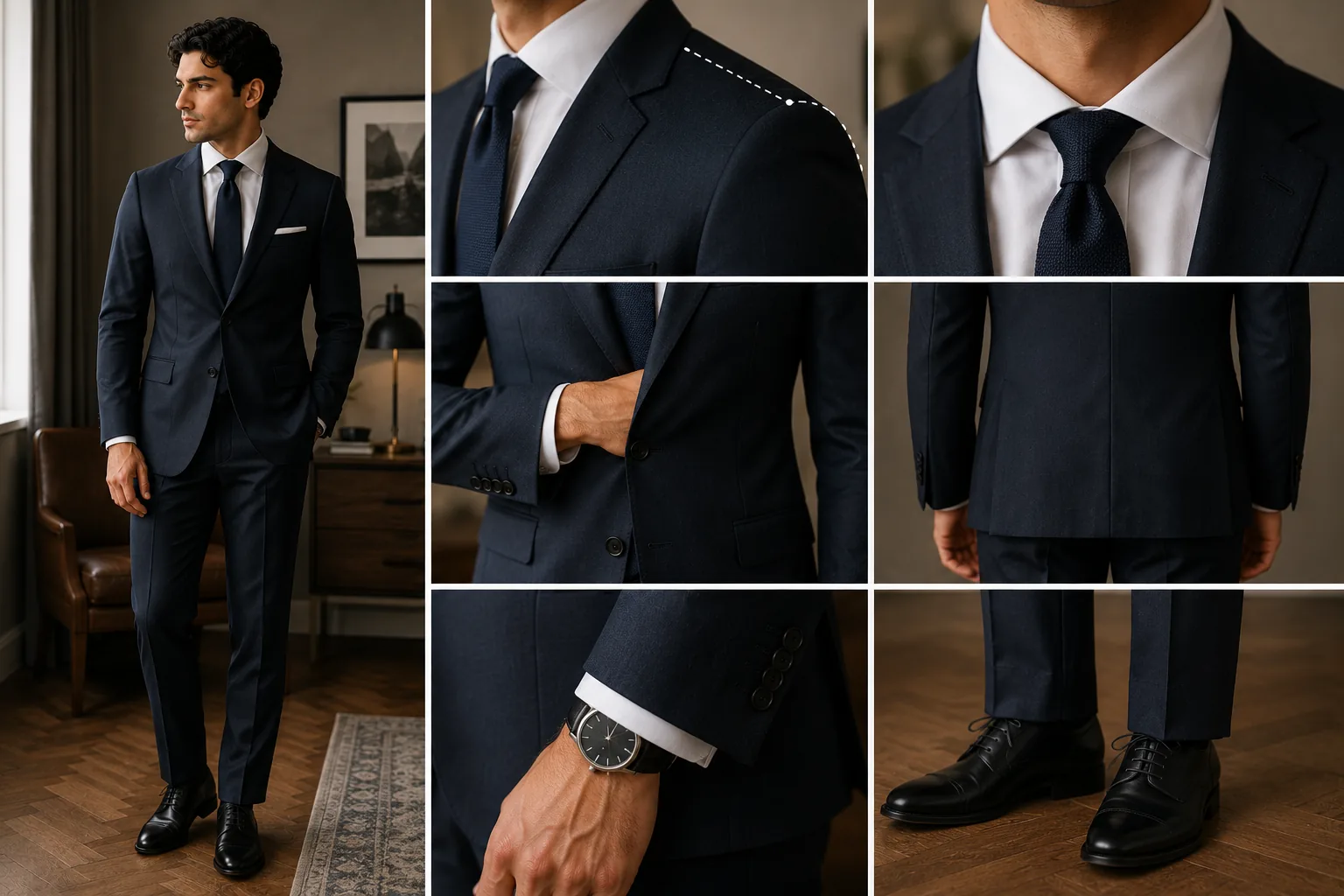
Shoulders and collar: buy for these two
A suit is bought at the shoulders and collar, because those are the two places tailoring cannot economically reach. The shoulder seam must end where your shoulder does — an overhang collapses into a divot on the upper sleeve, and a short seam strangles the arm. Check it side-on in the mirror; the sleeve should fall in one clean line from the seam.
The jacket collar should hug your shirt collar with no gap behind the neck and no bunching below it. A gap means the jacket is pitched wrong for your posture; a roll of fabric means the back needs work. If shoulders and collar sit right, the suit is a candidate. If either fails, walk away at any price.
The jacket body: button, waist, length
Fasten the top button of a two-button jacket — the only one you will ever close. One flat fist should slide between the button and your chest. Tighter, and the lapels bow open in an X of strain; looser, and the jacket reads boxy and borrowed.
The waist should follow you inward slightly, giving the jacket shape without pinching. Length is checked two ways: the hem should just cover the curve of your seat, and your knuckles should roughly reach the hem with arms relaxed. Modern cuts run a touch shorter, but a jacket that exposes the seat tips from current into cropped. When the button is closed, the lapels should lie flat against the chest, not float.
Sleeves and the half inch of shirt
Jacket sleeves end where the wrist bends, letting the shirt cuff show a centimetre — the half inch of linen that separates tailored from approximate. No shirt showing reads as outgrown gorilla arms; five centimetres showing reads as borrowed from an older brother.
This assumes the shirt underneath fits first — sleeve to the wrist bone, collar closing with two fingers of room — which is why how a shirt should fit comes before suit shopping, not after. Sleeve shortening is the cheapest, most routine suit alteration there is, so never reject an otherwise correct jacket over sleeves. Buy the shoulders; pay the tailor a few hundred rupees for the wrists.
Trousers: rise, seat, break
Suit trousers sit at the natural waist — the narrow point near the navel — not down on the hips where jeans live. Worn low, the rise collapses, the crotch sags and the shirt escapes; worn where they are cut to sit, the leg falls in one line and the jacket meets them cleanly.
The seat should follow you without hammocking below or pulling tight across. From the knee down, the trouser should hang straight into one shallow break — a single soft fold where fabric meets shoe. No break is sharp and current with a tapered leg; a full puddle is the most common suit failure in every wedding album. Hemming is a hundred-rupee fix; there is no excuse.
What a tailor can and cannot fix
Buy the closest fit at the shoulders, then budget a visit to the tailor — nearly every good suit you have seen was altered. Routine and cheap: sleeve length, trouser hem and break, waist in or out a few centimetres, darts through the jacket body. Possible but costlier: reshaping the seat and thigh, shortening a jacket slightly, adjusting the collar.
Effectively impossible: shoulders, the armhole, and lengthening anything beyond the seam allowance. That is the entire buying strategy — nail the unfixable, negotiate the fixable. For the big occasions this suit will serve, from job interviews to weddings, the two hundred rupees of hemming matters more than the two thousand you might have spent on a better label.