 SKIBDRIP®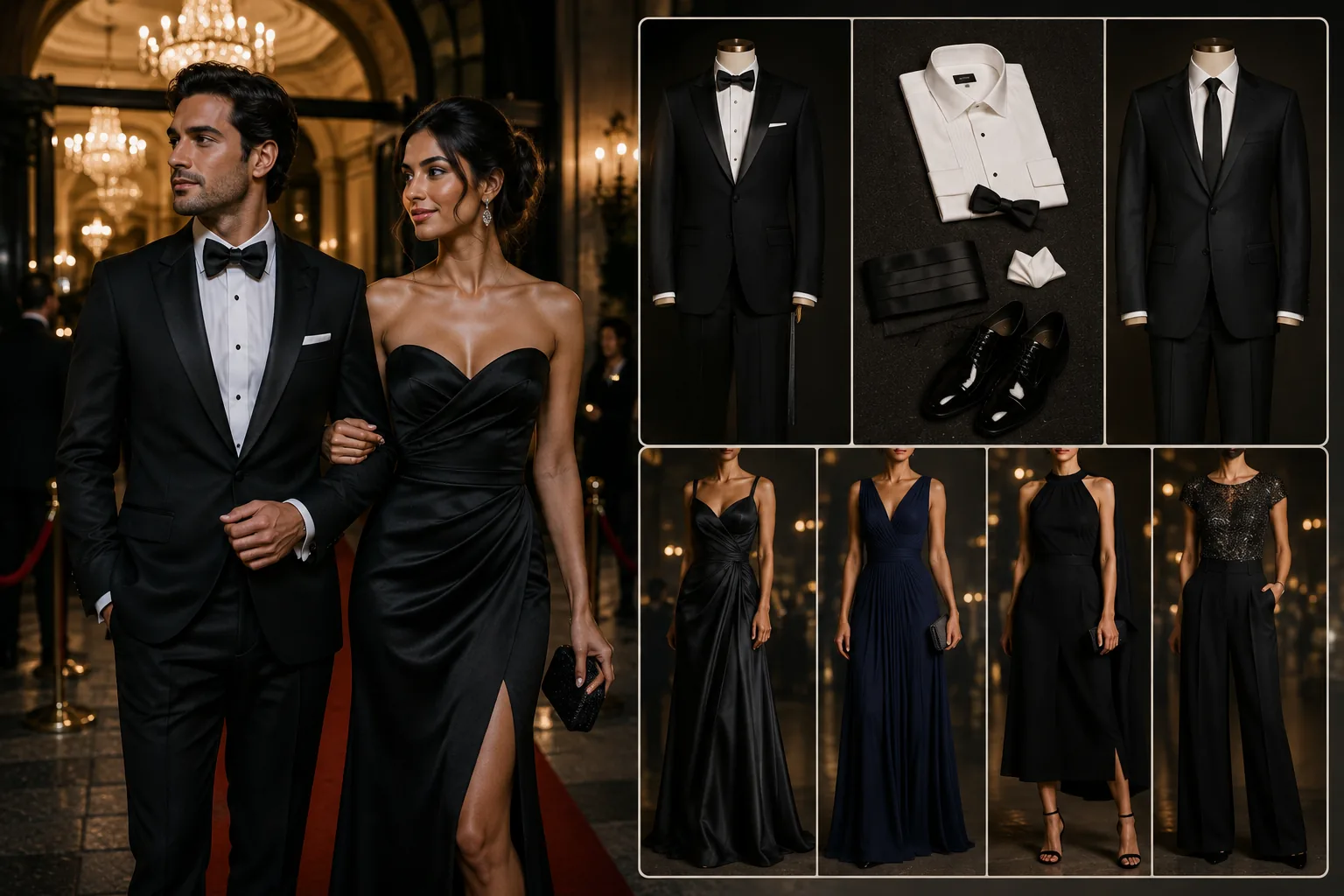
What the code is actually asking for
Black tie is the most codified invitation you will receive, written for evening events after 6 pm — galas, award dinners, formal weddings, New Year balls. It is not asking for your best clothes; it is asking for specific ones.
The logic is uniformity: a room of near-identical tuxedos and long gowns photographs as one elegant organism, and nobody competes. That is why improvising reads louder here than at any other dress code. The good news is the strictness is a gift — there are almost no decisions to make, only components to get right. Treat the invitation as a costume note from the host; the uniform is the gift you bring.
The men's uniform, component by component
- A black or midnight-blue dinner jacket with satin or grosgrain lapels — peak lapel or shawl collar, not notch if you are buying new
- Matching trousers with a single satin side stripe, no belt loops — worn with braces or side adjusters, never a belt
- A white dress shirt, marcella or pleated front, French cuffs with cufflinks
- A black bow tie, self-tied if you can learn it — pre-tied ones sit visibly flat
- Black patent shoes or highly polished Oxfords, black over-the-calf socks
- Optional: a cummerbund or low-cut waistcoat to cover the trouser waist
A wristwatch is traditionally skipped. Rent a tuxedo rather than improvise one; rental done well beats ownership done wrong.
The women's brief and its modern width
The anchor is the floor-length gown — rich fabric, structured or fluid, in black, jewel tones or metallics. That remains the surest answer.
The modern code also admits a formal midi in a clearly evening fabric, a dressy full-length jumpsuit, or impeccable separates — a silk skirt to the floor with a fitted top. Heels or flat evening sandals, a small clutch, and jewellery with real presence complete it. In India, black-tie-equivalent events welcome a rich silk or heavily worked saree — a Banarasi or Kanjeevaram carries the formality completely. What fails the code: short cocktail dresses, office tailoring, anything you could wear to dinner on an ordinary Saturday.
The traps that catch people every year
The classic errors, in descending order of frequency:
- Wearing a regular black suit with a long black tie and calling it done — recognisable across the room
- A notch-lapel business jacket standing in for a dinner jacket
- Brown shoes, ankle socks, or a belt with tuxedo trousers
- 'Creative' bow ties in colours or prints — black tie means a black tie
- For women, undershooting with a knee-length day-fabric dress
If the card says 'black tie optional', the tuxedo is still the host's preference; a dark suit with a white shirt and a dark, quiet tie is the sanctioned fallback. 'Creative black tie' keeps the tuxedo base and allows one playful element — a velvet jacket, a coloured lapel flower. When any variant code is unclear, email the host; precision is the entire culture here.
Fit, grooming and the final hour
A tuxedo forgives nothing, so suit-fit rules apply doubled: jacket shoulders ending exactly at the bone, sleeves showing a centimetre of shirt cuff, trousers with minimal break. Book any rental early enough for alterations.
Grooming is part of the code — clean shave or precisely kept beard, tidy nails, hair deliberate. Steam everything the day before; satin lapels show every crease. Break in the shoes at home for an evening. Arrive with the bow tie already tied. The whole point of black tie is that, done correctly, you stop thinking about clothes entirely and the evening takes over.