 SKIBDRIP®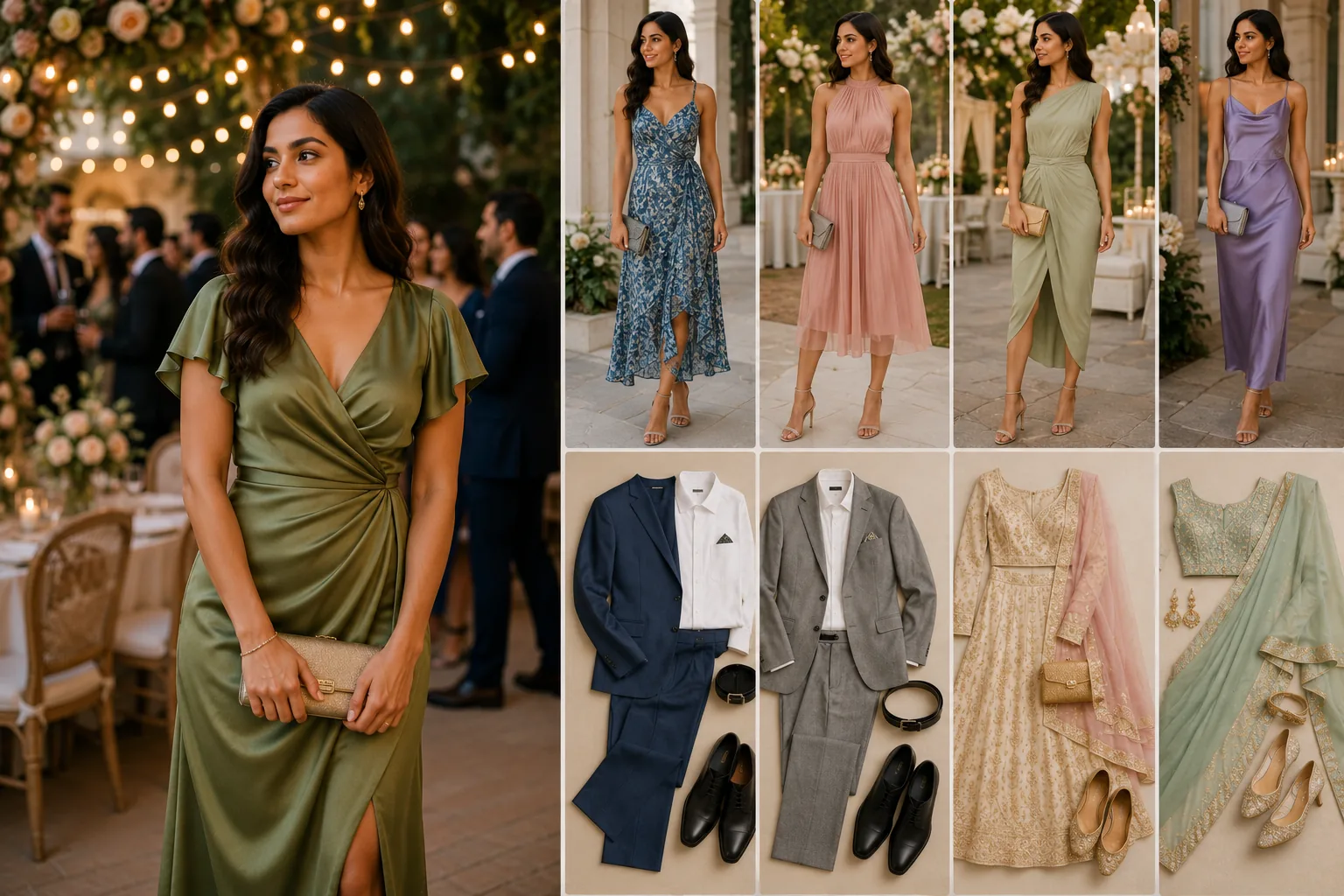
The invitation outranks everything
If the card says black tie, cocktail, festive or 'Indian traditional', that is the answer — dress codes exist so guests photograph well together and nobody feels out of place.
No code printed? Decode the venue and hour. A 5-star ballroom at night means suits and rich fabrics. A daytime garden or beach do means lighter colours, breathable cloth, heels you can walk on grass in — or flats. A gurudwara, church or temple ceremony means covered shoulders and modest hemlines for the ritual, whatever the party later allows.
When torn between two levels of formality, choose the dressier one. At weddings, overdressed is forgiven; underdressed is remembered. Many couples now add a dress note on the wedding website — check it before improvising.
The colours you wear and the ones you leave
One hard rule: white, ivory and cream belong to the bride at western-style weddings — leave the whole family of near-whites alone unless the couple explicitly requests them. Red deserves caution at Indian weddings for the same reason: it is the classic bridal colour, so keep it to accents unless you know the bride's palette.
Head-to-toe black reads sombre at daytime and Indian celebrations, though it is fine at evening cocktail dos. Prints on white grounds are fine — it is the all-over near-white column that reads bridal. Everything else is open: jewel tones, pastels, prints. Weddings are the rare occasion where wearing bright colour is not brave, it is correct.
Formulas that work, western edition
For men: a mid-blue, grey or tan suit by day; navy, charcoal or deep green by night. White or soft-coloured shirt, tie optional unless the code demands it, loafers or derbies polished. No jeans, no sneakers unless the couple has said so. In hot months, half-lined jackets and cotton-blend suiting keep the tailoring while losing the heat.
For women: a midi or maxi dress in a saturated colour or print, a jumpsuit with structure, or a skirt-and-top set. Add a layer for the ceremony — a wrap, blazer or shrug — and choose block heels or dressy flats if lawns are involved. A small bag, one considered piece of jewellery, done.
The Indian wedding is its own beautiful brief
An Indian wedding is usually several events — mehendi, haldi, sangeet, pheras, reception — each with its own register, and festive ethnic wear is the default language: kurta-pyjama or bandhgala for men, saree, lehenga or anarkali for women, with fabric richness rising as the events get grander.
Silks, Banarasi weaves and zari work belong at the main ceremony and reception; lighter cottons and florals suit daytime functions. If you are attending one, the full playbook — event by event — lives in our guide to Indian wedding guest outfits. Guests in ethnic wear at Indian weddings are never overdressed; that is the point of the party. Budget matters less than register — a crisp cotton kurta pressed well outranks a crumpled silk.
Comfort maths for a long day
Weddings run six hours minimum — ceremony, photographs, dinner, dancing. Plan for the full arc.
- Shoes you can stand in for three hours; broken-in, never new
- A layer for air-conditioned halls or evening drops
- Fabrics that breathe if the venue is outdoors — crepe, georgette, cotton-silk over heavy synthetics
- Nothing you must adjust every time you sit, bend or hug someone
Do a full sit-dance-hug test at home, and slip blister plasters and a safety pin into the bag — someone at every wedding needs both by hour four. The best-dressed guest at any wedding is the one still comfortable at midnight.