 SKIBDRIP®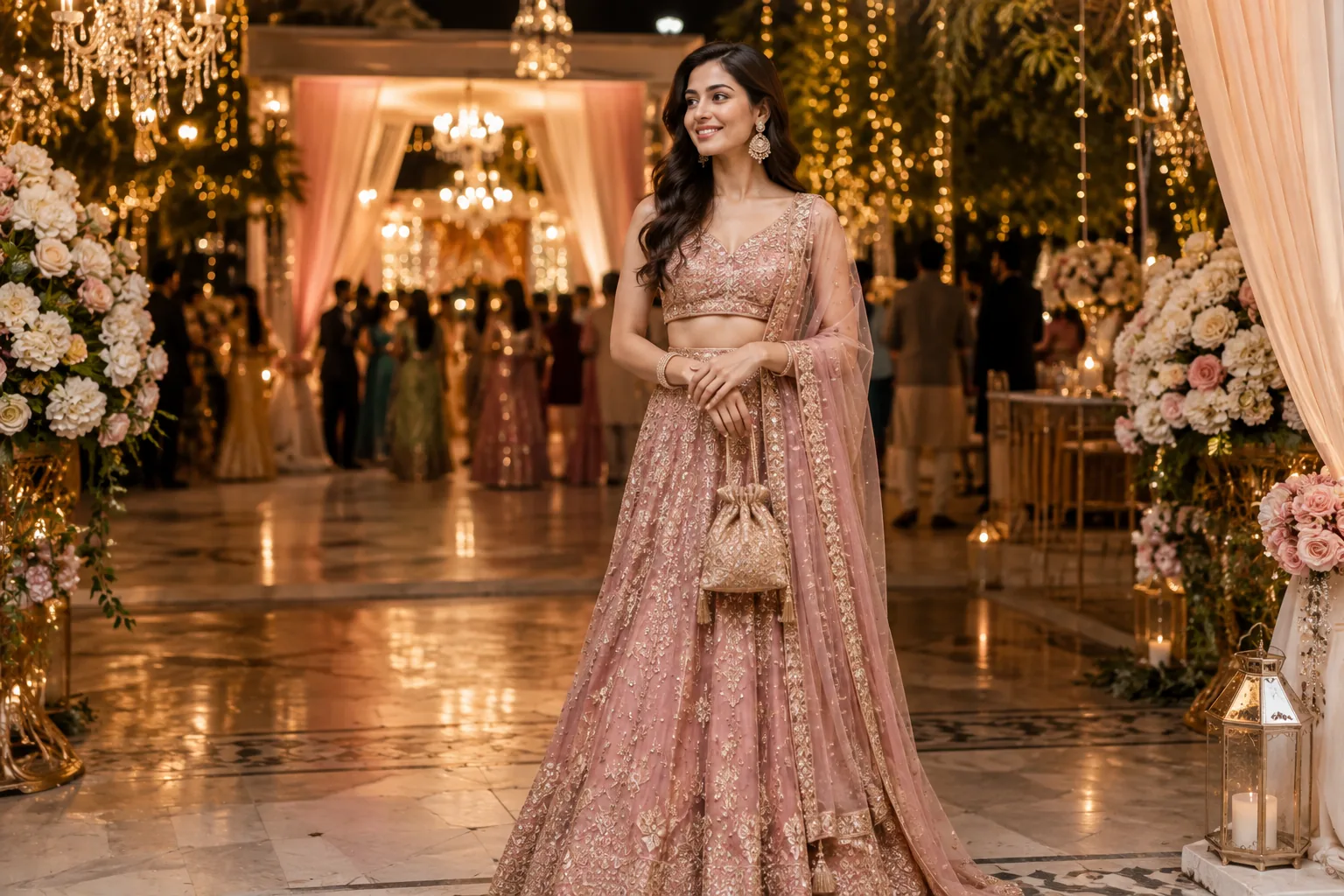
Read the card before the cupboard
An Indian wedding is a festival in instalments, and each instalment has its own brief. A daytime haldi on a lawn, an evening sangeet with a dance floor, morning pheras in a mandap, a hotel reception — same wedding, four different outfits. The haldi and mehendi have their own playbook; the main events reward planning.
Before choosing anything, establish three facts: indoors or lawn, day or night, and how the host family dresses — a Delhi farmhouse wedding, a Gujarati morning ceremony and a South Indian temple muhurtham sit at very different volumes. When the card says nothing, ask a cousin, never the couple. Then dress one notch below the immediate family: the guest's job is to add to the picture, not to centre it.
For women: the event picks the silhouette
The sangeet wants movement — a lehenga you can dance in, a sharara set, or a pre-pleated saree that will not fight you on the floor. The pheras reward tradition: this is where a Banarasi or kanjeevaram earns its keep, or a rich anarkali if managing a drape all morning feels like work.
Daytime events lean lighter — chanderi suits, organza sarees, soft florals. Receptions take the modern end: a sequinned or velvet saree in winter, a structured lehenga in the metros. Repeating a silhouette across events is fine; repeating the exact outfit at the same wedding gets noticed, so change the blouse, the drape or the jewellery and let one lehenga honestly do two nights.
For men: beyond the one blue suit
A kurta set with churidar or straight pyjamas covers every daytime event; upgrade the fabric — silk blend, chanderi, a fine handloom — as the event gets grander. Evenings belong to the bandhgala or a Nehru jacket over a solid kurta: structured, flattering on most bodies, and unmistakably occasion-wear.
The lounge suit stays legitimate at receptions, best with a textured shirt and no tie. What undercuts men most is footwear — office oxfords under a kurta, or sports shoes under anything. Closed mojaris, juttis or polished loafers finish the job properly. If you will own only one ethnic outfit, make it an ivory or deep-toned kurta set; it rotates across wedding seasons for years without anyone counting.
The colour rules nobody prints on the card
Three quiet rules keep a guest safe. The couple own their colours for the day — if you know the bride wears red, wear anything else. Head-to-toe white reads funereal in many communities; white with colour, or ivory carrying gold work, passes almost everywhere. Black remains welcome at cocktail and sangeet nights in the metros but still draws side-glances at daytime rituals in traditional families — when unsure, jewel tones are the answer: emerald, wine, rani pink, royal blue.
Shimmer scales with the sun. Sequins belong after dark; before it, let weave and thread-work do the shining. Jewel tones also photograph beautifully under mandap lighting, which is exactly why they never leave circulation.
Budget, borrow, repeat — with dignity
Nobody worth impressing is auditing labels. A Sarojini or Law Garden lehenga with a precisely fitted blouse outdresses an expensive set that fits badly — tailoring is the real luxury. Borrowing within the family is tradition, not compromise: your mother's silk saree with a new blouse is the best-value outfit in the country. Renting makes sense past a certain price. Spend where it shows — fit, pressing, and the jewellery, which carries a plain outfit further than embroidery ever will.
And plan for the body, not the photograph: a blouse you can eat in, footwear you can dance in, a drape that survives hugging two hundred relatives with warmth left over.