 SKIBDRIP®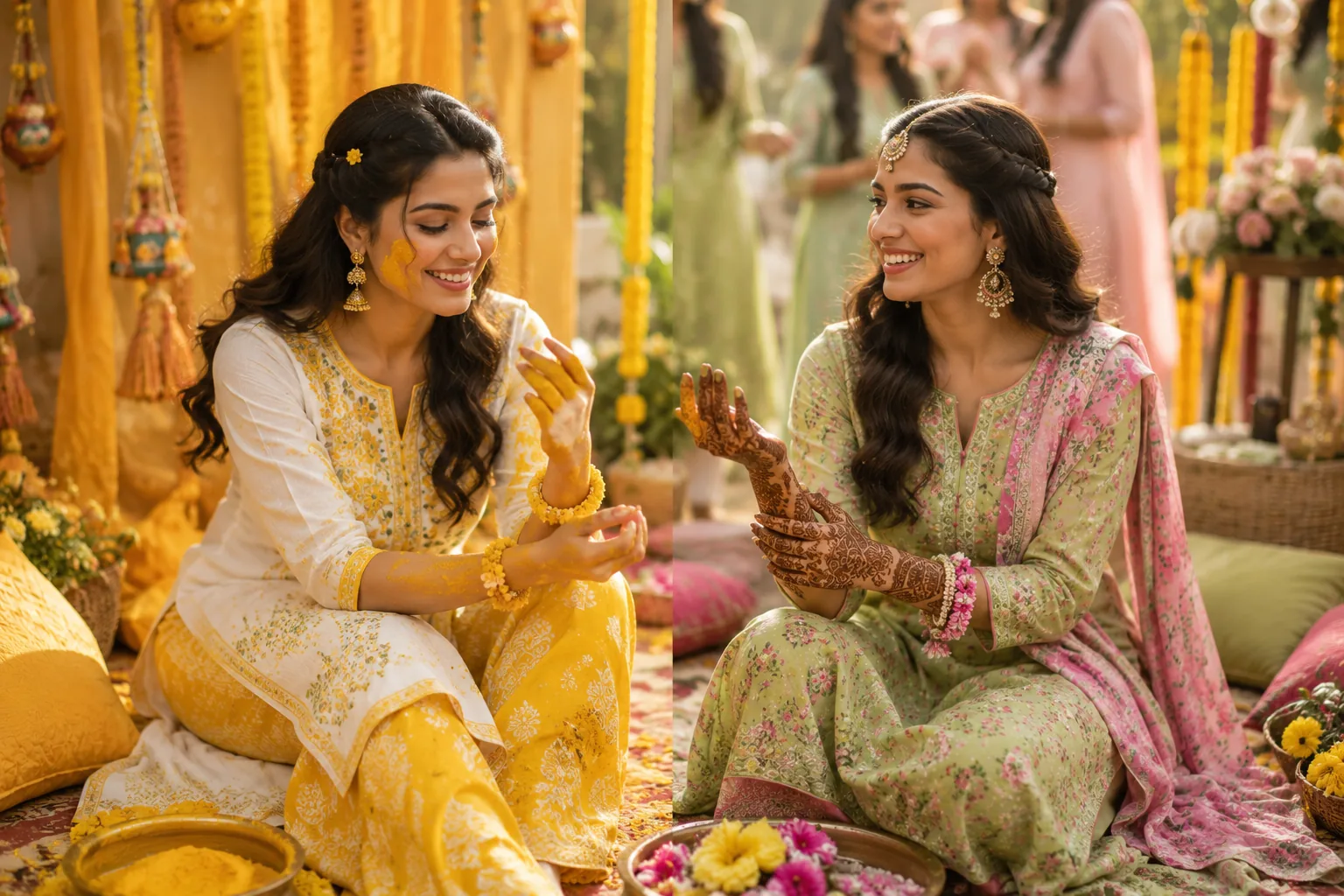
Haldi: dress for the turmeric, not the camera
The haldi is the one function where the outfit is a participant. Turmeric paste will find your sleeves, your lap and occasionally your hair — so wear cotton or mulmul you will not grieve, in colours that absorb the theme: marigold yellow, ochre, leaf green, white.
White is the insider's choice. It takes haldi stains as a badge, photographs beautifully against marigold decor, and a plain white cotton kurta or saree costs very little. Keep dupattas light or skip them entirely; a heavy dupatta trailing through a haldi bowl helps no one. Old favourites beat new purchases here — this is the function where a two-hundred-rupee market kurta genuinely wins the day, and everyone in the know dresses accordingly. If the haldi is at home, expect turmeric on door handles and chair backs too — carry nothing you love.
Mehendi: dress for wet hands and floor cushions
If you are the one getting mehendi done, the outfit must work without your hands for three hours:
- Sleeves that push above the elbow and stay there — or sleeveless
- No back zips, hook-heavy blouses or fiddly drawstrings
- A silhouette you can sit cross-legged in: sharara, palazzo-kurta, a lehenga with a forgiving waist
- Nothing that snags — heavy sequins and drying henna are natural enemies
Guests have it easier: florals, gota patti, bandhani and light chanderi in greens, pinks and yellows all belong. The mehendi is usually the wedding's most photographed daytime event, so texture and colour matter more than grandeur — and pockets, if your lehenga has them, are worth more than either.
Men: the pastel kurta's big day
Haldi and mehendi are where men finally leave the navy. A pastel kurta — lemon, mint, blush, sky — over white pyjamas or straight trousers is the working uniform, and it earns its place: light, seasonal, photogenic against the marigolds.
For the haldi, apply the same sacrifice rule as everyone else: cotton you can surrender to turmeric, sleeves rolled with intent. For the mehendi, upgrade one notch — a bandhani print, a textured cotton-silk, a contrast bandi if the family dresses up. Kolhapuris or open juttis beat sneakers at both functions; these events live on lawns and floors, and shoes come off far more often than any lookbook admits.
Footwear and the floor-seating problem
Both functions happen at ground level — cushions, low seating, lawns — so footwear must slip off in a second and survive grass. Flat kolhapuris, juttis and embellished flats win; block heels are the sensible ceiling; stilettos aerate the lawn and sink mid-photograph.
Feet show constantly when you sit, so clean straps and tidy nails quietly matter more here than at any other function. If the venue is a home, expect a shoes-off rule at the door — another argument against laces and buckles. Anklets and toe rings, if you wear them, get their one guaranteed audience of the whole wedding here, seated at exactly eye level with everyone's hemlines.
Jewellery: flowers first
Mehendi and haldi are the natural home of floral jewellery — gajra at the wrist, flower maang tikkas, petal earrings — light, inexpensive and thematically perfect. Oxidised silver is the other reliable register: jhumkas, cuffs and layered chains that dress up cotton without fighting it.
Skip anything precious at a haldi: turmeric and heirloom gold mix badly, and clasps snag half-dried mehendi. One statement — earrings or a cuff, not both — keeps a guest festive rather than bridal; the complete pairing logic lives in jewellery with ethnic wear. For these two mornings, when in doubt, choose flowers and save the metal for the sangeet.