 SKIBDRIP®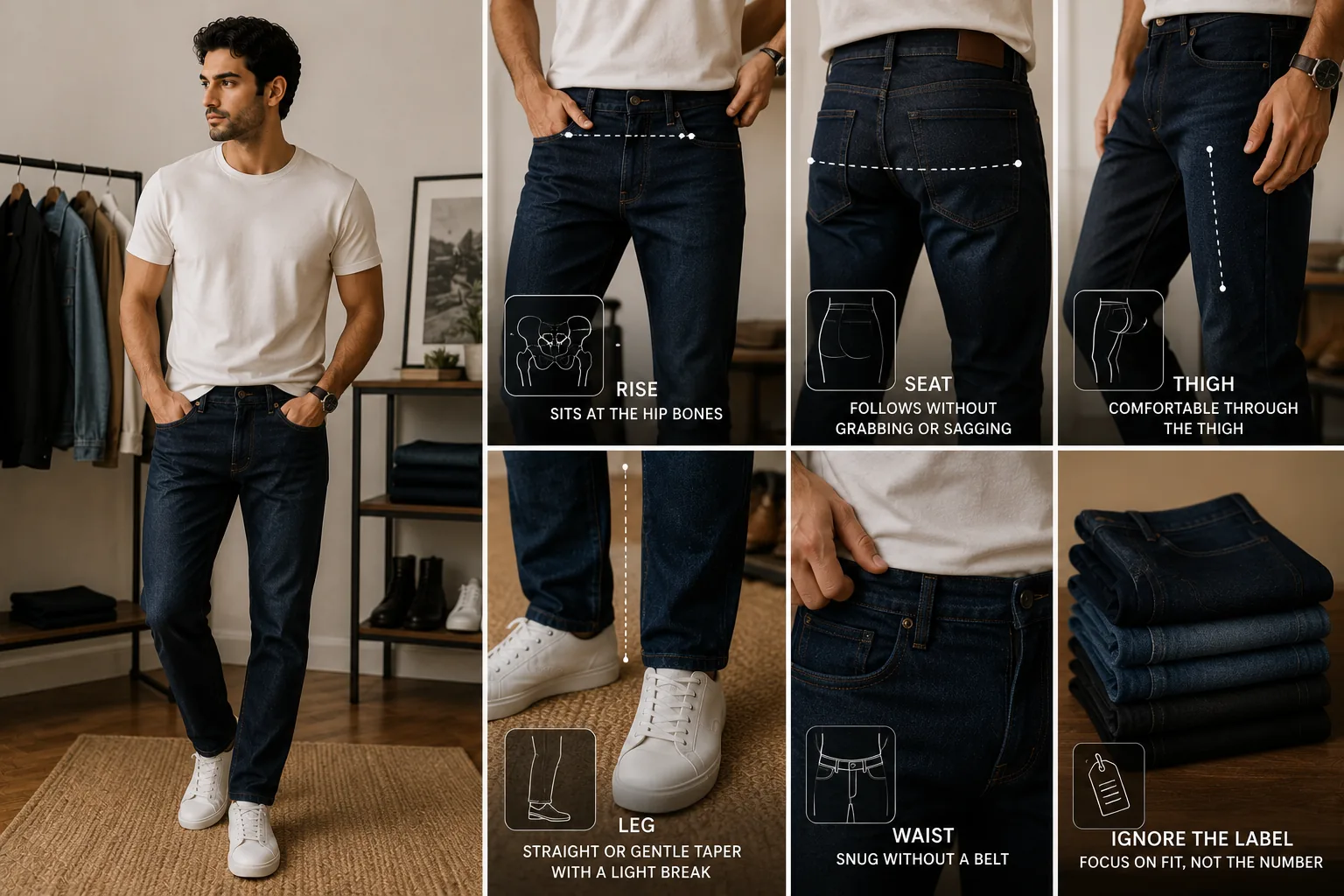
Start with rise — it decides comfort
Rise is the distance from crotch seam to waistband, and it is the measurement nobody checks and everybody feels. Mid-rise — sitting at the hip bones, roughly 25 to 28 centimetres — suits most men and most outfits. Low rise slides down and drags the crotch with it; high rise sits at the navel and has quietly returned as the comfortable choice for men with a fuller middle, because it holds at the body's natural shelf instead of cutting below it.
The test: sit, squat, and sit again. If the waistband gapes at the back or the crotch hangs like a hammock, the rise is wrong for your build no matter how good the leg looks standing still.
Seat and thigh: the follow test
Denim should follow the seat and thigh, not grip them and not hang off them. Standing, the back pockets should lie flat against you — sagging, empty-looking pockets mean the seat is too big; pockets stretched into wide smiles mean too small. Whiskering creases exploding from the crotch on day one are a size warning, not a style.
The thigh needs a pinch of ease — about two centimetres of loose fabric when you pinch mid-thigh. Athletic builds should look for cuts named athletic or relaxed-taper, which cut fuller here and narrow below the knee, instead of sizing the whole jean up and drowning the waist to buy thigh room.
Leg shape: straight and tapered do the most
From the knee down, two shapes cover nearly every man and neither will date on you. Straight falls plumb from the knee — the classic line that balances broader builds and heavier shoes. Tapered narrows gently to the ankle — cleaner with sneakers, sharper under a blazer.
Skinny grips the calf and has receded into a niche; very wide legs are current but demand commitment and the right shoe underneath. If you are unsure, a straight or subtle taper in dark indigo is the answer that works in every room.
The leg opening should relate to your shoe: roughly 18 to 20 centimetres across the hem frames most sneakers and loafers without swallowing them.
Length and hem: where jeans meet shoes
Jeans end in one light break — a single soft fold resting on the shoe — or, cuffed, just at the ankle bone with no break at all. A concertina of denim stacked on the sneaker undoes everything above it.
Unhemmed length is the most fixable flaw in denim: any tailor shortens jeans for less than the cost of lunch, and a chain-stitch hem keeps the original roughened edge if you care about that. A double cuff, four to five centimetres, is the no-tailor alternative and pairs naturally with white sneakers.
Buy for the seat and rise, then fix the length. Never the reverse — a perfect hem on a sagging seat is still a sagging seat.
The fitting-room routine that ends the search
Sizes lie — the same waist number varies two full sizes between brands, and stretch percentages change everything. So run the same five-minute routine on every candidate: sit in a chair, squat fully, walk ten steps, check the back pockets in the mirror, and slide two fingers into the waistband. Snug without a belt is right; rigid denim will give a centimetre or two at the waist within a week, while heavy-stretch blends stay where they start.
When a pair passes everything, note the brand, cut name and size like a prescription — that combination is your fit, and reordering it beats starting the whole search again next year.