 SKIBDRIP®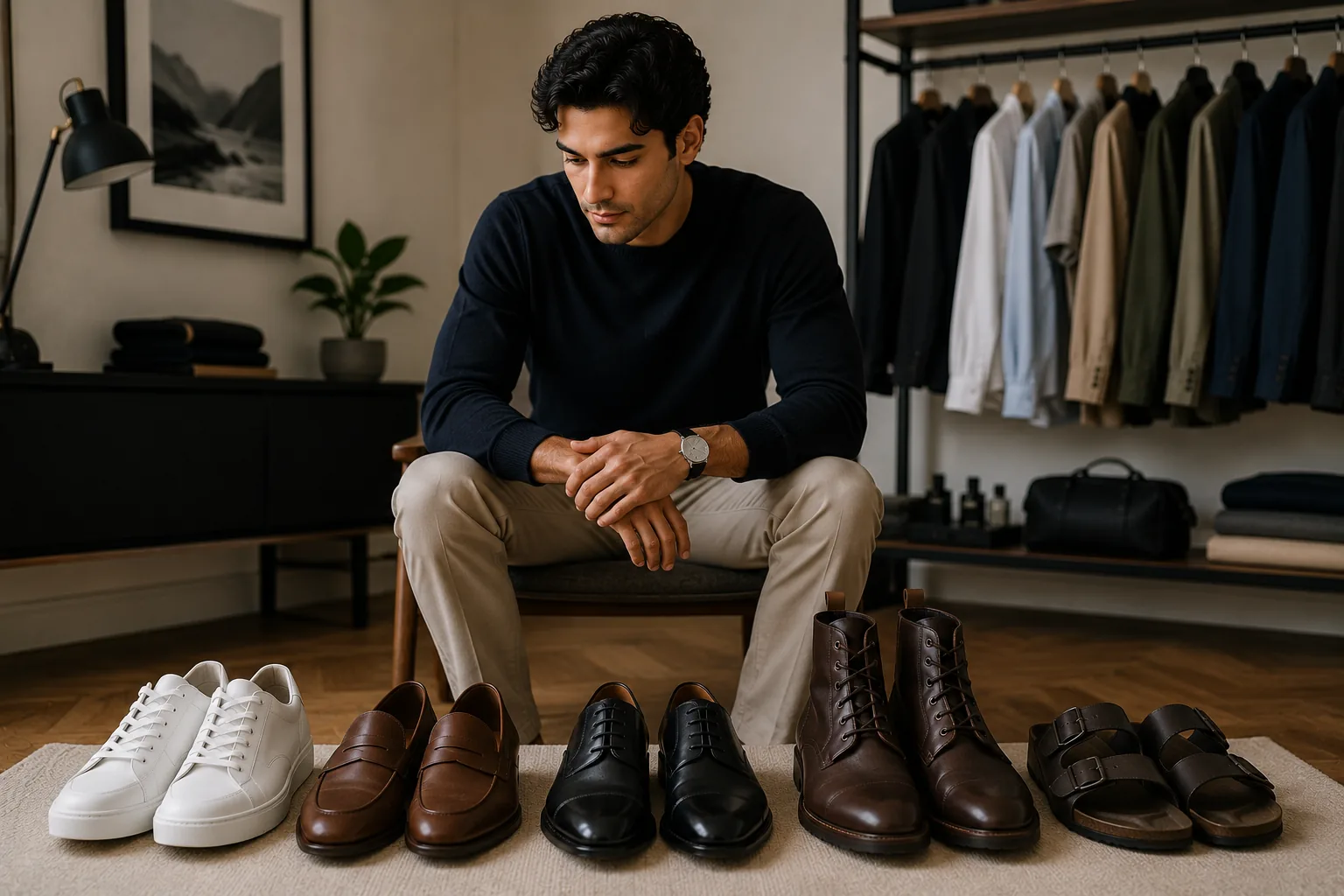
Five pairs, the whole calendar
Shoes are read before almost anything else you wear — they genuinely can make or break an outfit — yet most men own eight pairs and wear two. The working set is five: white leather sneakers for daily life, brown leather loafers or derbies for smart-casual, black dress shoes for formal rooms, a boot for rain and winter, and a slide or sandal for home and hot months.
Each pair holds a lane, the lanes barely overlap, and together they answer every invitation you will receive this year. Anything you buy beyond five is taste, not need — which is exactly when shoe buying becomes fun rather than expensive guesswork.
White leather sneakers: the daily default
One clean, minimal pair — leather rather than knit, low-profile sole, branding smaller than a coin — carries jeans, chinos, shorts and even summer tailoring. Leather matters because it wipes clean and ages into character; mesh gym shoes grey out and belong in the gym.
Fit note: sneakers should hold the heel firmly with a thumb's width of room past the longest toe. Buy them in the evening, when feet are at their largest after a day of standing.
Keep the whitening honest — wiped weekly, laces washed monthly, worn-in rather than dirty. Clean-enough white sneakers read as considered; grubby ones read as surrender, and no outfit above them survives it.
Brown leather: the loafer or derby decision
The brown pair does the heaviest lifting between casual and formal, so choose the shape by your life. A penny loafer slips on, breathes in Indian heat, and moves from chinos to wedding lunches without complaint. A derby — open lacing, rounder toe — is the friendlier cousin of the oxford and forgives a higher instep, which suits most feet better than sleeker lasts.
Mid-brown or tan goes with navy, grey, olive and every shade of denim; dark chocolate edges closer to formal. Look for stitched rather than only glued soles — the single clearest quality tell — and full-grain leather that creases instead of cracking. This is the pair worth the largest share of the budget.
Black formal, the boot, and the fifth pair
Black shoes have one job: formal rooms. A plain black oxford or sleek black loafer covers interviews, funerals and every dress code from business formal to black tie. It will spend most of the year in its box; buy it well once and it serves a decade.
The boot is your weather insurance — a leather chelsea or plain-toe boot with a grippy sole handles monsoon pavements and northern winters while still sitting cleanly under jeans and chinos.
The fifth pair is honest comfort: a leather sandal or decent slide for home, errands and the hottest months. Buying it deliberately keeps flip-flops from leaking into the rest of your week.
Rotation and care double their life
The cheapest upgrade in footwear is rest. Leather absorbs moisture through a day of wear and needs twenty-four hours to release it; a pair worn daily collapses in a year, while the same pair worn alternately lasts three or four. Five pairs make rotation automatic.
The maintenance list is short: cedar or plastic shoe trees in the leather pairs, a two-minute wipe after wet days, polish or conditioner monthly, and a cobbler visit at the first sign of heel wear — resoling a good shoe costs a fraction of replacing it. Do this and the five-pair wardrobe stops being a shopping list and becomes settled infrastructure: one decision made properly, then years of mornings where the shoes are simply ready.