 SKIBDRIP®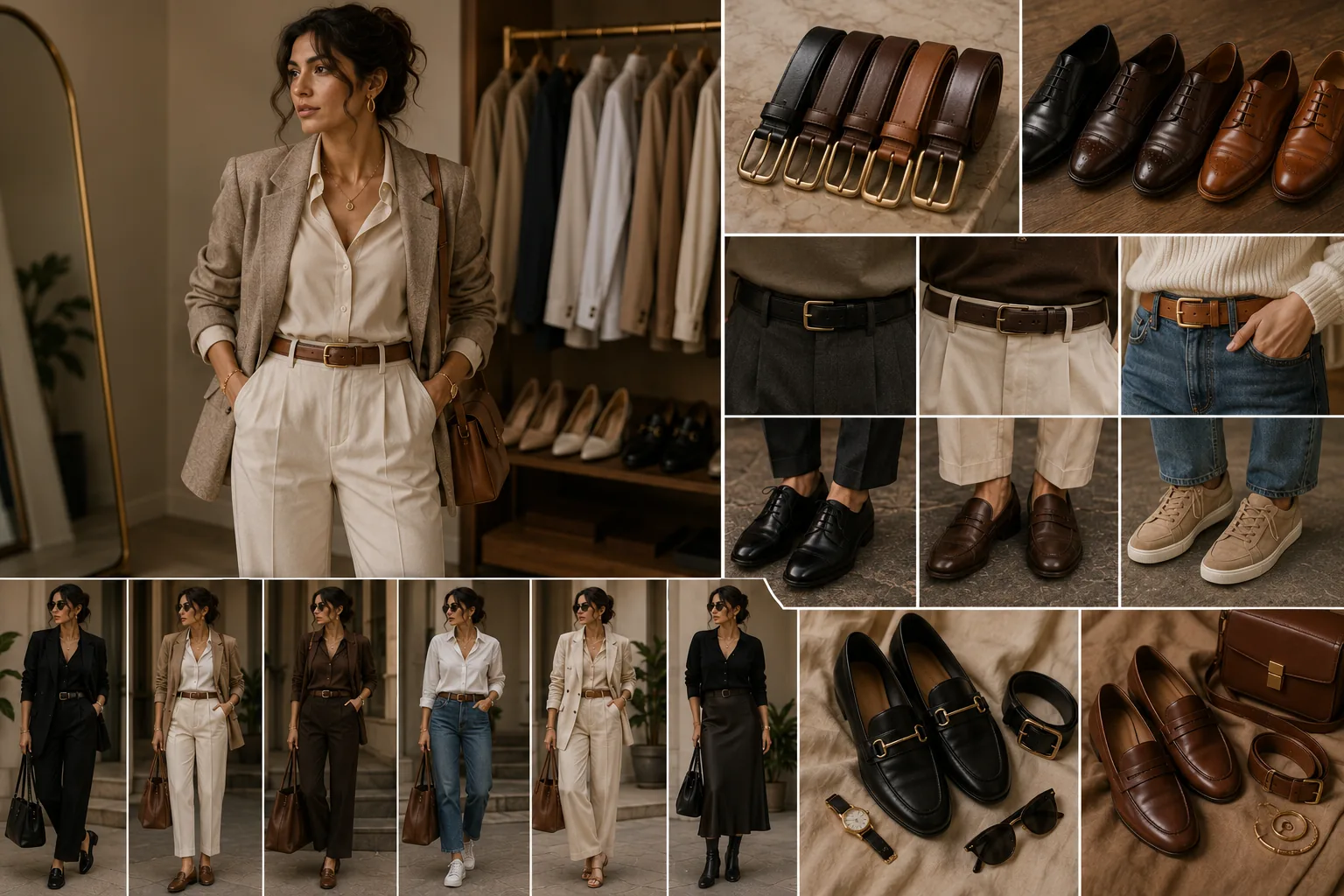
Where the rule is law
Formal dressing runs on quiet agreements, and belt-matches-shoes is one of the oldest. With a suit, tailored separates or a sharp office look, the belt should sit in the same colour family and finish as the shoes: black calf belt with black oxfords, dark brown with dark brown, a polished belt above polished leather.
The logic is visual: matched leathers make the belt disappear into the outfit's architecture, keeping the eye on the tailoring. A mismatched belt at a formal waist is a small flag that the details were not read.
Family, not forensic shade
Match does not mean identical dye lots. Brown runs a long spectrum — tan, cognac, chestnut, chocolate — and the standard is family plus finish: a mid-brown belt with mid-brown shoes passes; a pale tan belt with near-black brown shoes does not.
Finish matters as much as colour. Polished belt with polished shoes; matte or pebbled leather with casual leather; suede belt with suede shoes if you own one. A high-shine belt above suede loafers clashes in texture even when the colour agrees. The squint test settles it: if the two read as one material at a glance, you are done.
Where the rule relaxes
Below smart casual, exact matching starts to look overworked. With jeans, chinos, trainers or sandals, coordinate instead:
- Same temperature: warm belt (tan, brown) with warm shoes; cool (black, grey) with cool
- Similar darkness: dark with dark, light with light
- Non-leather freedom: webbing, canvas and woven belts pair by colour with the outfit, not the shoes
White trainers are neutral — nearly any belt works above them. And if the trousers sit well without one, skipping the belt entirely is often the cleaner casual answer; an unneeded belt is just hardware.
The wider leather ecosystem
The refinement beyond belt-and-shoes is loose agreement across everything leather: watch strap, bag, even the glasses case that comes out in meetings. Not identical — coordinated. A tan watch strap with brown loafers and a cognac bag reads as one warm story; a lone black bag against an otherwise tan outfit reads as a borrowed prop.
Women's dressing applies the same physics with more freedom: the bag may deliberately contrast, but belt and shoes agreeing in temperature still pulls the whole outfit together with zero effort. One warm story or one cool story per outfit is the whole ambition; two stories is where it unravels.
Five pairings, settled
The combinations that cover most weeks:
- Navy or grey tailoring, black oxfords: black polished belt, silver-tone buckle
- Chinos, tan or brown loafers: mid-brown matte belt — the workhorse pairing
- Dark jeans, white leather trainers: dark brown casual belt, or none if the waist sits well
- Black jeans, black boots: black matte belt, hardware matching the boot eyelets
- Linen trousers and sandals in summer: woven cotton or braided leather in tan — the one belt that forgives everything
Pin these five and the rule stops needing thought. Almost everything else in the wardrobe is a variation on one of them, a shade lighter or darker, and inherits the same answer.
The two-belt (maybe three) solution
Most wardrobes are fully covered by two belts: one black, polished, around 3 cm wide, for tailoring; one mid-to-dark brown in a slightly casual finish for everything else. A third — woven cotton or canvas — earns its place in summer-heavy, trainer-heavy lives.
Buy them in full-grain leather if you can; belts fail publicly, at the buckle and the crease. Keep buckles simple and matched to your watch and jewellery metal — silver with silver, gold with gold — and this entire question retires from your mornings. Replace a belt when the crease at your usual hole turns pale — that line announces itself across a room.