 SKIBDRIP®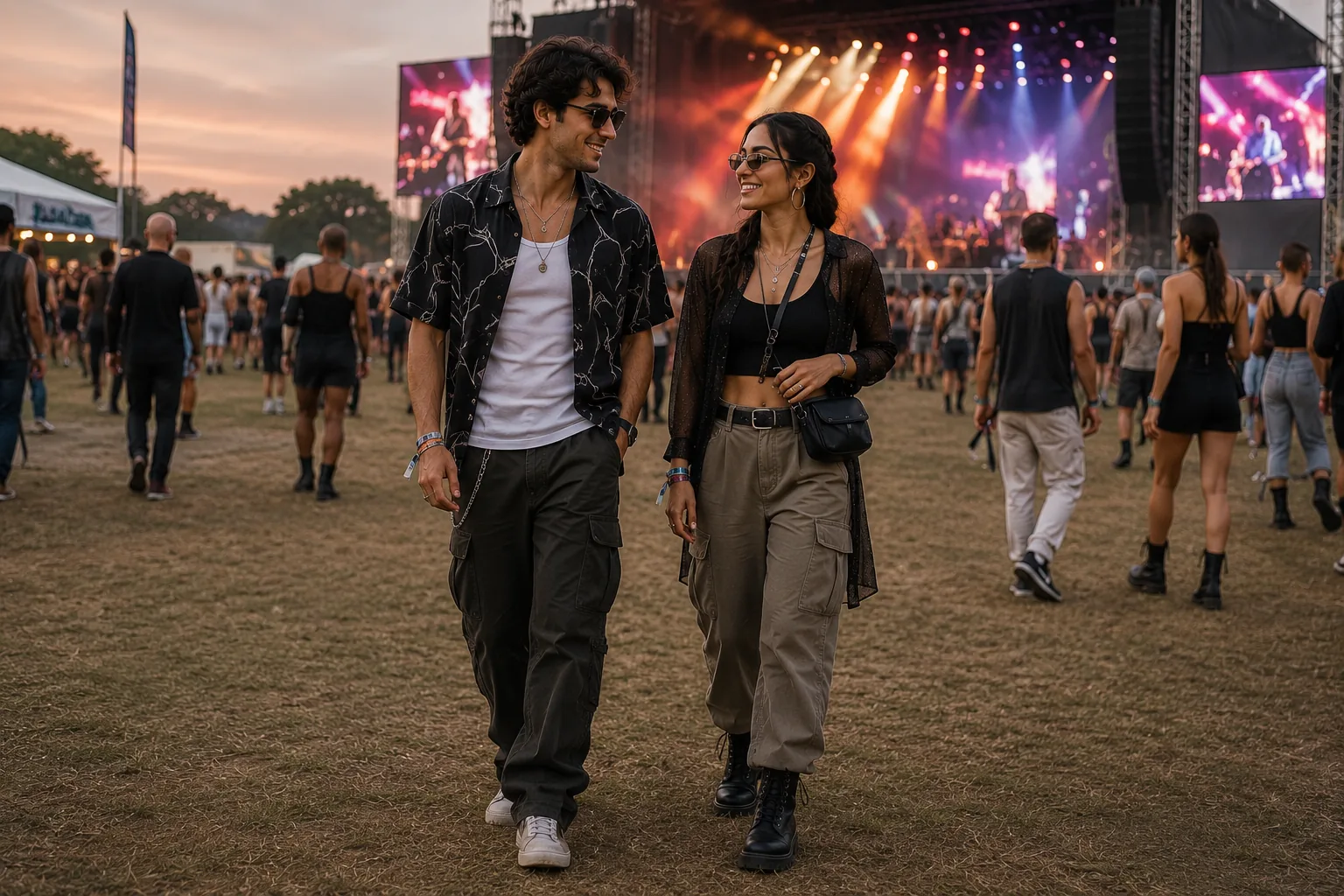
Venue first, genre second, wardrobe third
The same artist demands different outfits in different rooms. An outdoor festival means sun, dust, distance and no seat — endurance dressing. A stadium or arena means air-conditioning, queues and kilometres of walking from parking. A small club gig means heat, crush and spilled drinks.
Start with the venue's physics: how long will you stand, how far will you walk, what is the weather doing, and is there anywhere to keep a bag? Check the venue's bag and umbrella rules online — they shape the outfit more than the lineup does. Then let the genre tune the look — indie, techno, Bollywood night and a metal gig each have a native language. The crowd photographs as one organism; you want to be fluent in it, comfortably.
Shoes: closed, broken-in, sacrificial
Feet decide whether you enjoy the last hour. The rules are firm:
- Closed shoes always — toes do not survive crowds
- Broken-in sneakers or boots; never anything new
- Nothing you would mourn — floors collect beer, mud and worse
- Cushioned soles for concrete; grip for festival grounds after rain
White sneakers are the classic gig shoe but expect them to age a year in a night. For monsoon-season festivals and outdoor grounds in India, treat it like dressing for the rains: quick-dry materials, grippy soles, nothing suede. Heels have no jurisdiction here — not even block heels.
Layers, fabric and the temperature arc
A gig night swings hot-cold-hot: queue in the evening air, crush of bodies inside, cold walk to transport at midnight. Build a layer system.
Base: breathable cotton, linen or technical fabric — a tee, tank or light shirt that survives sweat. Mid: an overshirt, flannel or light hoodie you can tie at the waist when the pit heats up. Outer for outdoor festivals: a packable rain shell beats an umbrella, which crowds ban and wind destroys.
Avoid heavy jackets you must hold for four hours, and delicate fabrics — silk and a mosh pit end badly. A cap earns its place at daytime open-air sets. Dark colours forgive spills; black is the concert uniform for a reason.
Carry almost nothing, and carry it securely
Crowds are where phones go to disappear. The carrying system matters as much as the clothes.
- Zipped pockets or a small crossbody worn in front — never a back pocket, never an open tote
- Phone, card, ID, lip balm, earplugs; leave the rest
- Cash in a second pocket at festivals where networks die
- A bandana or light scarf: dust mask, sweat control, sun cover, instant style
Earplugs deserve a word: decent filtered ones protect hearing without muffling the mix, and your ears will thank you for decades. If the festival is multi-day, the same small-kit logic scales — packing light is a transferable skill.
The statement piece, and where to stop
With comfort engineered, add the fun: one statement that carries the whole look. A band tee — wearing the artist's merch is enthusiasm, not a faux pas, whatever old rules claimed. A fringed or metallic jacket at a festival. Statement sunglasses for daytime sets. Glitter, mirrored accessories, a printed bucket hat.
One loud piece on a practical base reads effortless; five read like the outfit came before the music. Do the final check against reality: can you dance, sit on grass, queue for an hour and survive rain in this? If yes, you have the rare outfit that works at 6 pm and still works at 1 am — which is the entire brief.