 SKIBDRIP®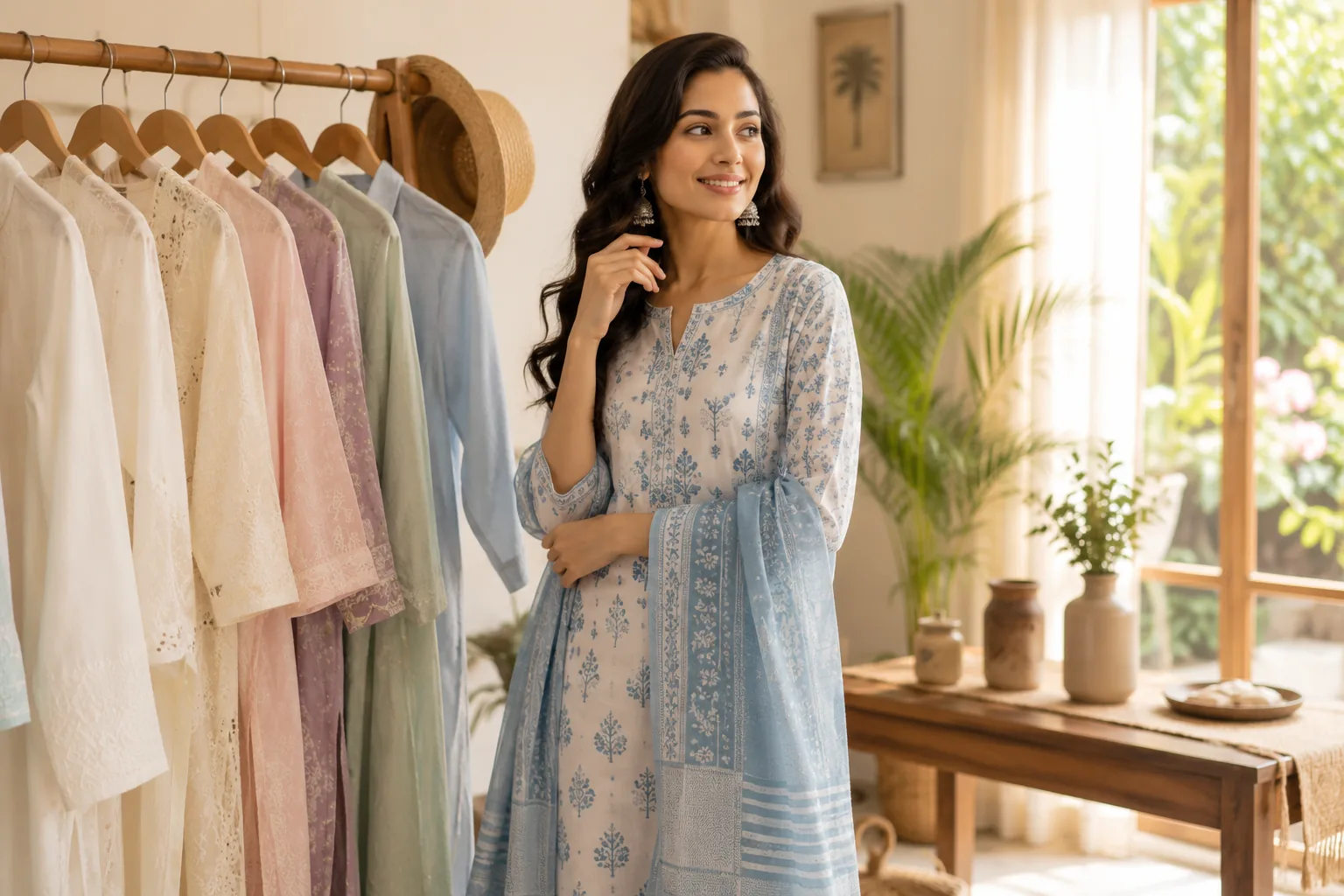
Weave beats fibre — the rule behind the rule
Two cotton garments can behave like different species at 42 degrees. What decides comfort is not the fibre on the label but how openly it is woven, how fine the yarn, how loose the cut. An open-weave cotton breathes; a dense cotton twill suffocates in the same afternoon.
So shop by hand and light: hold the fabric up — if it lets light through and crushes soft in the fist, it will breathe. This is why the traditional Indian summer wardrobe looks the way it does. Mulmul, handloom, khadi — generations optimised for exactly this weather long before performance-fabric marketing arrived, and the old answers still beat most of the new ones. The label can wait; the hand test never lies.
The champions: mulmul, handloom cotton, khadi
Mulmul — fine, almost weightless muslin — is the softest thing you can wear in May: it breathes, dries fast and improves with every wash. Handloom cotton from any region — Mangalgiri, Kala cotton, Bengal handloom — trades a little softness for texture and better drape. Khadi, handspun and handwoven, is the airiest of the three and crisps up smartly for shirts and kurtas.
None of this is a luxury purchase: khadi bhandars, state emporiums and local markets sell all three at every price point. A white mulmul kurta and two handloom shirts will outwork any imported performance polo from March to July — at a fraction of the cost and twice the dignity.
Linen, and the wrinkles you must forgive
Linen runs cooler than most cottons — hollow fibres, fast moisture release — and its texture reads expensive even when it was not. The tax is the crumple, and the adjustment is attitude: linen's wrinkles are the point, proof the fabric is honest. Press once in the morning and let the day do what it does.
Cotton-linen blends soften the tax for office settings, holding a crease a few hours longer. For trousers, choose mid-weights — the gauziest linens bag at the knees by lunch. In colour, linen loves the summer neutrals: white, bone, sand, faded indigo, the occasional washed olive. White linen, worn generously loose, is the closest thing to shade you can wear — and nothing else in the cupboard looks better slightly undone.
Office summers: seersucker, chambray, poplin
Office codes complicate summer, and three weaves solve most of it. Seersucker's puckered stripe holds the cloth off your skin — a seersucker shirt is air-conditioned by construction. Chambray gives the denim look at half the weight. Fine poplin stays crisp through meetings while staying thin.
All three survive the commute-to-AC double climate that defines office wear in India: breathable on the way in, presentable in the meeting room, layerable when the vents point at you. Keep fits relaxed — a slim shirt in the right fabric still traps heat against skin — and favour lighter colours; dark cloth absorbs noticeably more heat in direct sun, as the two o'clock walk to lunch will confirm.
What to avoid — and the humid-coast exception
Polyester against the skin is dry-heat misery: it blocks evaporation, traps sweat and holds odour. Dense denim, heavy twill and stretch-laden blends follow close behind. Silk and sheen belong to the evening, when the sun stops taxing them.
One honest nuance: on the humid coast — Mumbai, Chennai, Kochi — sweat barely evaporates anyway, so thin quick-drying synthetics sometimes beat waterlogged cotton; it is the monsoon's logic arriving early. In dry inland heat — Delhi, Ahmedabad, Nagpur — natural fibres win without contest. Read your city's air before your wardrobe, and when the loo blows, dress for the heat itself: open weaves, loose cuts, covered shoulders, light colours.