 SKIBDRIP®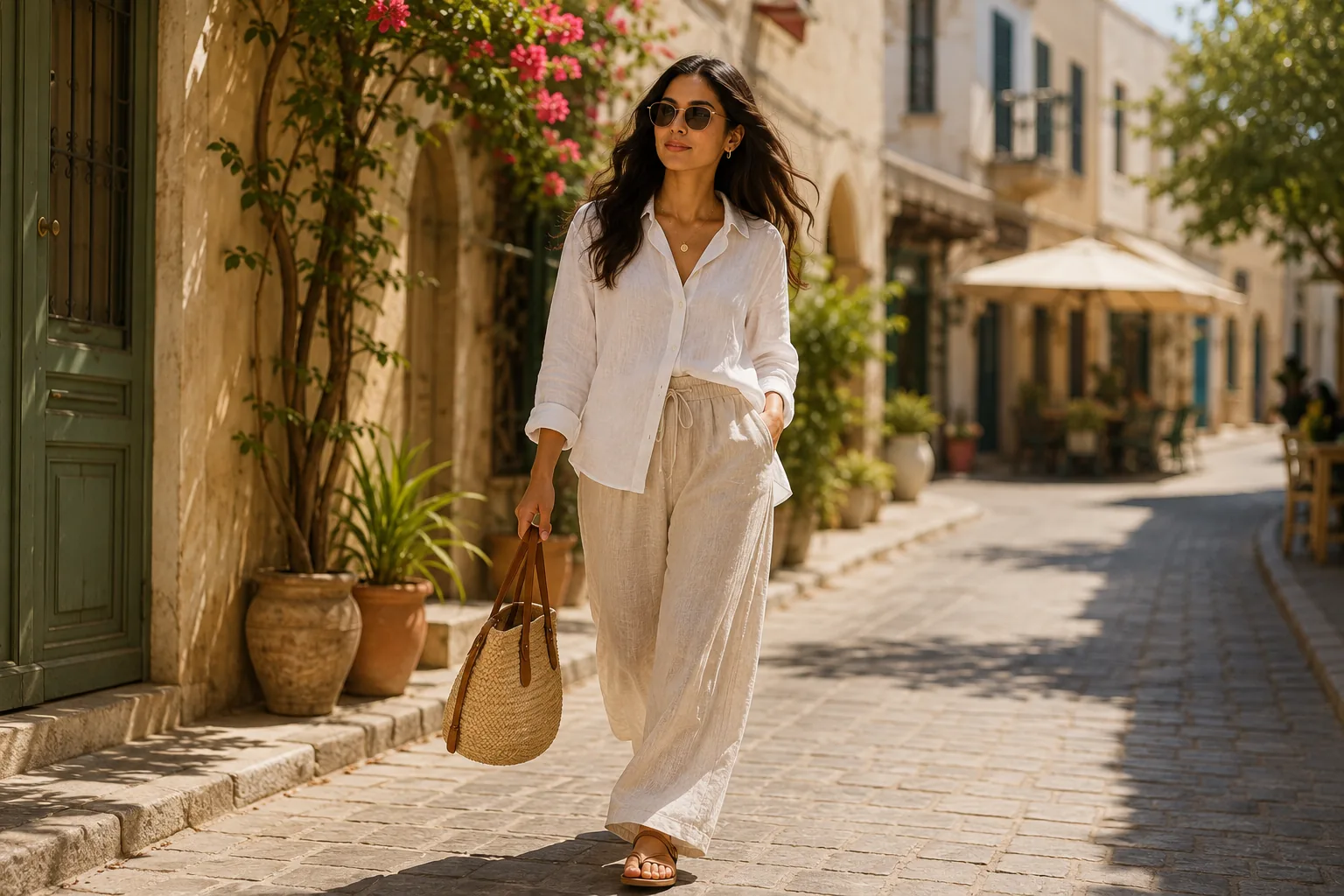
Fabric is the whole game
In serious heat, fibre choice outranks every styling decision. The friends: cotton in open weaves — poplin, seersucker, airy mulmul — linen and linen blends, chambray, and lightweight lyocell. They absorb sweat, release it, and let air through.
The enemy is polyester sitting directly on skin: it traps heat and holds odour, however breezy the cut looks. Check the label before the silhouette. Weave matters as much as fibre — a loose-woven linen shirt cools better than a dense cotton one, and the fabrics that survive Indian summers are the global gold standard for a reason.
Looser is cooler
Skin-tight clothing in heat cooks you in your own humidity; loose clothing creates moving shade. Choose silhouettes with built-in airflow: camp-collar and oversized shirts worn open at the neck, relaxed pleated trousers, palazzos, A-line and tiered dresses, wide shorts, kaftans and unstructured co-ords.
Desert cultures worked this out centuries ago — loose, full-length layers keep you cooler than exposure does, because they block sun while letting air circulate. A billowing full-sleeve mulmul shirt is genuinely cooler than a clinging vest, and it reads considerably more considered at lunch. Fit still matters — loose should hang from the shoulders, not balloon shapelessly at the waist.
Colours for sun and sweat
Colour has two jobs in a heatwave: reflect sun, forgive sweat. Light shades — white, cream, sand, pale blue — reflect heat best. Sweat patches show worst on saturated mid-tones: grey, bright blue, teal. They vanish on white, on deepest navy and black, and inside busy prints.
So run either light-and-loose or dark-and-airy, and lean on prints for high-sweat days. If black is your language, keep it loose linen and it works — it absorbs more sun but breathes, which matters more once you reach the shade. Prints earn their keep here: a busy block print hides in one afternoon what a plain grey tee announces.
Keep one crisp element
The line between summer-styled and beach-surrendered is a single sharp element. Loose everything can drift into shapeless; anchor it — a collar, a structured sandal, a real waistband, a straw hat with a proper brim, one piece that is actually pressed.
Grooming carries extra weight when clothes are minimal: feet worth the open shoe, pressed cotton rather than crumpled, sunglasses that fit. Heat strips outfits down to a few pieces, so each visible piece does more of the talking. Fewer items, better condition — put-together survives 42 degrees just fine.
Heat with a dress code
Formal obligations do not pause for summer, so engineer the formality: an unlined or unstructured blazer in high-twist wool or linen weighs a fraction of the standard one; shirts in open-weave cotton or chambray pass every dress code while breathing properly; trousers in tropical-weight wool hang cleaner than sweat-heavy chinos and feel cooler too.
Carry the layer, wear it in the meeting, shed it at the desk. Kurtas in fine cotton are the subcontinent's elegant answer to the same problem — smart, ventilated and unbothered by 40 degrees. Loafers with no-show socks finish it. Nobody senior remembers whether you wore the jacket in the corridor; they remember composure in the room.
The heat kit
Small logistics keep the style alive past noon:
- A thin cotton or bamboo undershirt on formal days — it catches sweat before the shirt shows it
- A spare tee in the bag for the worst commutes
- Leather or rubber sandals broken in before the season, never during
- Antiperspirant at night, talc where fabric rubs
- A cotton handkerchief; blotting beats wiping
And slow down — the final styling decision in extreme heat is pace. Arriving two minutes later and dry is the better look, so book the shaded side of the street the way you would book a seat.