 SKIBDRIP®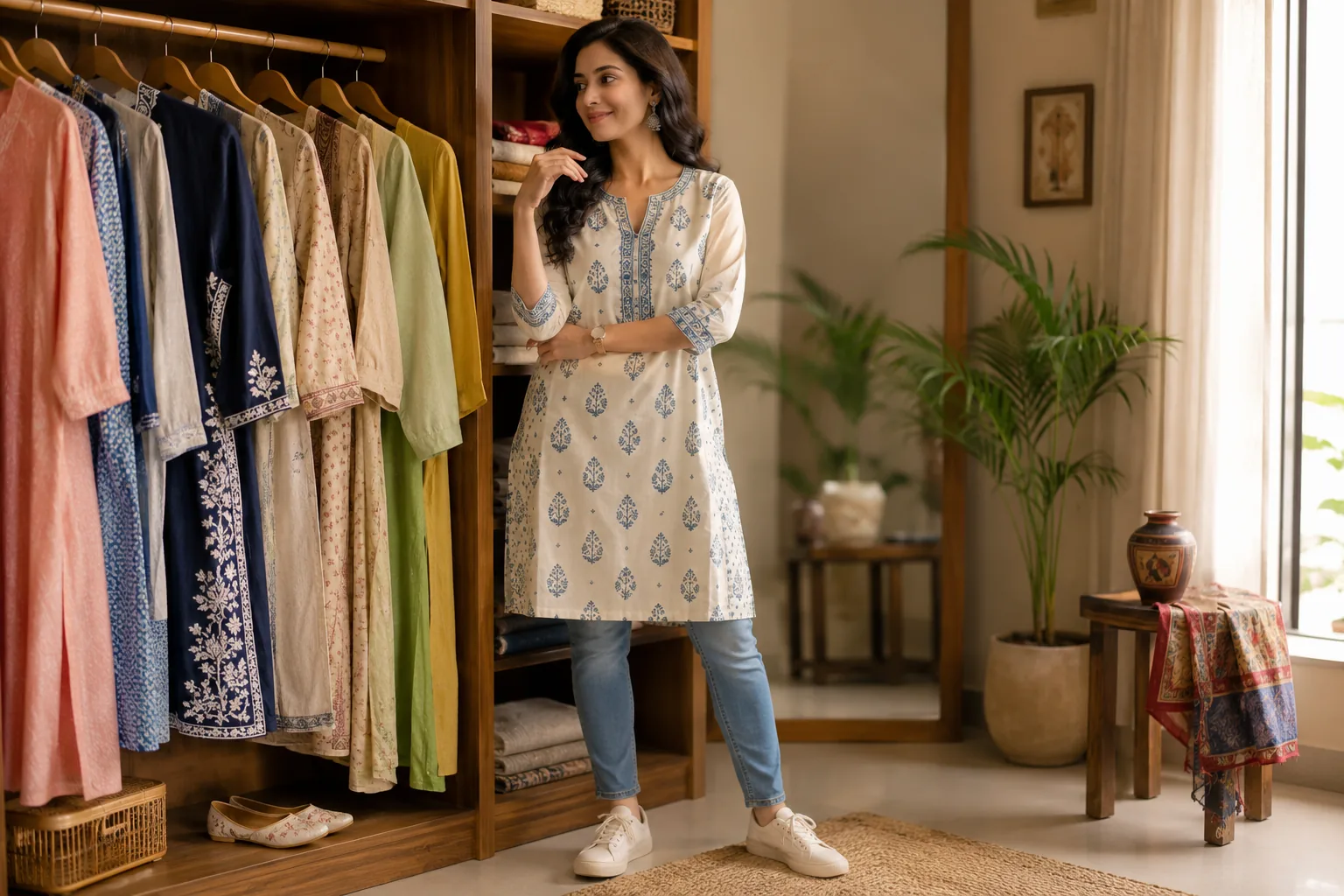
Length decides everything below it
A kurta's hem tells you what it wants underneath. Short kurtas — ending mid-thigh — behave like long shirts: straight jeans, chinos, even tailored shorts at home. Knee-length kurtas want slimmer bottoms to balance the volume: churidars, cigarette pants, tapered trousers.
For women, the wide-leg route flips the proportion instead — a straight knee-length kurta over palazzos reads relaxed and current, while a floor-sweeping anarkali is an occasion in itself and needs nothing but flat juttis and good earrings. The one reliable mistake is volume on volume with nothing fitted, or short-on-skinny with nothing relaxed. Keep one loose element and one neat element in every pairing and the silhouette sorts itself out.
The jeans pairing, done properly
Kurta with jeans is the workhorse of Indian casual — and small details decide whether it looks considered or accidental.
- Jeans: straight or slim, mid-blue or indigo, minimal distressing under a traditional print
- Kurta: short to mid-thigh, side slits sitting flat, sleeves rolled to the forearm
- Shoes: white leather sneakers, kolhapuris or suede loafers
- One wrist piece: a watch or a kada, not both
A chikankari or plain mulmul kurta over indigo denim, cuffs folded, is a ten-minute outfit that survives coffee, campus and casual Friday alike. If the kurta is printed, keep the denim dark and quiet; if the denim is light, let the kurta go solid and let the wash be the interest.
Layer for structure
The fastest upgrade is the Nehru jacket — the sleeveless bandi with a mandarin collar. Over a solid kurta it adds shoulders, a second colour and instant formality; in textured cotton or raw silk it carries you from an office event to a wedding side-function without a change of clothes.
Going the other direction, a denim or bomber jacket over a short kurta pulls the whole outfit towards streetwear — best with slim bottoms and clean sneakers. Women can reverse the layering entirely: a longline chikankari kurta worn open over a tank and jeans becomes a summer duster. Same garment, three registers. That range is exactly why the kurta earns its cupboard space, and why it rewards experimentation more than any western basic does.
Fabric sets the register
Mulmul and soft handloom cotton read easy and daytime; they crease, and the crease is part of the charm. Chikankari brings craft without weight — white-on-white for day, pastels for evening. Linen blends push the kurta towards smart casual. Silk blends, chanderi and anything with sheen move it firmly into festive territory.
Pick the fabric for the hour, then keep prints honest: bandhani and ajrakh blocks love plain bottoms, and a loud print over a loud bottom is a costume. Through an Indian summer, the right breathable fabric is not a style preference but survival — and in an AC office, the same kurta wants a bandi or stole within reach by mid-afternoon.
Finish like you meant it
Footwear moves a kurta more than any accessory: sneakers say casual, kolhapuris say relaxed heritage, closed mojaris say occasion, loafers say office. Match the register of the day, not the colour of the print.
Then one finishing object — a steel or leather-strap watch, a single kada, small jhumkas or hoops for women, a slim stole only when the event calls for it. And press the kurta: cotton crumples in transit, and two minutes with an iron separate deliberate from dishevelled. If the collar and the cuffs are crisp, the rest of the outfit gets believed — which is most of what office-appropriate means on an ordinary working day.