 SKIBDRIP®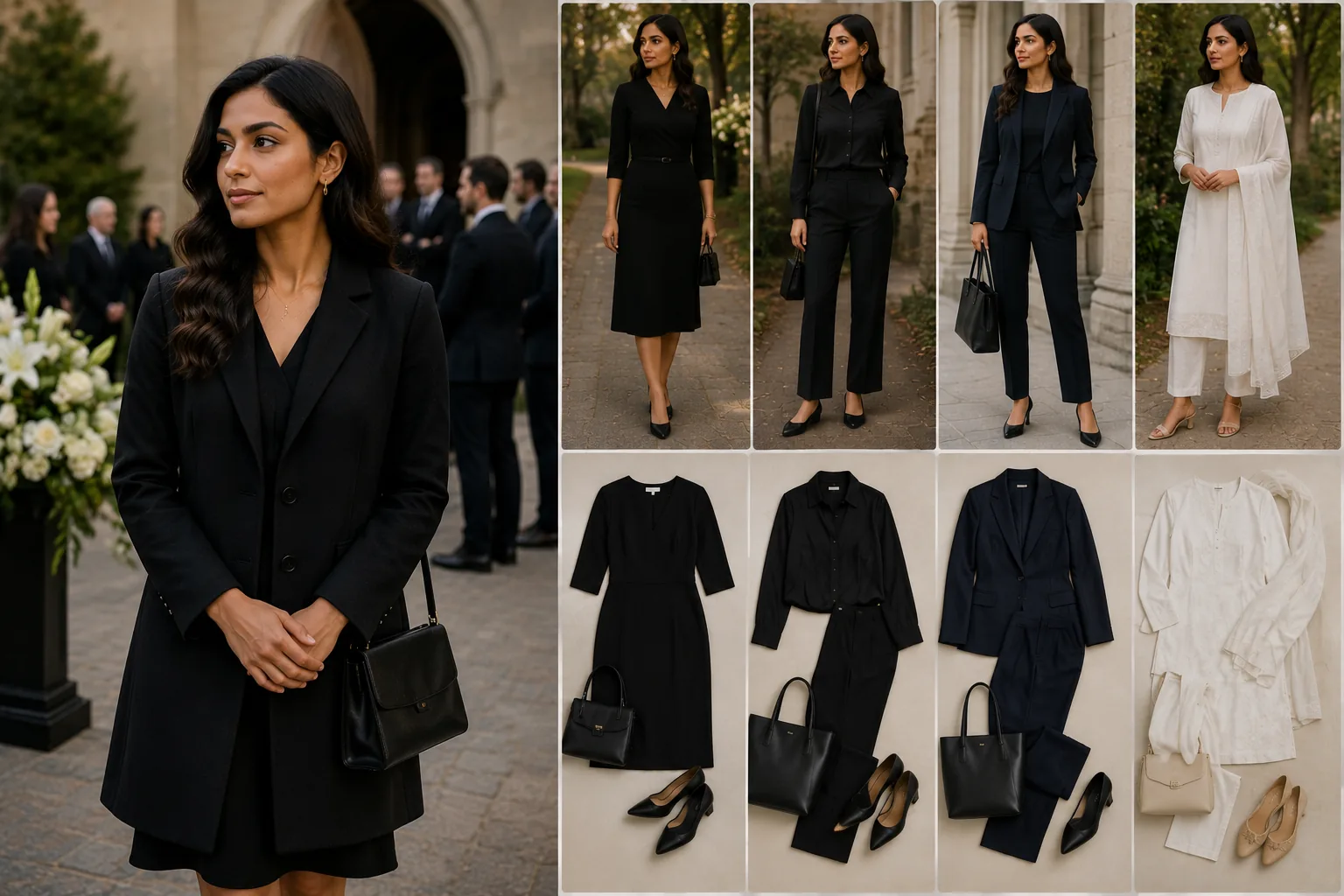
The single principle underneath every tradition
Funeral dress has one job: to make your presence about the family and the person being remembered, never about you. Every specific rule — colour, coverage, formality — flows from that.
So the universal brief is: subdued colour, modest coverage, clean and pressed clothing, minimal jewellery, no logos, nothing that shines or demands a second look. Formality should sit at or above smart casual; visible effort is itself a form of respect. If you remember nothing else, quiet, covered and cared-for will be appropriate in any tradition on earth. Dress so that, in every photograph and memory of the day, you are simply present.
Western and Christian services
Dark colours are the language of mourning here. Black is traditional and always correct; charcoal, deep navy and dark grey are equally acceptable.
Men: a dark suit or dark trousers with a sober shirt — white, grey, muted blue — a dark tie where the family is formal, and polished dark shoes. Women: a dark dress at knee length or longer, or dark trousers with a modest top; covered shoulders inside a church; closed shoes or simple heels; minimal make-up and jewellery.
Avoid bright prints, denim, sneakers, shorts and anything sheer or fitted for effect. If you own no dark suit, dark trousers with a sober jumper are entirely acceptable. A dark overcoat matters at gravesides — committals happen outdoors in all weather.
Hindu, Sikh, Muslim and other Indian traditions
In most Hindu communities the mourning colour is white, not black — attend in white or very pale, simple cotton clothing: a plain kurta-pyjama for men, a white or light-coloured saree or salwar-kameez for women. Black is traditionally considered inauspicious at many Hindu rites, so avoid it unless the family indicates otherwise.
At Sikh services, cover your head — a rumaal or dupatta — and dress simply in whites or pale tones. At Muslim janazah gatherings, sober, loose, fully covering clothing is expected, with women often covering the head. Across all of these: remove shoes where required, keep jewellery near zero, and let the simplest garment you own do the speaking. Choose comfort too — rites can run hours, often seated on the floor.
When you do not know the family's tradition
Mixed gatherings and unfamiliar customs are common, and there is a reliable protocol. First, ask — a family friend, the person who informed you, or the venue; nobody minds the question and everybody minds a misjudgement.
If asking is impossible, choose muted, mid-formality clothing that offends no tradition: grey, beige, soft white or muted blue trousers or a modest dress, covered shoulders, plain closed shoes. Carry a scarf or dupatta — it converts instantly into a head covering, a shoulder cover for a church, or warmth at a graveside; a plain dark shawl serves the same purposes. Arrive slightly early, observe, and follow the family's lead on shoes, seating and head coverings.
The details people notice without meaning to
Grief sharpens attention, so small signals carry. Silence your phone before entering. Skip strong fragrance entirely. Keep make-up minimal and waterproof. Choose shoes you can stand in — services involve long stretches of standing, queues to pay respects, and sometimes uneven ground at cremation grounds or cemeteries.
Weather-proof quietly: a plain dark or neutral umbrella, a sober coat. Leave flashy watches and bright bags at home, and carry little. Iron everything; creased clothing reads careless in a room where care is the entire point. These are the same habits that make any outfit look considered — here they simply serve someone else's day instead of yours.