 SKIBDRIP®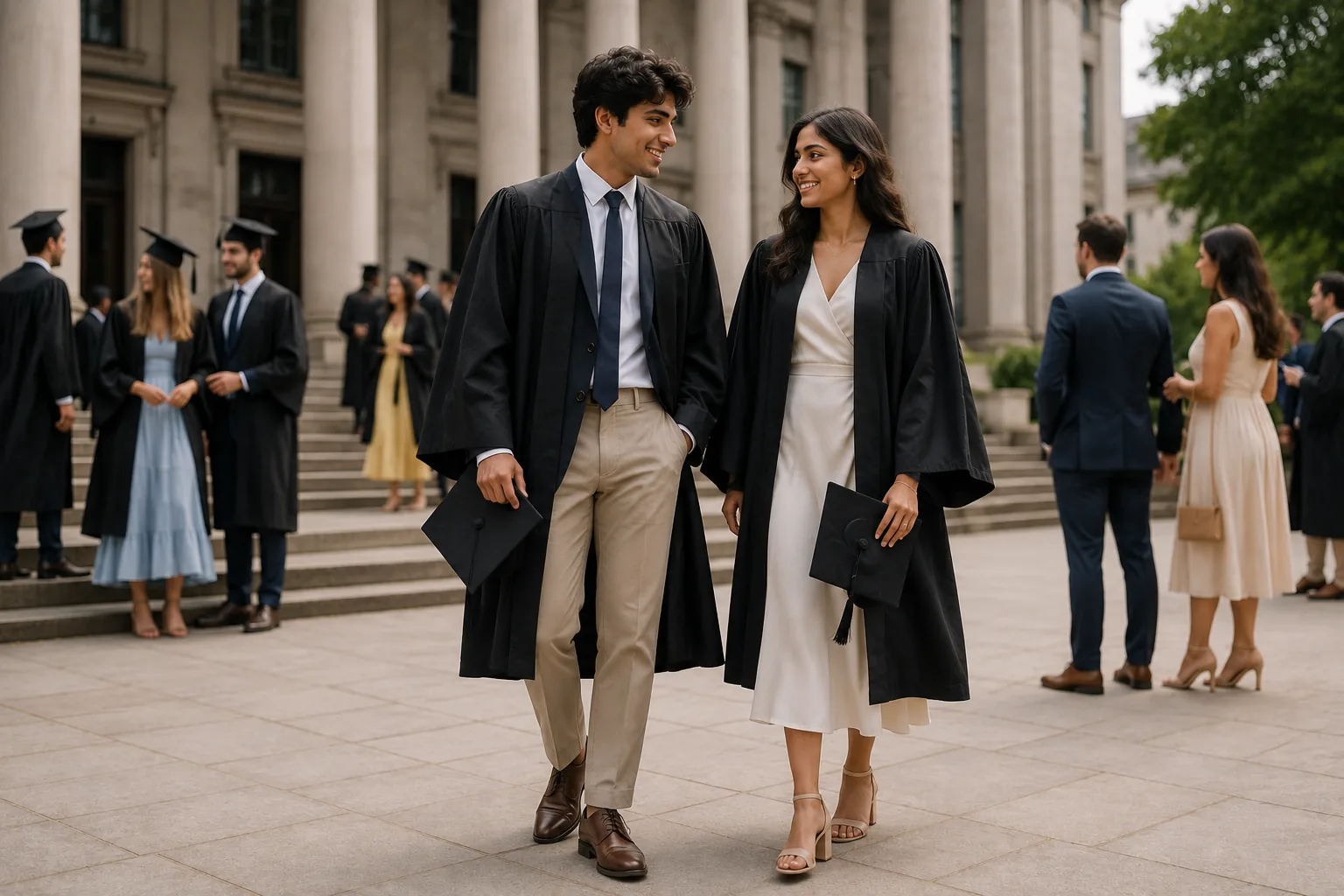
Dress for the two events inside the one day
A graduation is really two occasions running at once: a formal ceremony where a polyester gown covers most of you, and an all-day photo session where it comes off.
So the outfit must pass both tests — work under the gown without bulking or overheating, and stand alone in every photograph afterwards. That rules out heavy layers, high stiff collars that fight the gown's neckline, and anything so casual it collapses the moment the gown is returned. Think of the gown as a borrowed jacket: what is underneath should be complete, smart and light. Check your university's convocation guidance first — some prescribe colours or formal Indian dress.
What works underneath, precisely
For men: a light cotton or poplin collared shirt in white, light blue or soft colour, with chinos or tailored trousers in navy, grey or tan. A tie if your institution leans formal; a lightweight blazer only if you run cold, since gown plus jacket in an afternoon ceremony is a sauna.
For women: a knee-length or midi dress with a defined neckline — necklines show above the gown's V — or a blouse with tailored trousers or a skirt. Avoid maxi lengths that tangle with the hem and stage stairs. In India, a crisp cotton or silk-cotton kurta set or a light saree photographs beautifully at convocation — many universities' academic dress sits naturally over Indian formalwear.
Shoes: the decision the stage cares about
You will climb steps, cross a stage in front of a thousand people, and then stand on lawns for two hours of photographs. Choose accordingly.
- Best: block heels, loafers, polished flats, low wedges, clean minimal leather sneakers where the crowd is casual
- Risky: brand-new anything, stilettos on grass, slippery leather soles on polished stages
- Out: flip-flops, beaten-up trainers
Break shoes in for a week beforehand, and practise the stage walk once in the final pair. If heels matter to you, carry foldable flats for the lawn stretch. The walk across the stage is eight seconds long and photographed from every angle — stability is style here.
Colour, cap and the photograph maths
Most gowns are black, so colour placement is strategic: whatever shows at the collar, below the hem and on your feet does all the talking. A white or light collar brightens the face against black; a coloured dress hem or good shoes lift the full-length shots.
Check your stole or sash colour if your institution uses one, and avoid clashing with it. Keep jewellery modest — the cap and gown are already the statement — and remember the cap flattens hair, so plan a style that survives it. Solid colours photograph better than small busy prints, which shimmer on camera. Photos outlive the day by decades; colours that suit your skin tone near the face are the single highest-value choice you can make.
The logistics layer nobody warns you about
Convocations run long — rehearsal, seating, speeches, the queue of names. Comfort is a planning problem.
Gowns are warm: choose breathable fabric underneath and skip the extra layer if the venue is un-airconditioned. Carry safety pins — gowns gape and hoods slip — and hairpins to anchor the cap. A small crossbody bag or a pocketed outfit beats a handbag you must hand to someone for every photo. Eat before, and charge your phone fully; the day produces three hundred photographs and the ceremony will not pause for you. And confirm the family dress guidance too — parents in smart casual photograph better than anyone expects, and they will frame these pictures.