 SKIBDRIP®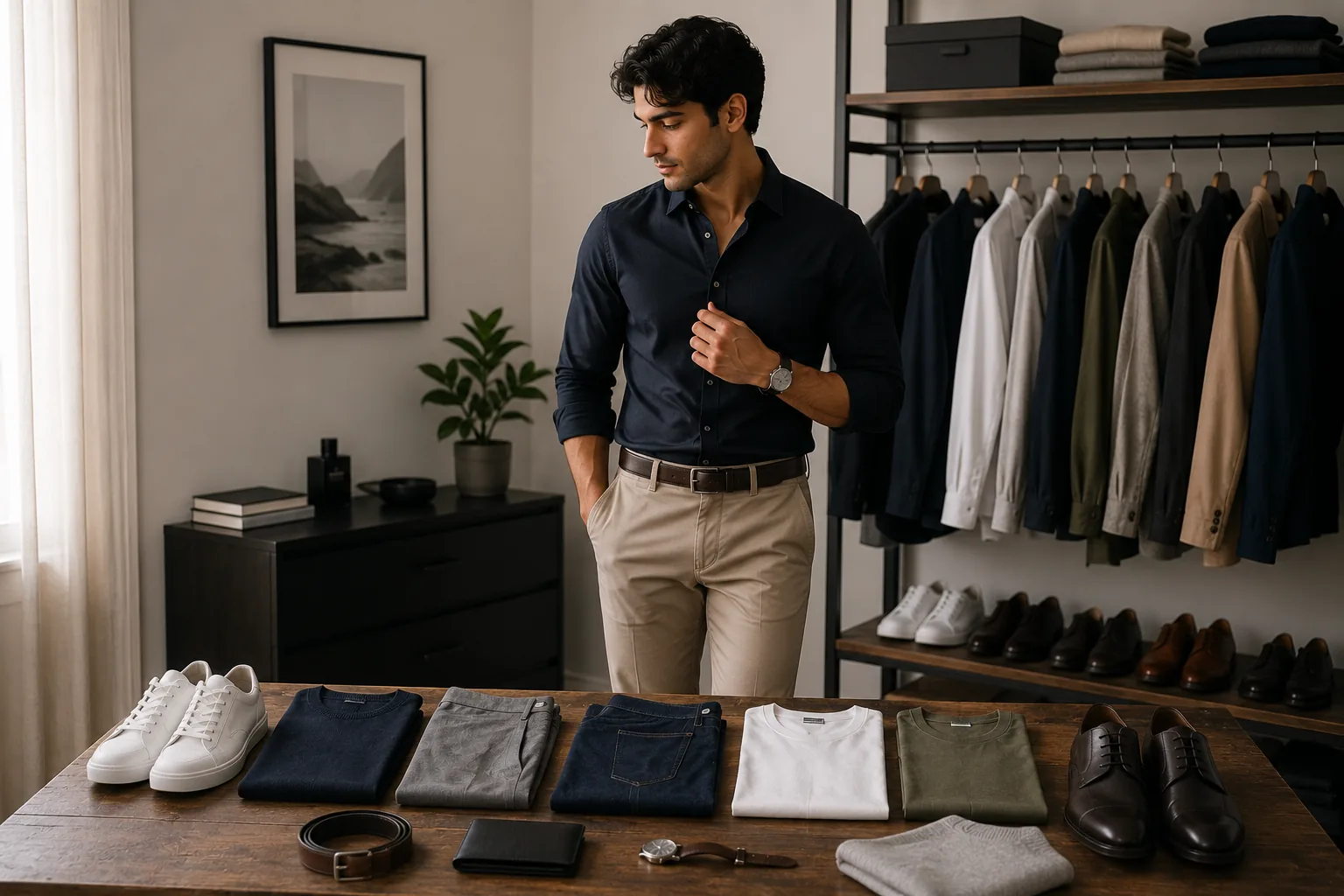
Fit is nine-tenths of the game
Nothing you buy matters more than how it sits on you, and most men wear clothes half a size to a full size too big — usually the size they settled on years ago. Four checks carry ninety per cent of the result:
- Shoulder seam ends where your shoulder bone does — not drooping down the arm, not biting into it
- Sleeves end at the wrist bone; jacket sleeves stop just short of that to show a sliver of shirt cuff
- Trousers skim the shoe with one shallow break or none — no pooling fabric at the ankle
- Body follows your torso without pulling at buttons or billowing at the sides
A three-hundred-rupee tee that fits beats a designer one that does not. Learn how a shirt should fit first; every other garment borrows its logic.
Build on neutrals, earn the colour
Navy, grey, white, off-white, olive, tan, black. Seven shades, and almost any two of them agree with each other — that is the entire trick behind men who look co-ordinated without trying. Their wardrobes cannot clash.
Put neutrals where the money goes: trousers, outerwear, knitwear, shoes. Let colour arrive through low-risk pieces first — a tee, socks, a pocket square — and hold it to one colour per outfit while you learn. Two neutrals plus one colour is the formula that never embarrasses anyone.
When you are ready to go further, work out which two or three shades suit your skin tone and promote them to the pieces nearest your face — collars, knits, scarves. Compliments follow the face, not the shoes.
Plain over printed, texture over graphics
A plain navy tee works with everything you own; a graphic tee works with jeans and an apology. While your wardrobe is small, choose solids and let interest come from texture instead — oxford cloth, brushed flannel, ribbed knits, suede, corduroy. Texture reads expensive from across the room and never argues with the rest of the outfit.
Prints are not banned; they are advanced. A fine stripe or a small check reads as texture from two metres away and is the safe entry point. Logos bigger than a coin date fastest and cheapen quickest. If you love print, hold it to one piece per outfit and keep everything around it plain. The quiet shirt gets complimented; the loud one gets remembered — once.
Buy less, spend where it shows
Style improves faster by subtraction than by shopping. Five outfits you love beat twenty you tolerate, and repeating proven outfits is what well-dressed men actually do — nobody is keeping a register of your rotation.
When you do buy, think in cost per wear: price divided by the number of times you will honestly wear it. Spend up on shoes, outerwear and trousers — worn constantly, inspected closely, hard to fake. Save on tees, basics and anything trend-led. One four-thousand-rupee pair of leather shoes, resoled once, will outlast and out-look six cheap pairs bought over the same years. The maths is boring, and it is also the whole secret of a wardrobe that looks expensive on an ordinary income.
Finish the sentence: shoes, grooming, upkeep
People read you from the extremities inward. Clean shoes, a deliberate haircut, trimmed nails and an ironed collar signal care louder than any label — and scuffed shoes under a good outfit quietly undo it.
Build the unglamorous habits: polish leather monthly, lint-roll dark knits, steam or iron shirts the night before, retire the tee with the stretched neck without a funeral. Stand straight; posture is free tailoring.
Then stop fussing. The basics of men's style are not a costume change — they are the same simple clothes, fitting properly, kept properly, repeated with confidence. Consistency, more than novelty, is what other people end up calling style.