 SKIBDRIP®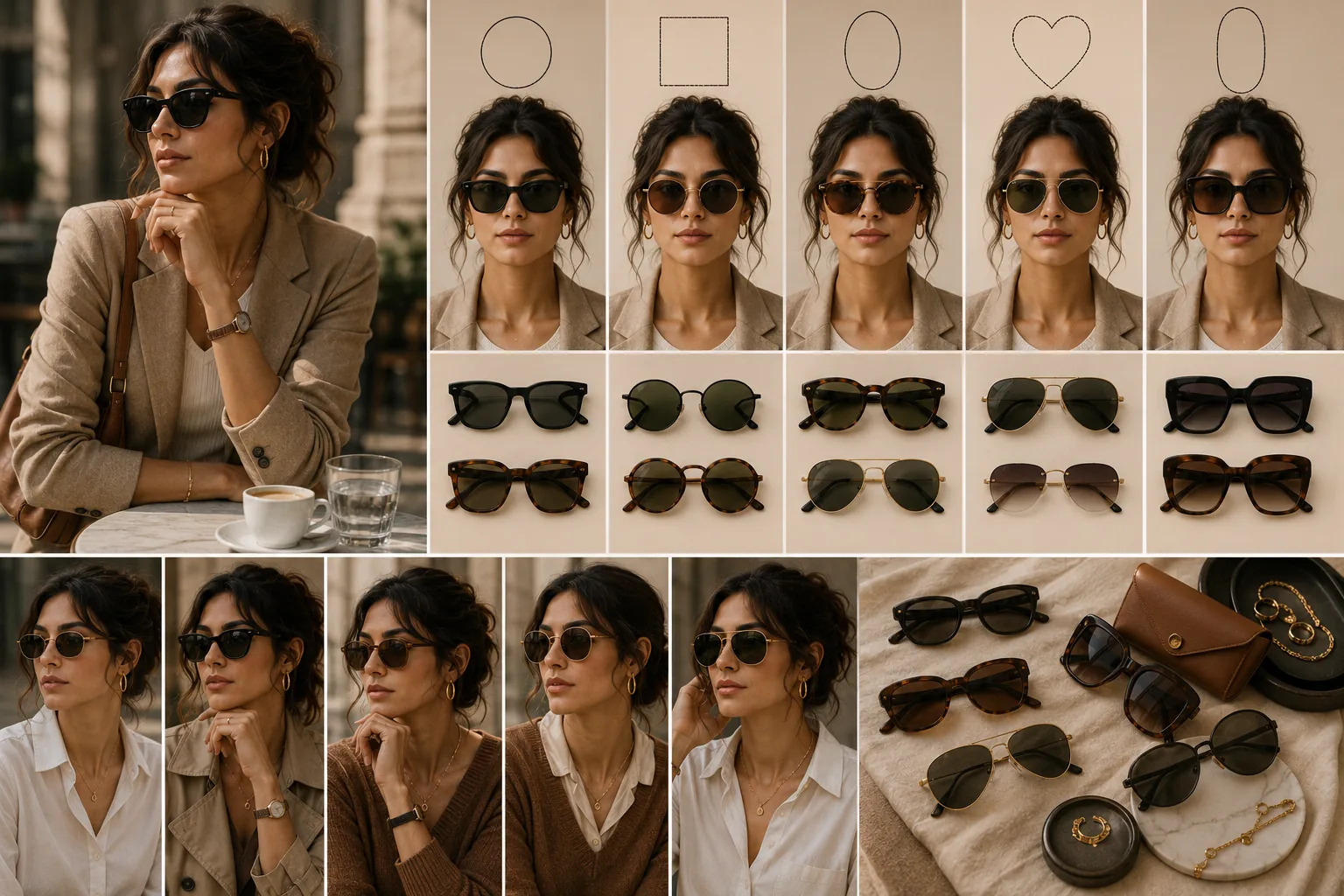
Find your face shape in thirty seconds
Pull your hair back, face a mirror straight on, and compare three widths — forehead, cheekbones, jaw — plus face length.
- Widths roughly equal, length noticeably more: oval or long
- Full cheeks, soft jaw, width close to length: round
- Strong jaw, widths similar, visible angles: square
- Wide forehead tapering to a narrow chin: heart
- Narrow forehead and jaw, widest at the cheekbones: diamond
Most faces are blends; pick the nearest and treat it as a starting point, not a verdict. The mirror-trace trick — outlining your reflection with a dry marker — settles arguments fast.
The contrast principle
Frames flatter by contrast: they lend the face what it has least of.
- Round: angular frames — rectangular, square, clubmaster, wayfarer — add definition; avoid small round lenses that echo the curve
- Square: rounded and oval frames or aviators soften the jaw; skip boxy frames that double the angles
- Oval: the lucky shape — most styles work; keep the scale proportionate
- Heart: aviators, rimless and bottom-heavy frames balance a wider forehead
- Long: taller lenses, oversized styles and deep wayfarers shorten the face; avoid narrow slim rectangles
- Diamond: oval and rimless styles, or gentle cat-eyes to widen the brow line
Contrast, not repetition, is the whole trick.
Fit outranks shape theory
A theoretically perfect frame that fits badly loses to a decent frame that fits well, every time. The checks:
- Width: the frame should end where your face does — no digging at the temples, no daylight either side
- Brows: the top rim sits at or just below the brow line, not above it
- Cheeks: lenses must not rest on your cheeks when you smile
- Nose: the bridge carries the weight without sliding when you look down
Shake your head gently; if the glasses move independently of your face, they are the wrong size regardless of the label.
Colour, lens and undertone
Frame colour is a face-adjacent colour decision, so your undertone applies: warm undertones glow next to tortoise, amber, honey and gold frames; cool undertones next to black, grey, silver and blue-toned ones. Neutral undertones borrow from both shelves.
Lens tint is mostly practical — grey keeps colours true, brown adds contrast, green splits the difference — but it changes the look too: dark lenses harden a face, gradients and lighter tints soften it. Whatever the tint, insist on full UV protection; that part is not a style decision. Polarised lenses cut glare for driving and water — worth the small premium if that is your life.
Match the frame to your wardrobe too
A frame can flatter a face and still argue with a wardrobe. Sunglasses have registers the way shoes do: slim metal frames and refined acetates sit naturally with tailoring and polished summer dressing; sport wraps belong with actual sport; oversized glamour frames want the outfit to meet their confidence. The mismatch — performance wraparounds above a linen suit — undoes both halves.
So run a second check after the mirror: picture the frame against the three outfits you wear most. If your life is kurtas and loafers, the quiet tortoise wins; if it is gym-to-errands athleisure, the sportier frame earns its place. The best pair passes both tests — geometry for the face, register for the clothes.
One pair or a wardrobe
If you own one pair, make it a mid-size wayfarer-adjacent shape in tortoise or black, fitted properly — the closest thing to universal that exists. It survives beaches, driving and weddings alike.
A second pair earns its place as the character actor: a rounder metal frame, a sportier wrap, a bolder cat-eye — chosen for the outfits your first pair feels too safe for. Like any focal accessory, sunglasses sit near the face and carry weight far beyond their size; buy fewer, fit them better. And store them in the case — a scratched lens retires a good frame faster than any trend does.