 SKIBDRIP®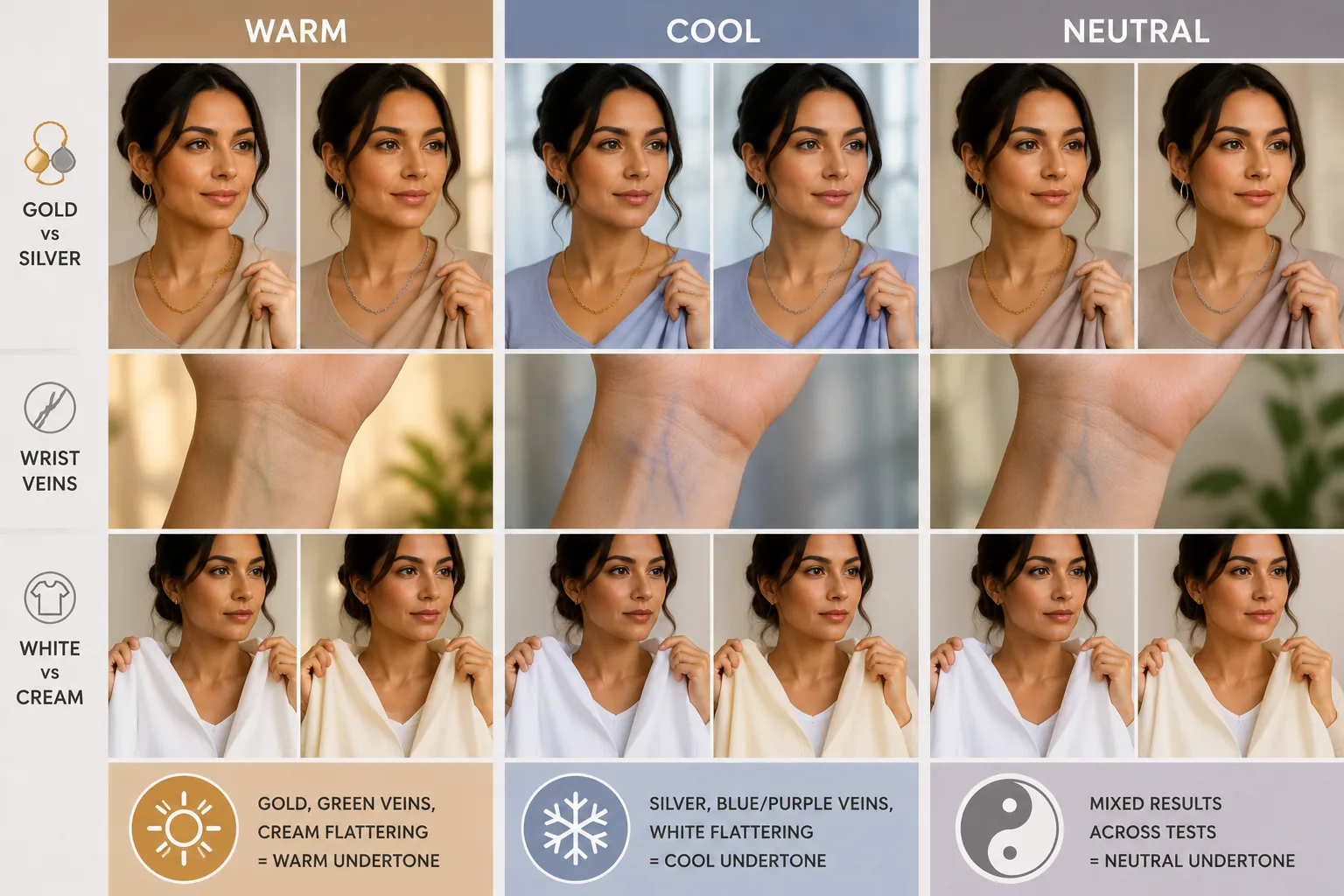
What undertone is — and is not
Undertone is the temperature beneath your skin's surface: golden-peach (warm), pink-blue (cool) or a genuine blend (neutral). It is separate from depth — fair, medium, dusky and deep skin each come in all three temperatures — and it never changes, not with tanning, not with age.
Overtone is what confuses people: skin can look yellowish on the surface yet be cool underneath, which is common across South Asian complexions. That is why the honest tests compare reactions — how your face responds to a colour held against it — rather than asking you to name your own shade from memory. Get this one property right and every later colour decision — palettes, seasons, metals, even lipstick and hair tints — inherits the accuracy for good.
Test one: gold versus silver
The most reliable home test. In daylight, hold gold fabric or jewellery under your chin, then silver — or simply try earrings of each metal.
Watch the skin, not the metal. The flattering metal makes your face look clearer, evens the tone and softens shadows; the wrong one makes you look slightly tired or sallow. Gold winning points warm; silver winning points cool; a genuine tie points neutral.
Photograph both in the same light and flick between the frames — a difference that is hard to see live is often obvious on screen. Borrow both metals if you own only one. Run it twice on different days before you trust it; one poor night's sleep can tilt the verdict.
Tests two and three: veins and whites
The vein test: in daylight, look at the veins inside your wrist. Leaning green suggests warm — yellow-toned skin over blue veins reads green. Leaning blue or purple suggests cool. An even mix, or genuine difficulty deciding, suggests neutral.
The white test: hold brilliant optic white up to your face, then cream or off-white. Cool undertones carry pure white easily; warm undertones look healthier against cream. A crisp white shirt and an unbleached mulmul dupatta make perfect props.
Each test alone can mislead — sun exposure and lighting interfere — so run all three and let the majority decide. If all three disagree, that scattered result is itself the answer: neutral.
If you land neutral
A genuine mix is common and quietly lucky. Neutral undertones borrow from both palettes: both metals work, both whites work, and the flattering-colour question shifts from temperature to depth and clarity — whether you shine in soft dusty shades or clear saturated ones.
Lean on the near-universal middle colours — teal, soft white, blush, cherry red, mid-blues — and note which extremes misfire: if icy pastels are your only failures you lean warm-neutral; if orange is, you lean cool-neutral. Seasonal analysis handles the refinement, since its other two axes matter more for you than temperature does. Enjoy the flexibility rather than forcing a side — neutrals get the widest shopping aisle.
Spend the answer immediately
Undertone is only useful once it changes a decision, so change three today.
Metals: shift everyday jewellery towards the winner — gold, brass and copper for warm; silver, platinum and white gold for cool. Whites: buy your next shirt or kurta in your white — cream versus optic. Face colours: keep your flattering palette in tops, dupattas and scarves, and send the fighters to bottoms and bags.
That is the entire discipline. One afternoon of testing, three standing rules, and every future purchase quietly gets easier — and more often right. Keep a note on your phone with your three answers; shops have a way of erasing memory.