 SKIBDRIP®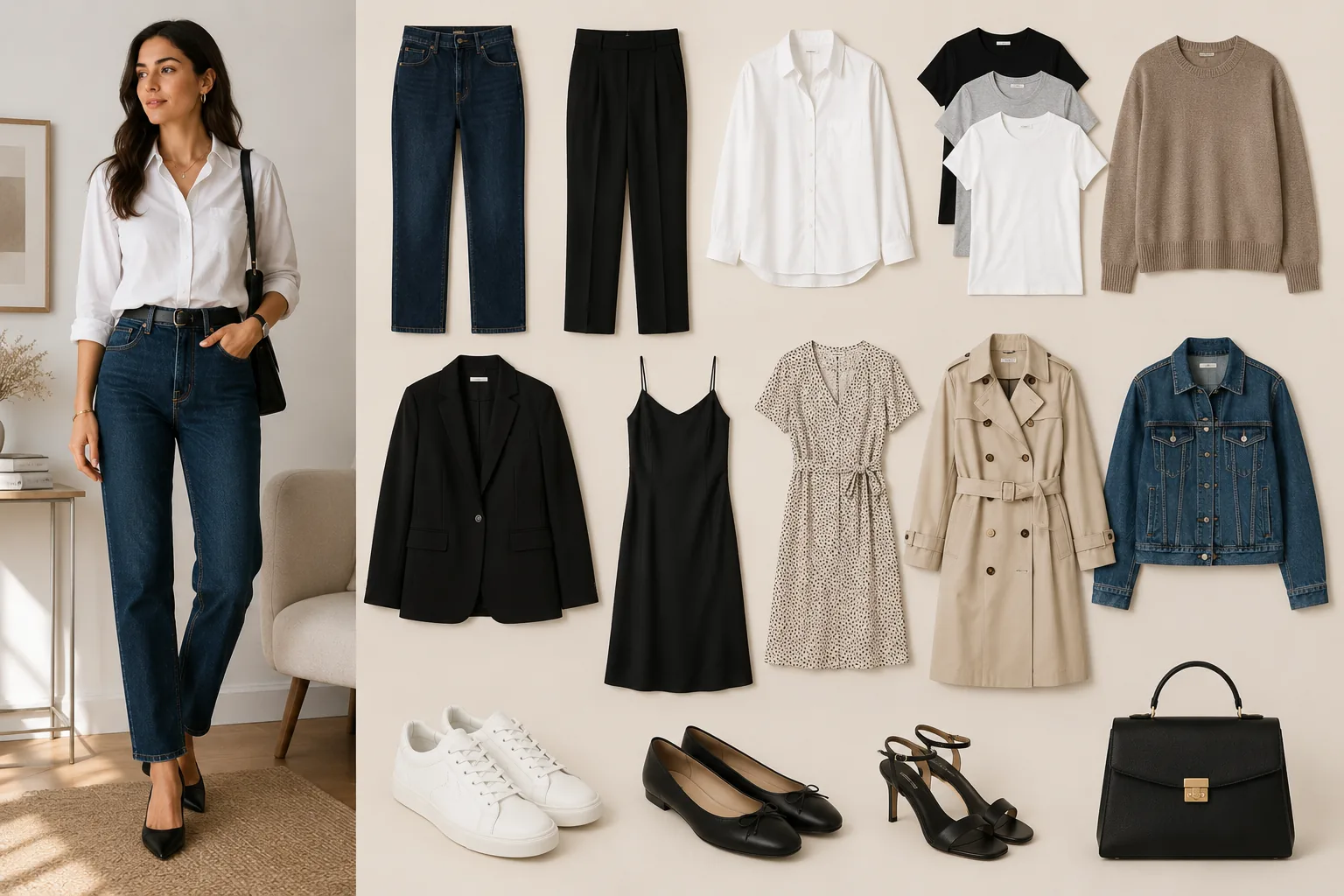
Essentials are a system, not a shopping list
An essential is not a piece a list told you to buy. It is a piece that combines with at least three others you own and suits the life you actually live — school runs, client calls, Sunday markets, wedding seasons.
So before buying anything, look at your week. If you have not worn trousers since 2023, tailored black trousers are not your essential; a great midi dress might be. The fifteen below fit most working lives, but swap freely — the system matters more than any single item. Every piece earns its place by working across at least three outfits, and anything that cannot manage that is decoration, not infrastructure.
The core fifteen
Count the tees separately and this is fifteen pieces exactly.
- Dark straight or slim jeans that hold their shape
- Tailored black or navy trousers
- A white cotton shirt with structure
- Three good tees — white, black, one colour that flatters your face
- A fine-gauge knit in navy, camel or grey
- A blazer that fits the shoulders precisely
- A little black dress you can turn up or down
- A day dress that works with trainers
- A trench or denim jacket for the season between seasons
- White leather trainers, ballet or pointed flats, one block heel
- A structured bag that closes
That is a working core, and a capsule wardrobe grows from exactly this skeleton.
Fit before fabric, fabric before brand
The hierarchy of quality is fixed: fit first, fabric second, brand last.
A 900-rupee tee that sits perfectly on the shoulder beats a designer one that pulls. Check shoulder seams, rise and where hems land — jeans should skim the ankle, blazer sleeves should show a sliver of wrist. Fit matters more than size, so ignore the number on the label and trust the mirror.
Then fabric: cotton poplin shirts, merino or cotton knits, denim heavy enough to hold a line. Natural fibres crease more but age better and breathe through Indian summers. A small tailoring budget — 200 to 500 rupees a piece — quietly upgrades everything you already own.
Choose your colour spine
Essentials earn their keep by combining, and colour is what makes combination automatic.
Pick two base neutrals — navy and white, black and grey, camel and cream — and buy the core in those. Add two accent colours you love wearing near your face. Now almost any two pieces pulled blind from the wardrobe agree with each other.
If you know your undertone, let it choose the neutrals: warm skin leans camel, cream and olive; cool skin leans black, charcoal and true white. This one decision is the reason some small wardrobes look rich and some large ones look random — the pieces were never the problem, the palette was.
Build outward from the gaps
The core is a floor, not a ceiling. Once it exists, add personality — the embroidered jacket, the red heel, the silver skirt — knowing each new piece lands on a base that can absorb it.
Audit twice a year: what did you reach for weekly, what never left the hanger, and which occasion still sends you shopping in a panic. That last one is your real gap. Fill it deliberately, in your spine colours, at the best quality the budget allows. A wardrobe built this way stops being a pile of clothes and starts being a set of answers — one for every kind of day you actually have. Keep a short list on your phone of the two or three gaps you have named, so a sale can only tempt you towards things the system actually needs.