 SKIBDRIP®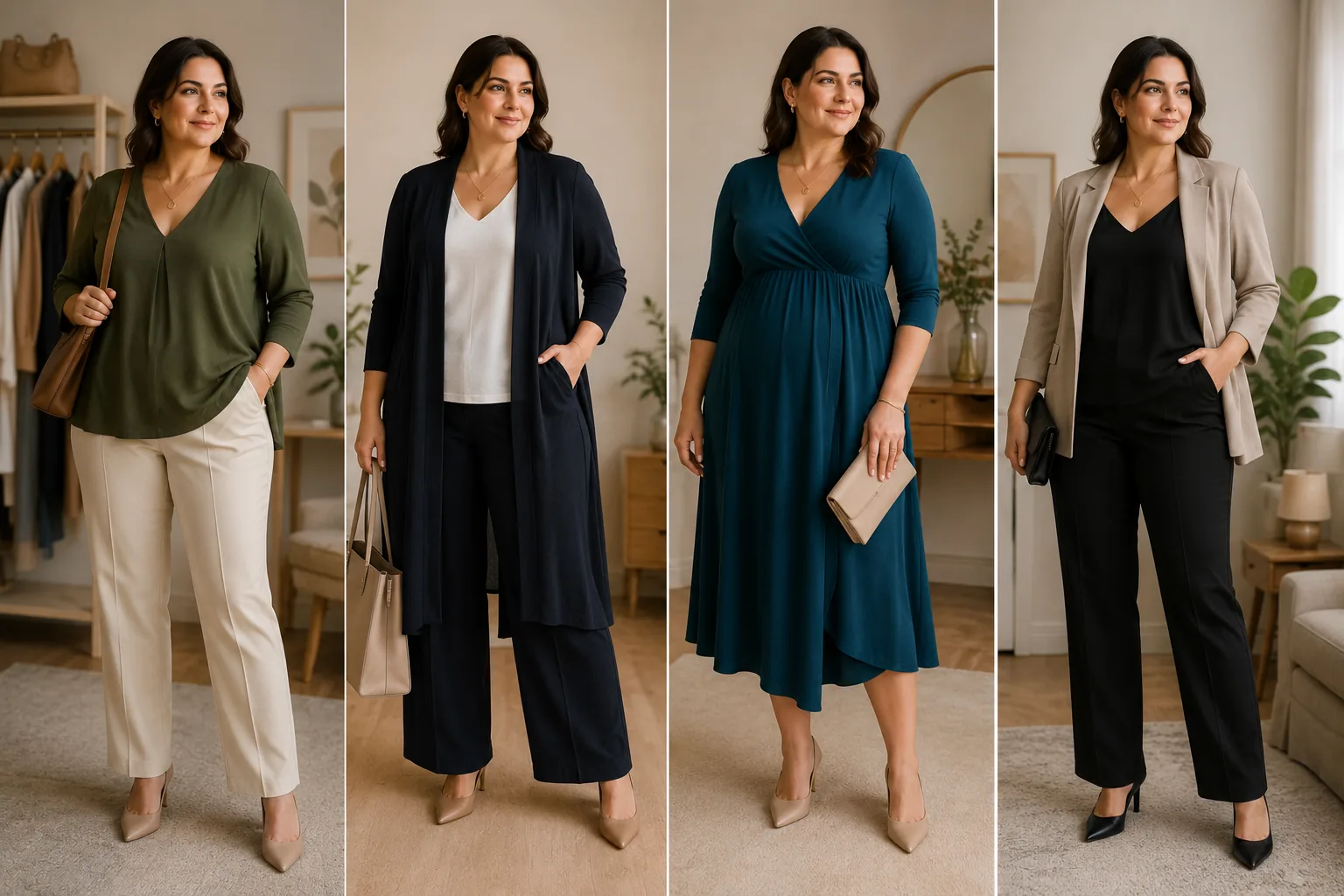
The apple brief: lead with your strong points
Apple describes fullness gathering through the midsection — bust, waist and tummy running closer to one measurement — while the legs, shoulders and neckline are usually the frame's strongest lines. Good apple styling is less about the middle than about giving those strong points the stage.
That reframing matters. Advice built on disguise produces tents, and tents flatter no one; advice built on emphasis produces outfits — great legs in a knee-length hem, a collarbone framed by a V-neck, shoulders carrying a well-cut jacket. The middle, meanwhile, asks only for fabric that moves past it with ease instead of reporting on it. Nothing needs hiding; some things simply deserve top billing.
The long vertical line is your best tool
One unbroken line from shoulder to hem lengthens and calms the whole silhouette, and apples have several easy ways to draw it. Open layers are the classic: a longline cardigan, an unbuttoned overshirt, a flowing dupatta or an open blazer creates two vertical edges that run straight past the middle. V and deep scoop necklines extend the line upward through the collarbone. A single colour or tonal column underneath — top and bottom in close shades — completes the effect.
Layering earns its keep here more than on any other shape: the inner layer skims, the outer layer draws the lines, and the eye travels top to bottom without stopping at the waist.
Dresses and tops that flow from the ribs
The most comfortable trick in apple dressing: define the narrowest point — just under the bust — and let fabric fall from there. Empire-line dresses, A-line shapes seamed at the ribs, wrap styles tied high and kurtas cut with a gentle flare all do it; so does soft ruching across the midsection, which adds texture that moves with you.
Fabric choice does half the work. Drapey viscose, modal, mulmul, matte jersey and crepe fall past the middle; stiff cottons and clingy thin knits both fight it, from opposite directions.
Structure still matters at the shoulder — a defined shoulder seam and a neat sleeve keep flow from becoming shapelessness. Flowing is a cut; formless is an accident.
Trousers, skirts and the comfortable rise
Waistbands decide an apple's whole day, so choose where they sit deliberately: either at the natural waist in a soft, flexible fabric, or just below the tummy's fullest point — never digging across the middle of it. Flat-front, straight or wide-leg trousers with a hidden elastic or drawstring back give polish without the pinch; well-cut ponte and stretch-woven pairs do the same in office registers.
Skirts repeat the logic: A-line and bias cuts falling from a comfortable band, hems at or just below the knee to show the leg.
And because legs are typically an apple strength, straight and slim legs balance beautifully under fuller tops — volume above, clean line below is the shape's most reliable proportion.
Comfort is a styling decision, not a concession
A waistband that digs will be adjusted forty times a day, and each adjustment reads from across the room; ease never does. That is why comfort sits inside apple styling rather than beside it — choosing the flexible waist, the skimming drape and the right bra (which resets the whole midsection line more than any garment) is proportion work, not giving up.
Size honestly for the fullest point and let everything else be altered, because fit, not the number, is what shows. Then wear what you love — including fitted things on the days you feel like it. An apple shape dressed with ease and intention does not look styled around; it just looks well dressed.