 SKIBDRIP®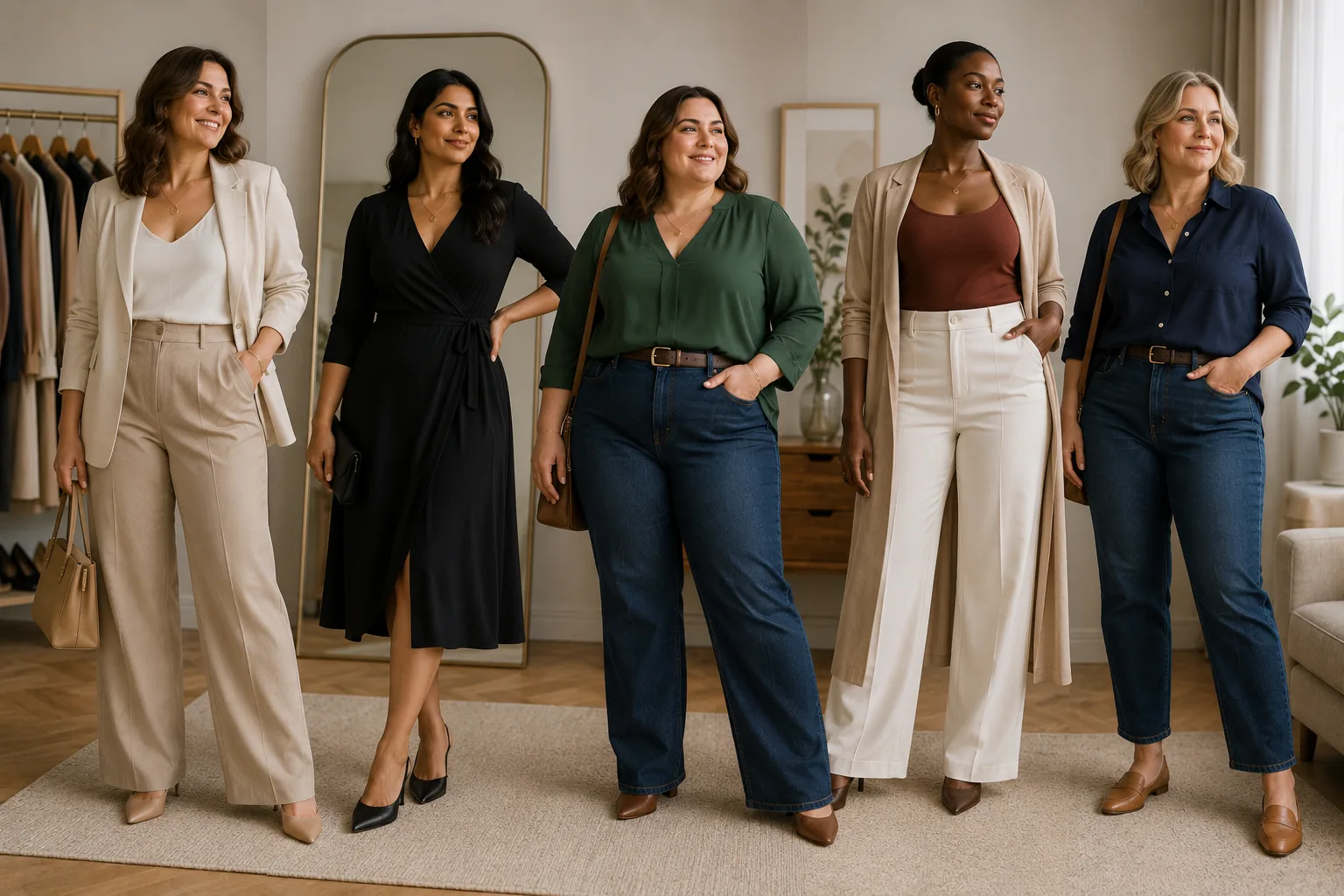
Today's body is the one that gets dressed
The most expensive habit in any wardrobe is dressing a hypothetical body — clothes bought tight as motivation, favourites benched until some future measurement. The result is a daily rotation of second-choice outfits, which is exactly what erodes confidence.
So the first move is administrative, not aspirational: know your current bust, waist, hip and inseam in centimetres, and buy against those numbers, ignoring whatever the label needs to call it. Sizes swing wildly between brands; measurements do not lie. Clothes that close comfortably, skim without gripping and stay put through a full day are the actual foundation of dressing well at any size. Everything aesthetic builds on that floor — and the floor is available immediately.
Fit first: buy for the widest point, tailor the rest
The professional method works at every size: fit the garment to your largest relevant measurement, then have the excess brought in. A shirt fitted at the bust with the waist darted, trousers fitted at the hip with the waistband nipped, a kurta taken in at the shoulder — each costs a small tailoring fee and delivers what off-the-rack rarely does, a garment shaped like you.
The fit checkpoints are universal: shoulder seams on the bone, sleeves to the wrist, buttons closing without strain, waistbands that sit rather than dig, hems breaking cleanly. Tight is not the failure to fear most — shapeless is just as unflattering in the opposite direction. Skimming, the middle path, is where clothes look considered.
Fabric is the quiet hero
At every size, cloth quality shows — but drape rewards curves especially. Fabrics with weight and movement — heavier jersey, ponte, crepe, twill, modal blends, good cotton poplin — fall smoothly over the body and hold their line through a day. Flimsy thin knits cling and crease; stiff boards bridge and gape; both create problems the cut never had.
Check construction too, because plus ranges are too often built down to a price: quality tells like dense seams, real hems, functional darts and a touch of elastane in wovens matter more here, not less.
Structure is drape's partner — a well-set shoulder, a firm waistband, a lined skirt. Softness over scaffolding is the combination that photographs expensive.
Shape and colour on your terms
Every silhouette is available; the choice is direction, not permission. Want definition? Wrap dresses, belted coats, high-rise trousers with tucked tops and seamed tailoring mark the waist beautifully at any size. Prefer ease? Column dressing, A-line sweep and considered oversized — one voluminous piece anchored by one closer one — read as deliberate as any cinch.
Colour follows the same rule. All-black is a fine look; it is not a uniform you owe anyone. Brights, pattern and colour-blocking work on the same principles as on any frame — near your face for lift, in one saturated column for drama, balanced with neutrals while you calibrate. The old whispered restrictions were never tailoring advice; they were timidity with a style guide's byline.
Underpinnings, upkeep and the last word
Unglamorous things do disproportionate work. A professionally fitted bra resets the bustline and shortens nothing; smoothing shorts prevent thigh chafe on hot days — comfort engineering, worn for you, not concealment; slips let dresses glide instead of catching. Natural-blend fabrics and half sizes up in shoes carry long days better.
Upkeep seals it: pilling shaved, hems intact, shoes clean — care is visible at any size and reads as self-respect.
Then the last word, which is not about clothes. Wear the sleeveless dress in the heat, the bright lehenga at the wedding, the fitted jeans on the good day. Confidence is not a prerequisite for dressing well; it is frequently the result of it.