 SKIBDRIP®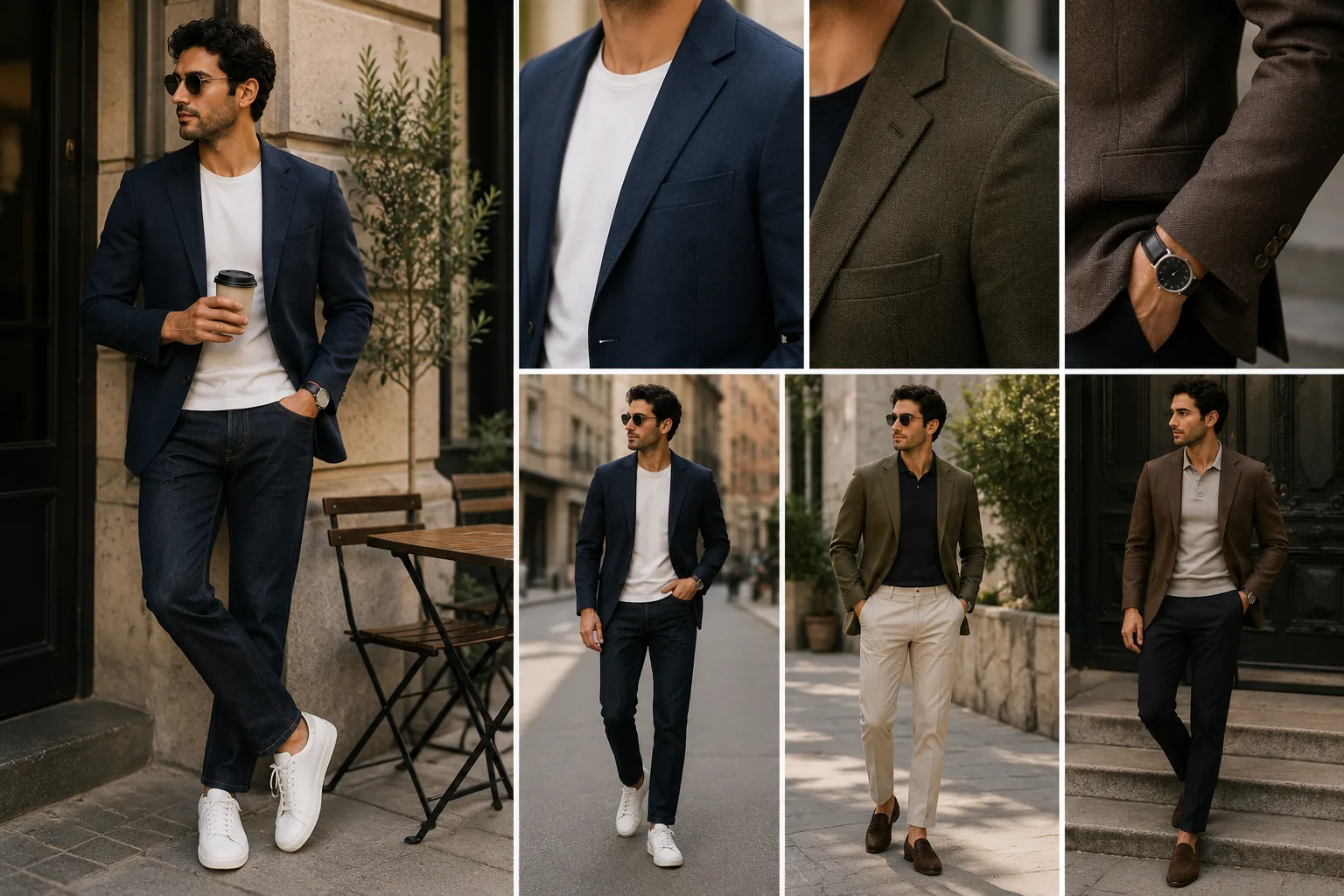
Buy the blazer that dresses down
Casual blazer outfits fail at the shop, not the mirror — the wrong jacket cannot be styled out of its stiffness. What you want is unstructured: soft or no shoulder padding, a light or absent lining, patch pockets rather than flapped ones. The jacket should move like a cardigan and crease like it has a life.
Fabric does the rest. Hopsack, cotton, linen and flannel carry visible texture that reads relaxed; smooth worsted wool with sharp shoulders reads boardroom no matter what sits under it. Navy first, then olive, brown or a muted check.
One warning: an orphaned suit jacket is not a casual blazer — its sheen and structure always whisper about the missing trousers.
What goes underneath: tee, polo, knit
The layer under the blazer sets the temperature of the whole outfit. A plain white or navy tee — heavyweight, crew neck, no graphic — is the simplest dress-down and the hardest to get wrong. A polo sits one notch smarter and survives Indian summers better than anything else on this list. A fine-knit jumper or roll-neck turns the same jacket wintery and vaguely cinematic.
An open-collared oxford or linen shirt works too — the casualness then comes from the open collar and the trousers, not the layer itself.
Whatever you choose, keep it tucked-or-hemmed neatly and longer than the jacket is short: fabric flapping below the blazer hem undoes the line.
Below the waist: jeans, chinos, clean shoes
Dark, straight or gently tapered jeans are the classic partner — the formality gap between tailored jacket and denim is the entire point of the look. Keep the denim clean of rips and heavy fading, and end it in one light break over the shoe. Chinos in khaki, olive or stone sit slightly smarter and travel to the office better.
Shoes decide the final register: white leather sneakers pull the outfit young and current; suede loafers or desert boots pull it toward smart-casual dinners; polished black oxfords pull it straight back to the office, so leave them there. Socks follow the shoe — no-shows with sneakers, colour optional with loafers.
Casual styling, sharp fit — never the reverse
Relaxing the outfit does not mean relaxing the tailoring. The casual blazer still passes the suit-jacket checks: shoulder seam ending at the shoulder bone, collar sitting against the shirt or tee neckline, one fist of room at the closed button, sleeve showing wrist — cuff can even be pushed slightly up, which is itself a casual signal.
Length can run a touch shorter than a formal suit jacket, but it should still cover most of the seat.
The failure mode is a baggy blazer over a baggy tee, which reads as borrowed rather than relaxed. Casual is carried by fabric, colour and the pieces around the jacket; the jacket itself stays disciplined. That contrast is the whole trick.
Three formulas to steal
- Weekend: navy hopsack blazer, heavyweight white tee, dark straight jeans, white leather sneakers — the default that works from brunch to gallery to airport
- Warm evening: olive or tobacco linen blazer, cream polo, stone chinos, brown suede loafers — dinner-ready in forty-degree honesty
- Cool day: brown flannel or check blazer, navy roll-neck, charcoal trousers or black jeans, chelsea boots — the winter version of trying without trying
Each formula obeys the same grammar: textured jacket, plain layer, clean trousers, unfussy shoes, two neutrals plus at most one colour. Master one, then swap single pieces. This register — jacket present, tie absent — is exactly the smart casual most invitations now mean.