 SKIBDRIP®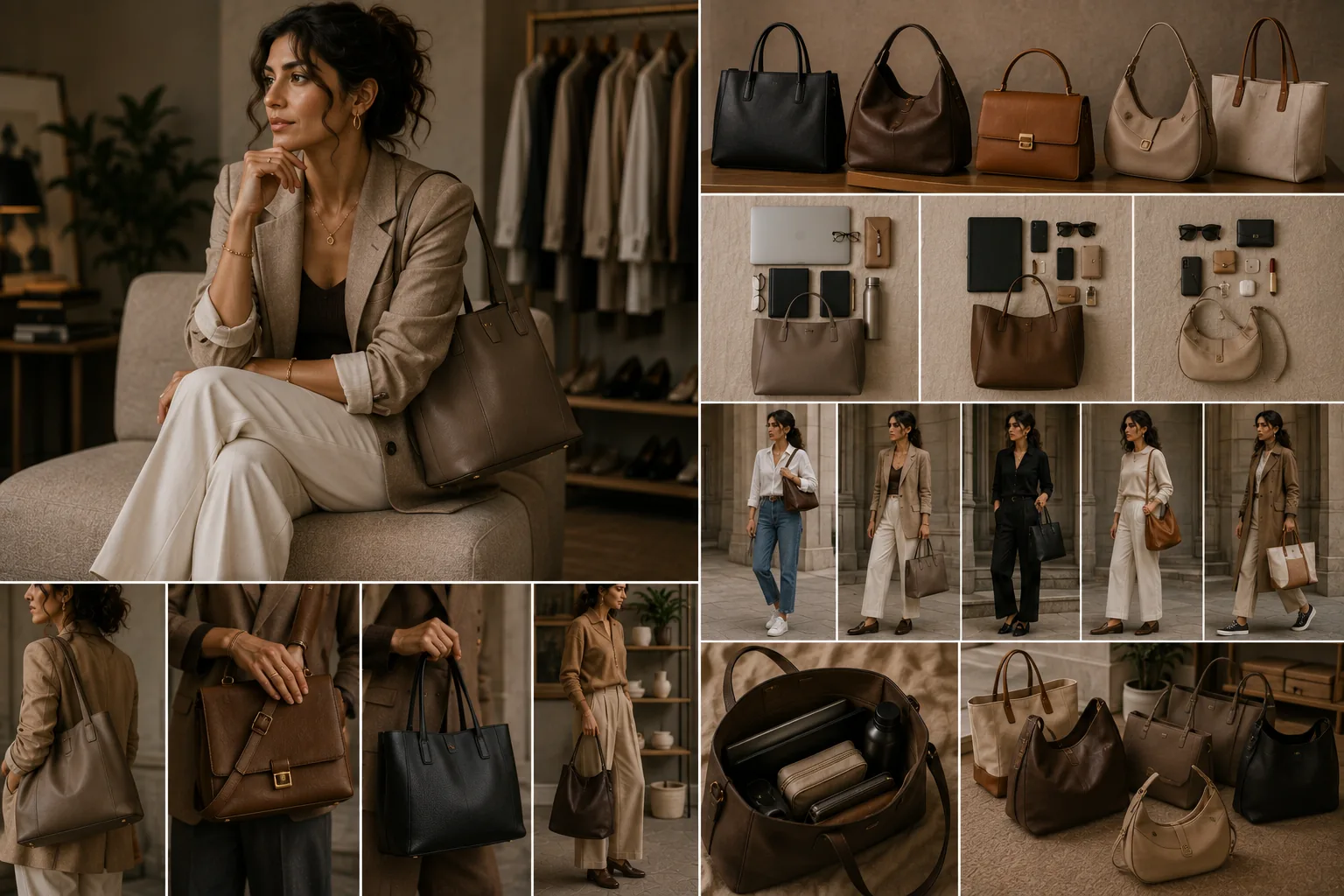
Audit the carry, not the shop shelf
Bags get bought for imaginary lives — the gala clutch, the weekend duffel — and then one overworked tote does every actual day. Reverse it: list what you truly carry. Laptop and charger? That is a structured tote or work bag with a padded sleeve, full stop. Phone, keys, cards, lip balm? A crossbody or small shoulder bag — anything bigger will fill itself with clutter to justify the space.
A bag that fits your real carry sits better, closes properly and ages slower. The wrong-size bag is the most common styling mistake at eye level.
Echo your silhouette
A bag is a shape you add to your shape, so it should speak your wardrobe's language. Structured bags — clean edges, holds itself upright — belong with tailored and polished clothes: blazers, trousers, sharp dresses. Soft, slouchy shapes — hobos, soft totes, crumpled leather — belong with relaxed denim, knits, linen and flowing silhouettes.
The clash test is instant: a rigid boxy bag against a floaty kurta set looks borrowed, and a collapsed slouch under a sharp suit undoes the suit. If your wardrobe spans both registers, your first two bags should too — one structured, one soft.
Colour: repeat a neutral you already wear
The everyday bag touches every outfit, so its colour must be a team player. Safest move: repeat a neutral your wardrobe already leans on — black for cool, high-contrast wardrobes; tan, cognac or chocolate for warm, earthy ones; navy and taupe as quiet alternatives.
Bags need not match shoes exactly — same temperature and similar darkness is enough. Save colour and print for a second, smaller bag, where a burst of red or a woven texture works as the outfit's focal accessory instead of fighting every coat you own. If your wardrobe splits between warm and cool, choose the bag for the coat you wear most — coats and bags share the frame all winter.
Proportion, strap and where it lands
Bags are worn, not just held — so scale and strap decide how they look on you. The bag's widest line lands wherever it hangs: crossbodies at the hip, shoulder bags at the waist or underarm, totes at mid-thigh. Let it land somewhere you are happy to widen slightly.
Scale to your frame: an enormous tote can swallow a petite frame, a tiny bag can look like a toy on a tall one. Test the strap over your actual coat, walk five steps, check a mirror side-on — thirty seconds that catch most regrets.
Reading quality before you buy
Bags fail at predictable points, so inspect those first. Zips: they should run smooth one-handed — a sticking zip in the shop becomes a broken one by March. Straps: look for stitching plus rivets at the join, the single highest-stress point on the bag. Edges and corners: painted edging should be even and sealed, because corners are where wear shows first. Lining: stitched-in beats glued, which peels in heat.
Smell and weight tell you about the leather; genuinely good hides smell of leather, not chemicals. None of this needs a luxury budget — mid-price bags pass these checks constantly and outlast dearer ones that do not. Ten minutes of checking beats two years of mild regret.
The three-bag wardrobe
Nearly every life is covered by three:
- The workhorse: mid-size, neutral, structured enough to hold its shape, fits the daily carry
- The small one: crossbody or clutch-with-strap for evenings, errands and travel days out
- The big one: tote or weekender for the gym, the market, the overnight
Buy the workhorse best — it appears in more of your days than any garment you own, and cost per wear on a daily bag makes even a serious price honest. Hardware in one metal, zips that run smooth, and it will outlast trends by a decade.