 SKIBDRIP®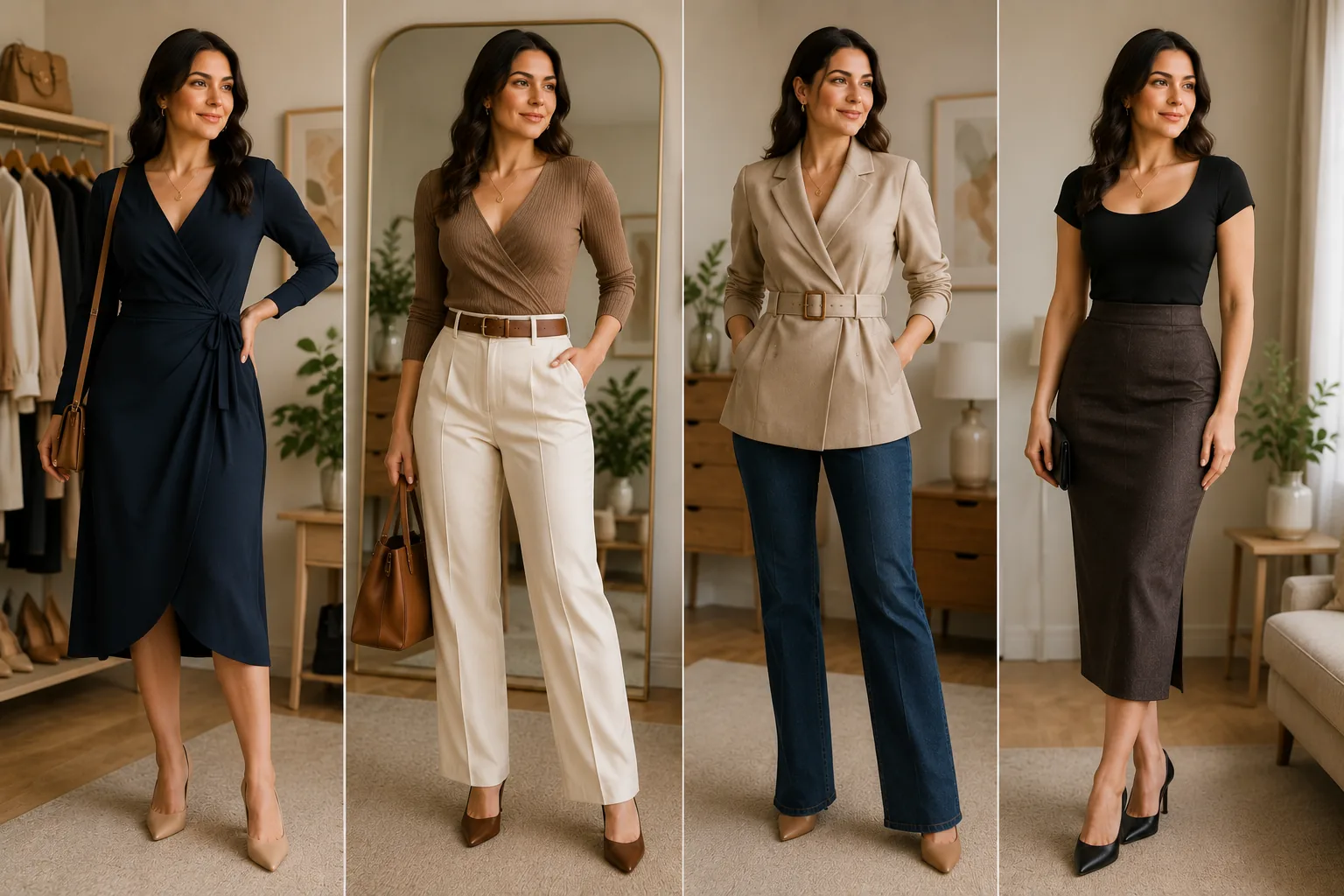
The hourglass brief: definition, not decoration
Hourglass proportions — shoulder and hip lines close to equal, with a waist markedly narrower than both — come with a styling irony: the shape fashion drawings idealise is one much modern clothing is not actually cut for. Straight-cut shirts, boxy jackets and rigid low-rise trousers are drafted on straighter blocks, which is why an hourglass can stand in a fitting room surrounded by good clothes that all fit wrong.
The working principle is simple: let clothes acknowledge the waist rather than bulldoze it. That does not mean bodycon everything or dressing to please anyone — it means choosing cuts whose own lines bend where yours do, so garments sit smoothly instead of straining at one point and sagging at another.
Waist-first pieces that do the work
A short list of cuts earns permanent hourglass residence. Wrap dresses and wrap tops — the wrap adjusts to your exact ratio, which fixed buttons cannot. High-rise trousers, jeans and skirts that sit at the waist's narrow point, where they hold securely and comfortably. Belted things — trench coats, shirt-dresses, oversized knits over a cinched middle — because a belt recreates definition any garment forgot. Seamed and darted tailoring, princess seams especially, cut to travel inward and back out.
Necklines are free territory, though wrap, V and sweetheart shapes frame a fuller bust with the least fuss. Saree drapes, seated at the waist by design, might be the oldest hourglass-friendly garment still in daily use.
Fabric matters more than the label
Two garments in the same cut behave completely differently on curves depending on cloth. What serves an hourglass is fabric with recovery — stretch wovens, ponte, heavier jersey, crepe with elastane — which follows a curve, then returns to shape instead of bagging or gripping. Softly structured cloth drapes over the transition points; bone-rigid fabric bridges straight across them, creating the classic gape-and-strain.
Thin clingy knits do the opposite failure, reporting every seam underneath.
A quick shop test: stretch the fabric gently across its width and watch it snap back. Slow recovery means bagging knees and seat by afternoon. Weight plus stretch plus recovery beats any brand promise on the swing tag.
The gape, the gap, and other fit fixes
Hourglass frustrations are usually one size gap expressing itself. Jeans that fit the hip but gape at the waistband: buy for the hip, have the waist darted in — a routine, inexpensive alteration. Shirts that pull at the bust but fit the shoulders: size up for the bust and take in the body, or seek brands cutting with bust darts. Dresses that fit up top and grip below, or the reverse: two-piece alternatives and wrap styles dissolve the compromise entirely.
The theme is constant — buy for the largest relevant measurement, tailor the smaller ones — because fit is a set of adjustments, not a number. An hourglass that befriends one local tailor stops fighting every fitting room in the city.
Wearing the oversized trend on your terms
None of this bars you from relaxed fashion — it only asks for one anchor. The reliable ratio is one defined point per outfit: an oversized shirt over slim high-rise jeans, a voluminous skirt under a fitted knit, a boyfriend blazer with the front open and a tucked top marking the waist inside it. Definition somewhere lets volume everywhere else read as intentional.
And on the days you drop the anchor entirely and float in head-to-toe ease, that is a legitimate choice too — body-type advice is a menu, never a mandate. The hourglass playbook exists for the days you want your frame's own geometry doing the styling. Most days, it is the easiest win in your wardrobe.