 SKIBDRIP®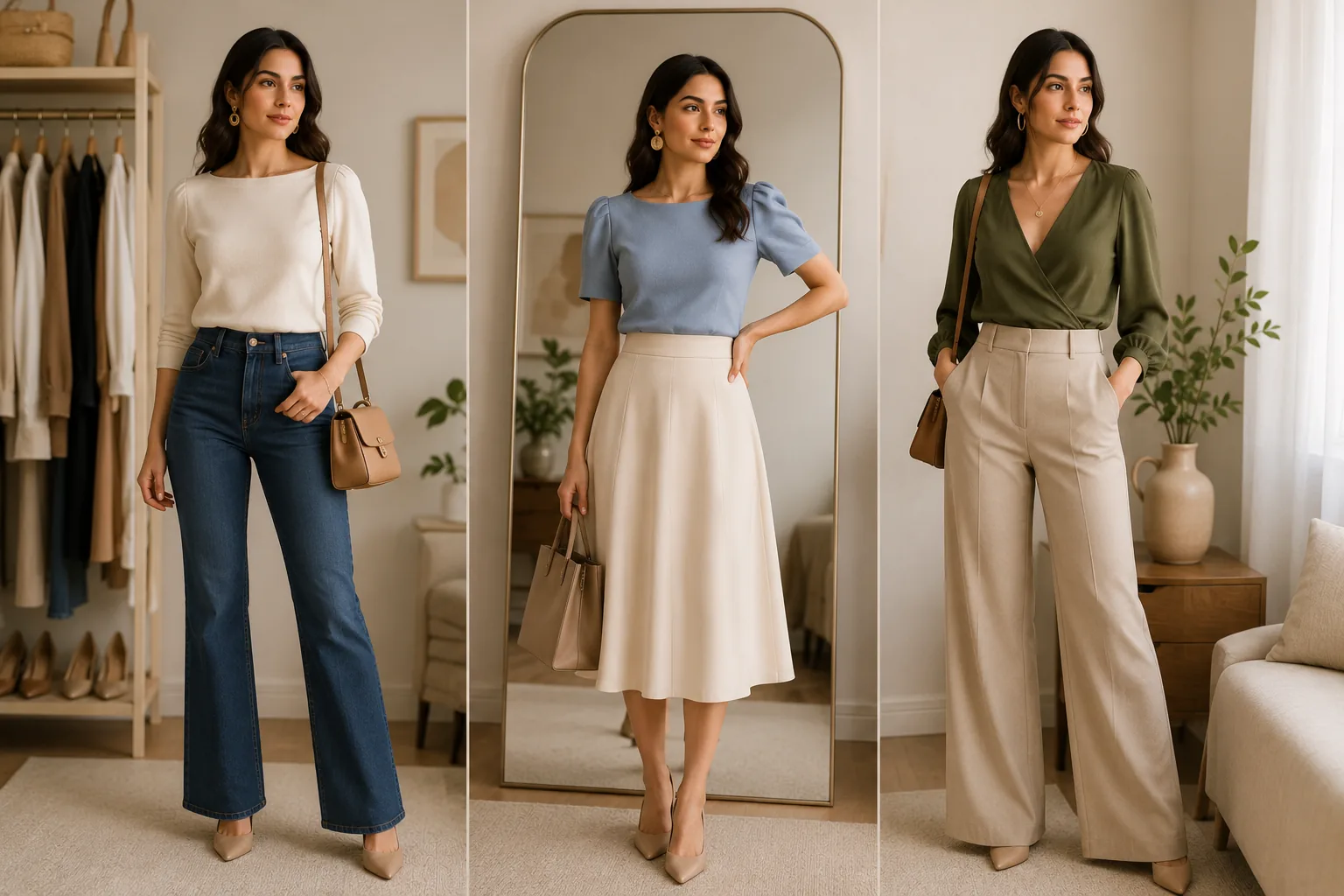
What pear-shaped means, minus the baggage
Pear simply describes a proportion: hips and thighs carrying more visual width than shoulders, usually with a clearly defined waist between them. It is among the most common proportions there is, and nothing about it needs concealing — hips are not a problem to be managed, whatever older magazines implied.
The styling conversation is about balance: if you want shoulders and hips to read closer to equal, you add presence up top and ease below. If you would rather celebrate the curve itself, you do the opposite with a clear conscience. Both are style choices, not corrections. Everything below is the how — offered for the days you want it, ignorable on the days you do not.
Up top: add structure and light
Balancing a pear starts at the shoulder line, not the hip. Details that build the upper half: boat and wide scoop necks that stretch the shoulder line sideways, small shoulder pads or structured sleeves, breast pockets, epaulettes, ruffles and yokes — any detail that gives the eye something at the top.
Colour helps the same cause. Brighter shades, lighter tones and pattern sit happily above the waist while the lower half runs deeper and quieter — a coral or striped top over dark straight trousers reads instantly balanced.
Finish at the face: statement earrings, a scarf at the neck, an open collar. Attention naturally rises to wherever the light and detail live, and that placement is entirely yours to set.
Below the waist: skim, never squeeze
The lower half asks for fabric that follows the curve and keeps moving. Cuts that do it well:
- A-line and bias-cut skirts — flowing from the waist and skimming the hip, styled a dozen ways
- Wide-leg and bootcut trousers — the flare below balances the hip above, straightening the whole line
- Mid-to-high rises — sitting at the waist's narrow point, where they hold comfortably
What frustrates pears is not any single garment but cling and grip: stiff fabric straining across the hip, pockets forced open, waistbands gaping behind. Size for the hip — the widest relevant point — and let a tailor take in the waist; that alteration is routine and transforms every trouser you own.
Dresses, and the waist advantage
Pears usually own the wardrobe's best asset: a genuinely defined waist. Dresses that mark it are almost a cheat code — wrap dresses, fit-and-flare cuts, belted shirt-dresses and anything seamed at the natural waist give the eye a clear centre while the skirt skims everything below.
Saree drapes flatter the same way, seated at the waist with the pallu adding presence across the shoulder — a proportion lesson centuries older than the terminology. Lehengas and A-line kurtas over straight bottoms follow the identical logic.
If a dress fits your hips but bags above, buy for the hips and have the bodice taken in — the standard pear alteration, and a cheap one. The reverse surgery never works as well.
And if you love the opposite, wear it
Every guideline above is reversible on purpose. Fitted skirts and slim jeans on a pear shape showcase the very curve the balancing advice softens — and worn with intent, that looks superb too. A clingy knit skirt with an oversized jumper, attention pointed exactly where the guidelines said to diffuse it, is a complete and confident outfit.
The point of knowing your proportions is choice, not compliance: on balance days you pull the balance levers, on celebration days you pull the others, and both versions are you at your best. The only outfit that genuinely fails a pear shape is the one worn with apology. Fit properly, choose deliberately, and stand accordingly.