 SKIBDRIP®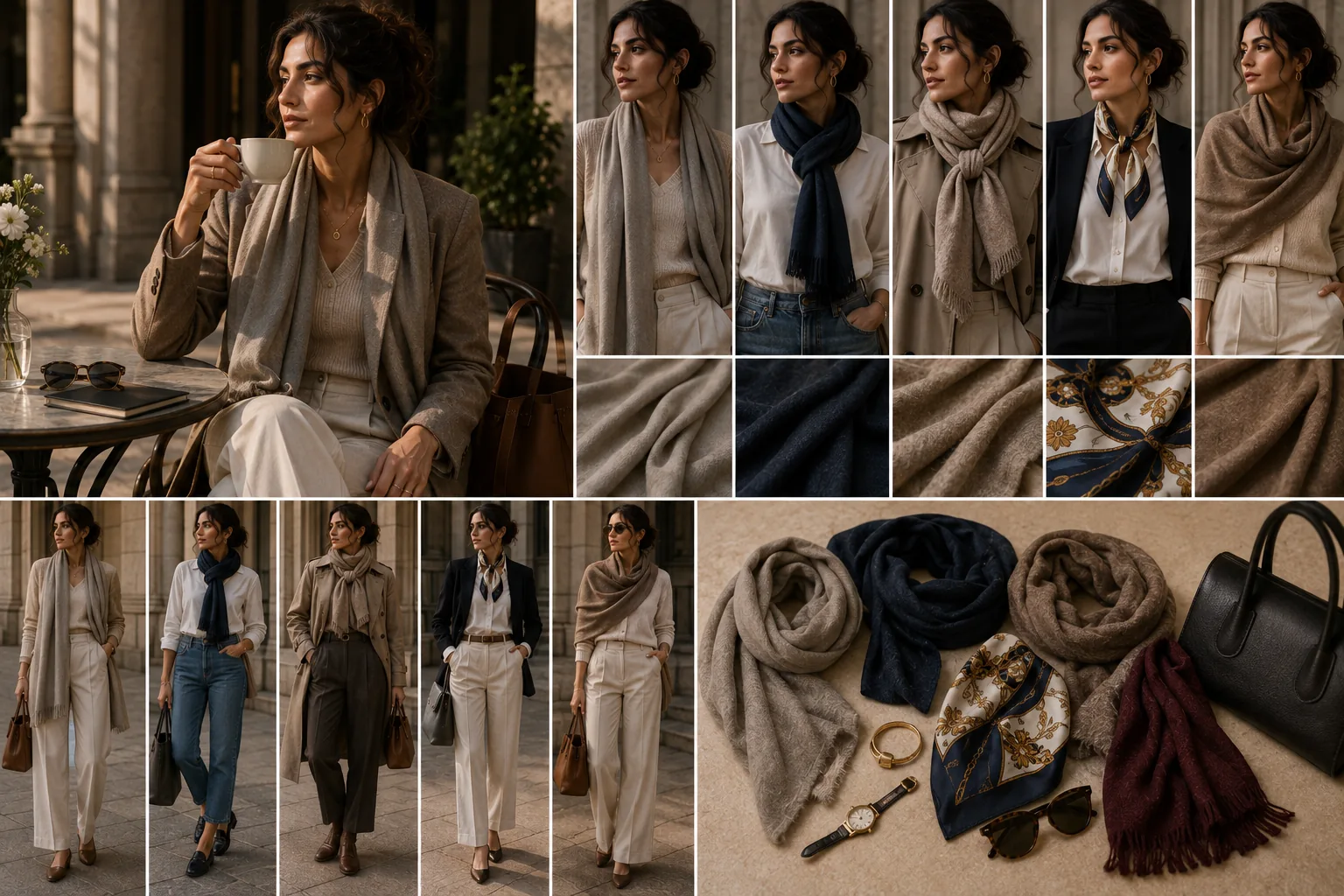
Pick the scarf by job
Scarves divide by purpose before they divide by pattern. Warmth: wool, cashmere and thick blends, 160 to 200 cm long. Decoration: silk and satin squares, 50 to 90 cm. Versatility: cotton, modal and fine viscose oblongs that work in warm climates — a register anyone fluent with a dupatta already knows well.
Buying order for a first scarf wardrobe: one wool oblong in a neutral (grey, camel, navy), one printed silk square, one lightweight cotton for the eight warm months. Three scarves, every season answered. Check composition before print: natural fibres and good blends drape and knot; stiff synthetics fight every fold you attempt.
The five moves
Five techniques cover ninety-five per cent of scarf life:
- The drape: hang it flat around the neck, ends even, under or over a coat — a vertical line that lengthens everything
- The once-around: one loop round the neck, ends hanging — casual warmth in thirty seconds
- The Parisian knot: fold the scarf in half, wrap the neck, pull both ends through the fold — neatest and warmest, best over coats
- The silk neck-tie: fold a square into a band, knot it at the side of the throat — instant polish above a shirt or plain tee
- The shoulder throw: over one shoulder, or draped and belted at the waist — the drama option
Practise each once at home; hands remember.
Proportion and placement
A scarf changes your silhouette, so place its bulk deliberately. Volume near the face frames the jaw and suits longer necks; a low, loose knot flatters shorter necks and rounder faces. Long vertical drapes slim; wide horizontal wraps add presence at the shoulders.
Because it sits beside your skin all day, scarf colour works like a second face-frame — a shade from your flattering palette at the jaw lifts the whole outfit. When the outfit is busy, the scarf goes plain; when the outfit is plain, the scarf is the print.
Beyond the neck
A silk square is the wardrobe's most versatile object: knotted to a bag handle, worn as a hairband or tied round a low bun, folded into a choker, threaded through belt loops, knotted at the wrist. Each move takes seconds and reads as fluency, not effort.
Bigger scarves moonlight too — a shawl on cold flights, a beach cover, an impromptu picnic blanket. This is why seasoned travellers pack one good scarf before a second jacket: it is the highest styling return per gram in the bag. If a scarf has gone unworn for a year, one of these second lives usually revives it.
Keep them worth wearing
Scarves live next to your face and show neglect quickly, so care is styling. Silk: hand-wash cool or dry-clean, iron on low from the reverse, and store rolled or hung — folded creases become permanent lines across a print. Wool and cashmere: de-pill each season, wash rarely and gently, air after wearing, and store clean over summer, because moths prefer your best one.
Cotton and modal take the machine, which is why they carry the daily load. Rotate rather than repeat and each scarf keeps its body for years. A well-kept scarf from five years ago outranks a tired new one — with scarves, condition is most of the beauty.
Mistakes that undo it
Four common misfires. Bulk fighting a structured collar — over a tailored lapel, choose a flat drape or wear the scarf inside the coat. Strangulation — knots cinched at the throat look anxious; leave breathing room. Occasion mismatch — chunky knit scarves with evening wear, fine silk with sports kit. And polyester shine, which photographs cheap next to a good coat.
When in doubt, treat the scarf as the outfit's one focal accessory: let it star, quiet everything else, and resist adding a competing necklace an inch away. One neck, one story — the scarf tells it better alone.